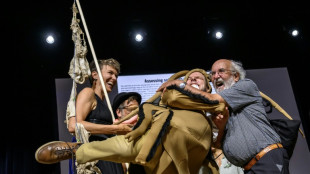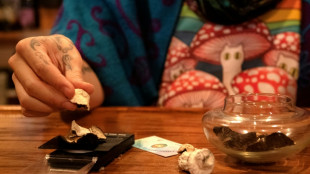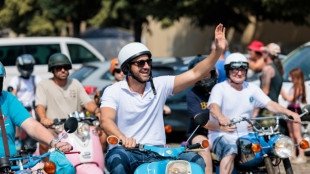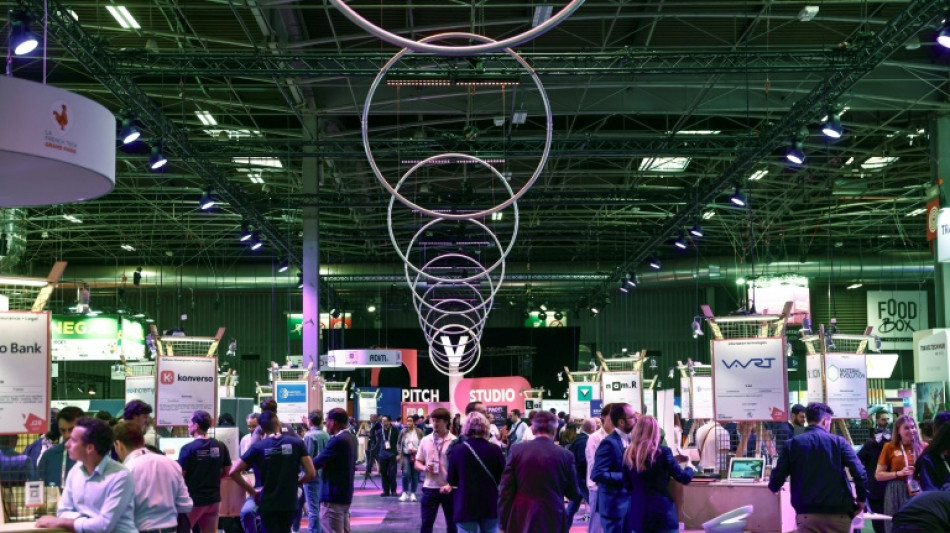
The most eye-catching products at Paris's Vivatech trade fair / Photo: Thibaud MORITZ - AFP
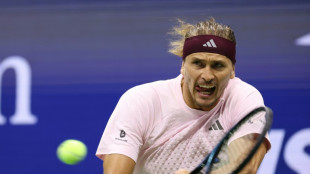 At last: Straight sets win over Tabilo puts Zverev in US Open last 16

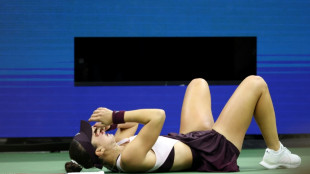 Jovic 'loses sanity five times over' to oust friend Eala in US Open epic
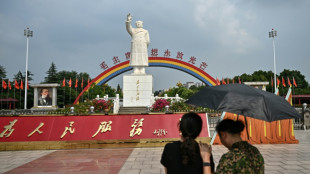 China's memories of Mao fade to nostalgia 50 years after his death

 US envoys discuss with Putin 'substantive' plans for steps to end Ukraine war

 Zheng stuns Keys as US Open upsets dim American hopes
 Jovic 'loses sanity five times over' to oust Eala and book Gauff clash

 'Like a jewel': Japan's luxury ice revered by bars worldwide
 'The flood is coming': How a Nepal principal saved 900 students

 Kiss's winning run ends as Argentina hold Australia to draw
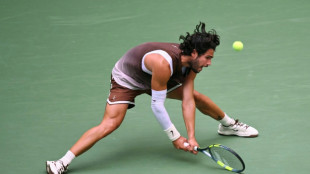 Alcaraz excited to face 'dangerous' Paul for US Open quarter-final berth

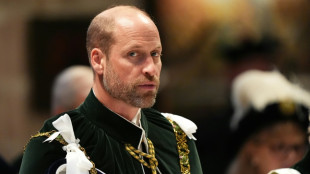 Prince William to represent King Charles III at Norway late King Harald's funeral

 Inter and Roma roar back to win thrillers and share top spot

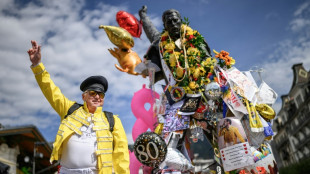 Don't stop them now: fans party for Freddie Mercury's 80th birthday
 AFP photographer wins top prize for Madagascar protest coverage

 Keys: 'I felt like I couldn't play tennis'

 Simmonds stars as Pau upset Montpellier

 Inter roar back in five-goal thriller with Napoli

 Haaland keeps Man City perfect in Premier League, blunt Spurs held

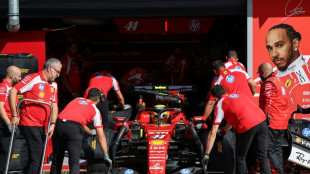 Hamilton worried by Ferrari pace while Antonelli prepares for a fight

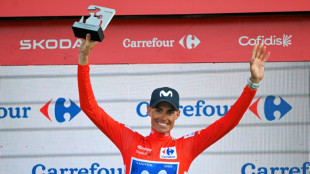 Vuelta stage 15 shortened due to extreme heat, Mas consolidates lead

 Putin meets US envoys for Ukraine war talks

 Modric available for Croatia in Nations League

 Potapova upsets 2025 US Open runner-up Anisimova
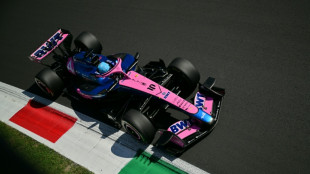 Gasly a 'class act' says Alpine boss after Monza pole

 Athletic Bilbao crush Simeone's flat Atletico
Products ranging from footwear to AI counterfeit detectors fill the halls of Paris's Vivatech trade fair, which runs until Saturday.
Here are some of the highlights of this year's show gathered by AFP on the scene:
- Anti-counterfeiting AI -
For humans, spotting the difference between a Lacoste polo shirt and a fake sporting the brand's crocodile logo can be tricky.
But French startup Vrai AI believes its artificial intelligence model can tell the two apart based on a simple photo.
"AI can detect micro-mistakes" made by counterfeit manufacturers of products like off-the-rack clothes, banknotes or even anti-malarial medications, co-founder Hugo Garcia-Cotte tells AFP.
"It's more reliable than humans," he adds.
Lacoste has been testing the AI model since November, with customs services in countries like Cameroon and Senegal also taking an interest.
- Robotic telemedicine -
Scooting around on castor wheels, column-shaped robots from Hong Kong firm Robocore can serve as mobile advertising billboards -- but for now are mostly deployed for medical purposes in hospitals and retirement homes.
"We are in about 200 elderly homes in the United States, 1,000 elderly homes in Hong Kong, and we are in a lot of hospitals as well," boss Long Hei Roy Lim tells AFP.
The robots, each a few feet high, use AI to navigate environments autonomously, including taking the lift.
They can also analyse patients' medical data and have conversations powered by chatbots from American developer OpenAI or Chinese competitor DeepSeek.
Robocore says its robots can save time for health workers, whose workload is cut to simply checking up on what the robots have distributed to patients -- hopefully limiting the impact of doctor shortages.
With 50,000 units deployed across 33 countries, Robocore was hoping to expand into new markets thanks to its attendance at Vivatech.
- Nimble electric vehicles -
At just 79 centimetres (two and half feet) wide and 2.4 metres (seven and a half feet) long, French startup Aemotion's four-wheeled electric vehicle is designed to weave through traffic, saving commuters time spent in jams.
Built in central France, the black transport that's not quite a motor scooter nor really a car is fully enclosed and can carry two people at up to 115 kilometres per hour (70 mph).
"We aim to sell 5,000 of these a year within five years," company chief Alexandre Lagrange told AFP at the company's stand, where he is showing off the third version of Aeomotion's prototype.
Pre-orders are already open for the vehicle, with the company aiming to get road licensing early next year, with a price tag of 20,000 euros ($23,000).
The first drivers will get their hands on one in late 2026 or early 2027, co-founder Alain Dublin said.
- Smart shoes -
Imagine being guided on a walk around busy city streets not by brightly-coloured signs and traffic lights, but by vibrations in your feet.
That's the promise of Japanese start-up Ashirase, which has developed a vibrating tool that slips into shoes aimed at making life easier for visually impaired people.
“We use AI for accurate positioning, by mixing the sensor data from the Ashirase device and location data from (a) smartphone,” development chief Ryohei Tokuda said.
Users simply have to select a destination in the accompanying app and the buzzing inserts will let them know when to turn.
Backed by carmaker Honda, Ashirase's smart shoe upgrades are already on sale in Japan.
It hopes to bring them to Europe starting with a launch in Germany in September.
B.Finley--AMWN