Five things to know about Uganda / Photo: - - AFP
 UK asserts 'unshakeable' Falklands commitment after Milei presses claim

 How a Dostoevsky novella took TikTok by storm

 Zverev goes the distance again to reach US Open third round

 German AfD's love for Simson mopeds dismays Jewish family behind brand
 Two trapped tunnel workers rescued in Nepal 'miracle'
 Ex-Pakistan coach Gillespie tells Javed 'look in the mirror' over sackings
 Monfils falls to Tien in US Open in Grand Slam farewell

 Arsenal brace for Chelsea test as Spurs seek spark

 Efficient Rybakina reaches US Open third round

 Taiwan boxer Lin considered 'graceful exit' after Paris Games gold
 'I miss my home': Cambodians displaced by conflict start over
 Ailing Auger-Aliassime falls at US Open as Swiatek, Osaka and Gauff advance

 Tesla launches self-driving 'Cybercab' in Texas
 'Wallace & Gromit' creators turn 50 with spook-tacular Shaun yarn

 New York's Muslims reclaim their city after 9/11 backlash

 Premier League transfer windfall a lifeline for ailing French clubs
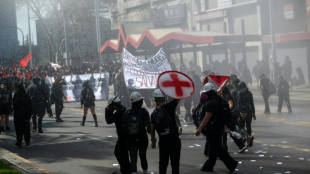 Chile protesters see shades of Pinochet in new security plan

 InterContinental Hotels Group PLC Announces Transaction in Own Shares - September 04
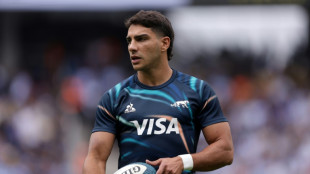 Carreras reverts to fullback as Argentina change four for Australia Test

 Wilson back to lead Australia as Kiss rotates team for Argentina
 Yen surges on new intervention talk, US stocks rally

 Japan's Ueda fires Lille top of Ligue 1 on debut
 Arsenal chief executive reveals 'dynasty' ambition

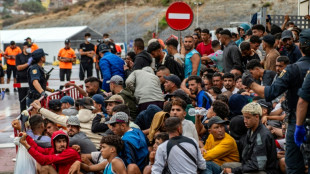 Spanish PM says no 'solid proof' Morocco planned migrant rush

 Iran war is not a war, US VP Vance says

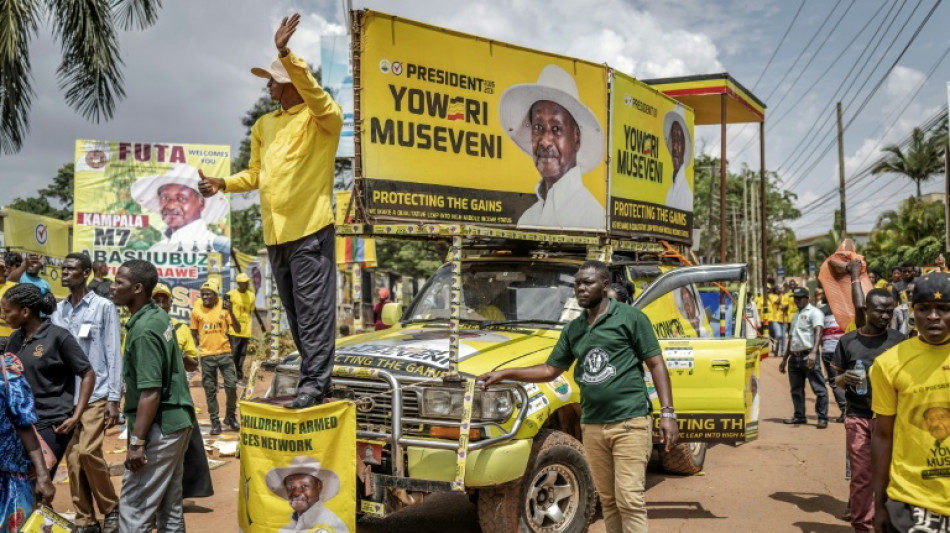
Uganda, where President Yoweri Museveni is seeking to extend his 40-year rule with a seventh term on Thursday, has one of the world's youngest populations and is pinning its hopes on oil reserves to overcome poverty.
Here are five things to know about the east African nation:
- Regional military involvement -
Still haunted by the tyrannical reign of Idi Amin from 1971 to 1979, which Museveni helped to end as a former guerrilla, Uganda has been involved in several civil wars and regional conflicts since achieving independence from Britain in 1962.
Museveni, who took power at the head of a rebel army in 1986, has tried to position himself as a useful ally to the United States to offset criticism of his domestic regime.
Uganda's troops have, for instance, been the largest contingent of African soldiers in Somalia fighting al-Qaeda-linked Al-Shabaab militants since 2007.
Its troops have fought in two brutal wars in what is now the Democratic Republic of Congo (1996-1997 and 1998-2003) and maintain a military presence there.
In March, Uganda again sent troops to South Sudan to support President Salva Kiir, which observers deemed a breach of a United Nations arms embargo.
- Strict anti-homosexuality law -
Uganda's Anti-Homosexuality Act, signed by Museveni into law in May 2023, is one of the most severe in the world, with harsh sentences for same-sex relations or "promoting" homosexuality.
This includes the death penalty for "aggravated homosexuality", though capital punishment has not been applied for many years.
Human Rights Watch said the law "institutionalised" homophobia and made it "legitimate".
The World Bank suspended new loans to the country over the law, but announced in June 2025 that it was resuming lending, while claiming that measures were put in place to limit the risk of discrimination in its projects.
- Black gold hopes -
Agriculture is central to the Ugandan economy, with coffee as its leading export, along with refined gold, and a burgeoning tourism sector.
Museveni has overseen sustained economic growth -- which continued at more than six percent in 2024-2025, according to the World Bank.
Some 60 percent of Ugandans still live on $3 or less, however, with critics accusing the government of multiple, massive corruption scandals that have sapped growth.
The government has high hopes for its oil sector after discovering major reserves in the Lake Albert region in 2006.
Landlocked, Uganda hopes to export its first oil through a $10 billion project with France's TotalEnergies and the China National Offshore Oil Corporation (CNOOC) that has been strongly opposed by environmental groups.
The 1,443-kilometre (900-mile) pipeline -- the world's longest heated pipeline -- is due to start transporting crude from Uganda to the Tanzanian port of Tanga on the Indian Ocean in June.
- Young population -
Half of the population of 51.4 million in 2025 was under 18, according to the World Bank, with only two percent over 65.
Britain's former protectorate was named the "Pearl of Africa" in the early 20th century by the future British prime minister Winston Churchill.
Its natural diversity includes misty rainforests, great lakes and snow-capped mountains. It has a long shoreline on Lake Victoria -- which straddles Uganda, Kenya and Tanzania -- and is crossed by the Nile river.
Bwindi National Park is home to half the world's mountain gorillas while Mount Stanley is Africa's third-highest peak at 5,109 metres (16,762 feet).
- Open doors -
Uganda hosts more refugees than any other African country, according to the United Nations. It put their number at two million in 2025, due to influxes from Sudan, South Sudan and the Democratic Republic of Congo.
Aid groups say Uganda struggles to assist the ever-expanding population, but the government has also faced scandals over inflating its refugee numbers to boost the aid it receives.
L.Harper--AMWN