-
 US trade gap in July hits biggest in over a year on AI buildout
-
US feminist icon Gloria Steinem dies aged 92
-
 Study shows plug-in hybrids polluting far more than expected
-
France recorded 'hottest summer ever': environment minister
-
 Lost tool disrupted Airbus jet deliveries for months
-
'No plans to retire', says 'acting god' Malkovich
-
 MEXC Concludes 0808 Stock Season with Over 86,000 Participants and More Than $1M Saved Through 0 Fee Trading
-
Nigerian opposition lobbyist tapped for White House-linked role, firm says
-
 US feminist icon Gloria Steinem dies at 92: foundation
-
China emissions fell in Q2 as Iran war pared oil use: analysis
-
 All Blacks drop veteran hooker Taylor for third Springboks Test
-
France sells bonds at highest rate since 2008 amid deficit worries
-
 British, French leaders hold talks on migrants, EU relations
-
Vast aid challenge after 'Himalayan tsunami' devastates Nepal

-
 Oil prices jump as Iran strikes US targets
-
Bosnia captain Dzeko to retire from international football

-
 Putin denies plan for new Russia military call up
-
Grief on Chinese internet as wait for Tibet flood news drags on
-
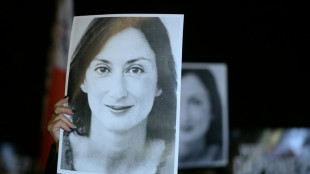
 Caruana Galizia: 'one-woman WikiLeaks' who exposed Malta's shady side
-
Heavy rain puts a dampener on Taiwan 'extreme heat' drill
-
 Kuwait's Iranians under pressure since start of war
-
Juve's Khephren Thuram out until 2027 with knee injury

-
 EU lawmakers demand Brussels force Meta to 'protect' European children
-
Delivering aid to Nepal flood survivors 'very, very difficult': UN

-
 Clooney turns AFP photographer in jokey red carpet switch
-
German growth prospects brighten as economy defies Mideast turmoil
-
 Retirement Income Planning Florida Launches No-Cost 'Income Gap Analysis' Program for Pre-Retirees
-
Outrage mounts in Malta after acquittal over journalist's murder
-
 Iraola hails Barcola mentality after blockbuster Liverpool move
-
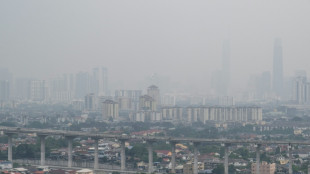
Malaysia starts cloud seeding to help clear toxic haze
-
 Michelsen shocks Nakashima in US Open clash of rising Americans
-
El Nino could be strongest in decades, UN warns

-
 US govt sides with OpenAI in New York Times copyright lawsuit
-
Kenya steps up crocodile hunt as rising lakes fuel conflict

-
 Grammy-Winning Jazz Vocalist Cassandra Wilson Dies at 70
-
Argentine Groups Seek Court Halt to Sea Lion Oil Project Near Falklands

-
 Maui Wildfire Survivors Report Major Losses to Troubled Rebuilding Contractors
-
China’s Oil Use Drops 9 Percent as Transport Electrification Accelerates
-
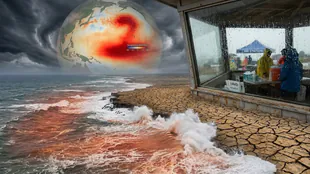
 WMO Says Powerful El Niño Is Likely to Persist Into February 2027
-
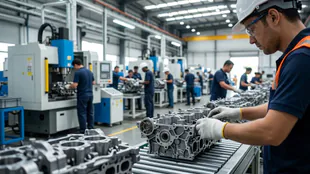
Fifth-Generation Mitsubishi Pajero Returns With Ladder Frame and Seven Seats
-
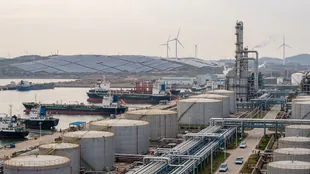 Honda Presses Suppliers for Deep Cost Cuts in $9.4 Billion Savings Drive
-
Philadelphia Roundup: Museum Closure, Phishing Warning and Gun Violence Data

-
 Philadelphia Festival Revisits the Signing and Legacy of the U.S. Constitution
-
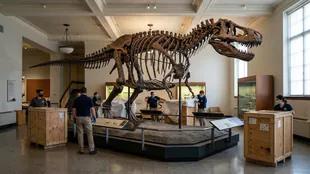
Philadelphia Natural History Museum Prepares to Close After Two Centuries

-
 Russia to close branches of Germany's Goethe Institute
-
Indonesia protesters targeted by coordinated disinfo

-
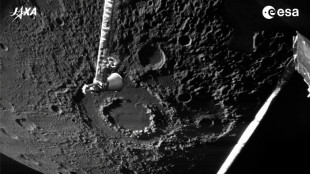 Spacecraft bound for Mercury faces 'tricky' arrival
-
Oil sinks, bond yields ease and stocks boosted after Trump Iran hint
-
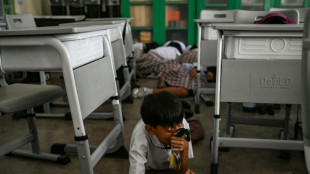 Philippines holds drills to safeguard students from armed intruders
-
American jazz singer Cassandra Wilson dies at 70

Laser-written glass can store data for millennia, Microsoft says
Thousands of years from now, what will remain of our digital era?
The ever-growing vastness of human knowledge is no longer stored in libraries, but on hard drives that struggle to last decades, let alone millennia.
However, information written into glass by lasers could allow data to be preserved for more than 10,000 years, Microsoft announced in a study on Wednesday.
Since 2019, Microsoft's Silica project has been trying to encode data on glass plates, in a throwback to the early days of photography, when negatives were also stored on glass.
The system uses silica glass, a common material that is resistant to changes in temperature, moisture and electromagnetic interference.
These are all problems for energy-hungry data centres, which use fast-degrading hard drives and magnetic tapes that require backing up every few years.
In the journal Nature, Microsoft's research arm said Silica was the first glass storage technology that had been demonstrated to be reliable for writing, reading and decoding data.
However, experts not involved in the project warned that this new tech still faces numerous challenges.
- How to write inside glass -
First, bits of data are turned into symbols, which correspond to three-dimensional pixels called voxels.
A high-powered laser pulse then writes these minuscule voxels into square glass plates that are roughly the size of a CD.
"The symbols are written layer by layer, from the bottom up, to fill the full thickness of the glass," the study explained.
To read the data requires a special microscope that can see each layer, then decode the information using an algorithm powered by artificial intelligence.
The Microsoft researchers estimated that the glass could survive for more than 10,000 years at a blistering 290 degrees Celsius, which suggests the data could last even longer at room temperature.
However, the researchers did not look into what happened when the glass was deliberately smashed -- or corroded by chemicals.
Unlike data centres, the glass does not require a climate-controlled environment, which would save energy.
Another advantage is that the glass plates cannot be hacked or otherwise altered.
The Microsoft researchers emphasised that future storage is important because the amount of data being produced by humanity is now doubling roughly every three years.
- 'Carry the torch ' -
One of the glass plates holds the equivalent of "about two million printed books or 5,000 ultra-high-definition 4K films", according to Feng Chen and Bo Wu, researchers at Shandong University in China not involved in the study.
In a separate Nature article, the pair warned there were more challenges ahead, including finding a way to write the data faster, to mass produce the plates and to ensure people can easily access and read the information.
However, they praised Silica for creating a "viable solution for preserving the records of human civilisation".
"If implemented at scale, it could represent a milestone in the history of knowledge storage, akin to oracle bones, medieval parchment or the modern hard drive," they said.
"One day, a single piece of glass might carry the torch of human culture and knowledge across millennia."
A.Rodriguezv--AMWN