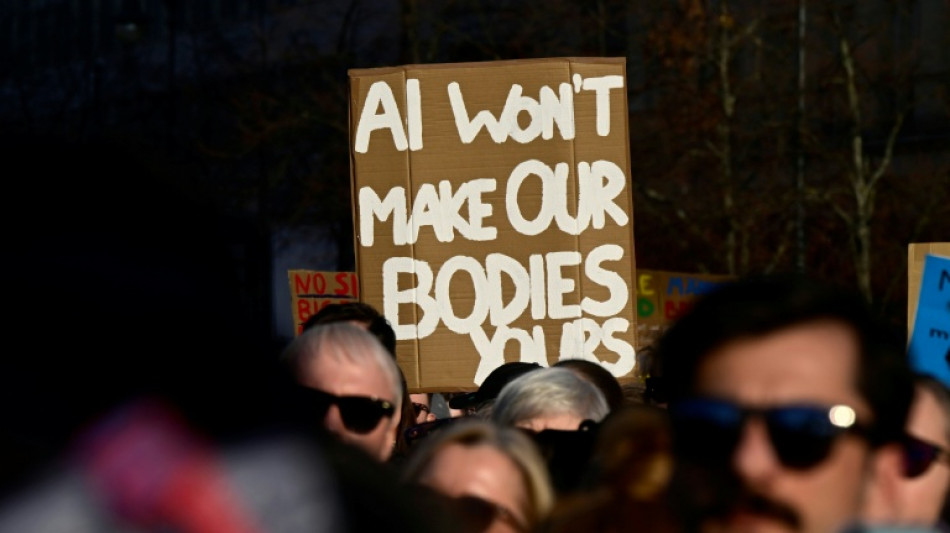
AI making cyber attacks costlier and more effective: Munich Re / Photo: John MACDOUGALL - AFP/File
 Pacific islands to face food shortages over global warming: scientists

 Venice jury head Maggie Gyllenhaal questions lack of women directors

 Stocks drop, bond yields rally on Mideast flare-up

 China expands Egypt investments in first Xi visit in a decade

 Messi departure leaves Argentina facing rebuild after golden era

 Ourbit SuperCEX Launches "Cosmic Wheel Season 3. Oracle Realm" on September 2 with 3M USDT Prize Pool

 Ebola death toll passes 3,000 in DR Congo: official data

 Hong Kong democracy activist Wong pleads guilty to foreign collusion

 World record prize winner Romantic Warrior retires from horse racing

 5,000 US sailors arrive in Thailand after months at sea
 Joshua Wong, Hong Kong's pro-democracy poster child

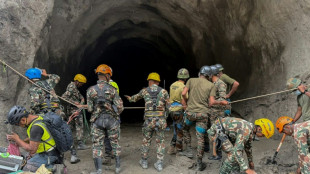 Nepal tunnel rescuers seek trapped workers but hit dead ends

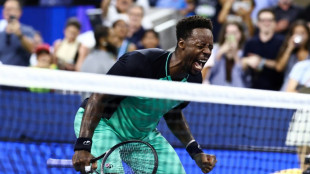
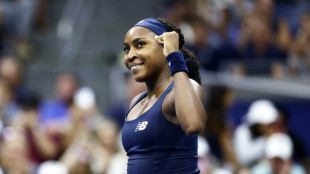
 Zverev wins wild five-setter, Rybakina and Gauff ease through at US Open

 US energy secretary arrives in Venezuela to discuss oil deal

 Meloni government becomes Italy's longest-lasting

 Funerals in Nepal for missing, a week after deadly floods

 US aircraft carrier arrives in Thailand after months at sea

 US aircraft carrier approaches Thai port after months at sea
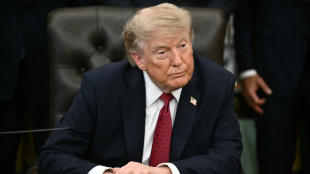
 Nepal's young PM faces gravest test after flood catastrophe
 What rainbow? LGBTQ Indonesians on edge as hostility mounts

 O'Connor eyes Wallabies World Cup swansong after Force return
 Syria UXO causing death, injury every six hours: charity
 Tiger Woods set to change not guilty plea in DUI case: court documents
 Zelensky warns airlines Russian skies not safe due to Ukraine drones
 UK vows anti-settler measures as Israel warns of retaliation

Artificial intelligence is making cyberattacks increasingly sophisticated and costlier for businesses, reinsurer Munich Re said Wednesday, warning of methods ranging from highly personalised phishing emails to computer-generated, convincing fake identities.
"If cybercrime were a country, it would be the third-largest economy in the world", behind only the United States and China, the reinsurer said in a report.
Citing figures from market analysis firm Statista, Munich Re projected cybercrime will generate global losses of some $14 billion (12.07 bn euros) in 2028.
Martin Kreuzer, head of cyber risks at Munich Re, told AFP that "automation now plays a central role", enabling attackers to operate "efficiently and in a more targeted way".
"They rely on highly personalised phishing emails, automatically generated malware, and synthetic identities that appear deceptively real," he said.
The trend of "agentic AI" means the advent of systems that can "act autonomously, make decisions, and even circumvent defensive mechanisms," according to Kreuzer.
The most widespread cyberattacks are still ransomware, in which hackers lock systems and demand money to release them.
Munich Re's study says that the number of publicly reported attacks of this kind "increased by nearly 50 percent in 2025 and... continue unabated in 2026".
Coordinated attacks via networks of hijacked devices, used to overwhelm systems, also more than doubled in 2025 and are becoming more common thanks to services available for hire.
At a more advanced level, criminals are collaborate with states, concealing the origin of attacks and accelerating their global operations.
"Nation-state actors are among the most professional players in the cyber threat landscape," said Kreuzer.
"Here we are seeing both an evolution of tools and methods, and the emergence of hybrid warfare driven by geopolitical motives," he said, adding that "disinformation is increasingly being used as a weapon".
The study notes that while attacks on large businesses attract most public attention, "the majority of cyber incidents and claims affect micro-companies and SMEs".
Compared with risks from natural catastrophes, for which almost half of all losses were insured in 2025, Kreuzer said that "cyber risk coverage is still far too low, with only a fraction insured".
J.Williams--AMWN