
TrustNFT.io Issues Technical White Paper on the Limitations of DMARC Email Authentication, Arguing Blockchain Verification Closes Critical Consumer Trust Gap
 John Ternus takes over as Apple enters era of AI, foldable phones

 Second-ranked Rybakina eases into US Open 2nd round

 Man City sign Fernandez, Ndiaye as Premier League clubs set new spending record

 Alcaraz aims to step it up in round two of US Open title defense

 Honduran judge drops corruption charges against ex-leader Hernandez

 Mudryk joins Spurs on loan from Chelsea after doping ban ends

 What's next after judge strikes down New York's landmark climate fund law

 Cobolli claws out five-set victory at rain-hit US Open

 Ndiaye seizes 'chance of a lifetime' in Man City move
 Global bond sell-off, surging oil prices send markets into the red

 Zuckerberg, Musk make plea at G20 for more AI data centers

 'Discomfort' at G20 finance talks as US hosts Russian minister

 Man City set to sign Fernandez for record fee, Ndiaye on deadline day

 Back-to-school in Cuba a grim day with shortages of everything
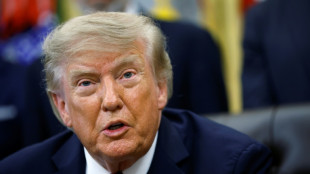
 Canadian minister says Russia's G20 presence sparked 'discomfort'

 IMF reaches agreement with Senegal on new $2.2 bn loan programme

 Germany blames Russia for airport drone incident, hits back with sanctions

 Iran president urges return to truce, hails Russian support

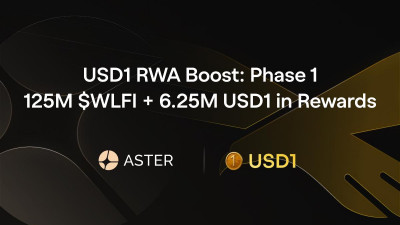 Aster and World Liberty Financial Launch USD1 RWA Boost: Phase 1, Offering 125M $WLFI + 6.25M USD1 in Rewards

 Tronchon sprints to Vuelta stage 10 win, Mas keeps red jersey

 Germany defender Rudiger announces international retirement

 Musk defends AI data centers, slams EU rules at G20

 Activists blame Kenya for Ugandan opposition figure's plight

 Iran president offers US olive branch, hails Russian support

 TrustFinance Community Choice Awards 2026 Opens Global Voting

Research documents three fundamental gaps in DMARC that leave consumers unable to distinguish real corporate emails from sophisticated counterfeits - and presents blockchain anchoring as the missing layer
MIAMI, FL / ACCESS Newswire / April 8, 2026 / TrustNFT.io today released "The Authentication Gap: Why DMARC Alone Is Not Enough - and Why Blockchain Verification Closes the Loop," a technical white paper directed at corporate IT security, CISO, and risk management leadership. The paper examines the specific limitations of the widely deployed DMARC email authentication standard and presents the case for blockchain-anchored domain verification as the consumer-facing trust layer the existing stack cannot provide.
DMARC - Domain-based Message Authentication, Reporting and Conformance - has been widely adopted as the gold standard for corporate email security. However, fewer than 30 percent of Fortune 500 companies have DMARC configured with a 'reject' policy, and even those that do face significant residual vulnerabilities that DMARC is architecturally incapable of addressing.
The Three Critical DMARC Limitations Documented in the White Paper:
Lookalike domain attacks: DMARC protects only the exact registered domain. It provides zero protection against emails sent from firstenergy-payments.ru, firstenergy-billing.com, or any of the hundreds of lookalike domains criminals register to impersonate major brands. In a single 30-day monitoring period, TrustNFT Guardian users reported phishing from four separate lookalike domains targeting one major utility - all of which passed DMARC authentication for their own fraudulent domains.
No consumer-visible trust signal: DMARC operates entirely in the background. Even when a company has perfect DMARC enforcement, consumers see no badge, no indicator, and no visible confirmation that an email is genuine. A consumer has no way to distinguish a DMARC-compliant email from a sophisticated impersonation.
The 70% deployment gap: Despite years of industry promotion, fewer than 50% of Fortune 500 companies have published any DMARC record, and fewer than 30% have the standard configured at its most protective 'reject' setting. Government agencies mandated to implement DMARC by a 2018 DHS directive show approximately 35% compliance.
"DMARC is a necessary investment and we strongly encourage every company to implement it fully. But telling your board that you have DMARC while your customers have no way to verify whether an email is really from you is leaving the most important protection gap unaddressed. Blockchain verification gives consumers the visible signal that makes authentication real and actionable."
- Stuart Fine, CEO, TrustNFT.io / Remergify
The white paper includes a four-layer implementation roadmap covering SPF, DKIM, DMARC, and blockchain verification, as well as a detailed technical comparison of what each layer protects and what vulnerabilities remain unaddressed without the full stack.
"The Authentication Gap" is available for download at reseach.trustnft.io and is intended for corporate security professionals, CISOs, and risk management teams evaluating their email authentication posture. Companies interested in TrustNFT Verify's free 90-day pilot may contact [email protected].
About TrustNFT
TrustNFT is a blockchain-anchored email verification platform developed by Remergify, LLC, headquartered in Miami, Florida. TrustNFT operates two complementary products: TrustNFT Verify, an enterprise email domain verification service for corporations, utilities, financial institutions, and government agencies; and TrustNFT Guardian, a consumer email protection product that helps individuals and families identify phishing emails before clicking on them. TrustNFT Verify uses blockchain technology to create an immutable, unforgeable record of verified corporate sending domains, displayed as a visible trust badge inside consumers' email clients in Gmail, Outlook, Yahoo Mail, and AOL Mail.
Media Contact
Stuart Fine, Chief Executive Officer
TrustNFT / Remergify, LLC · Miami, Florida
Email: [email protected]
Web: research.trustnft.io | trustnft.io
SOURCE: Remergify, Inc.
View the original press release on ACCESS Newswire
C.Garcia--AMWN