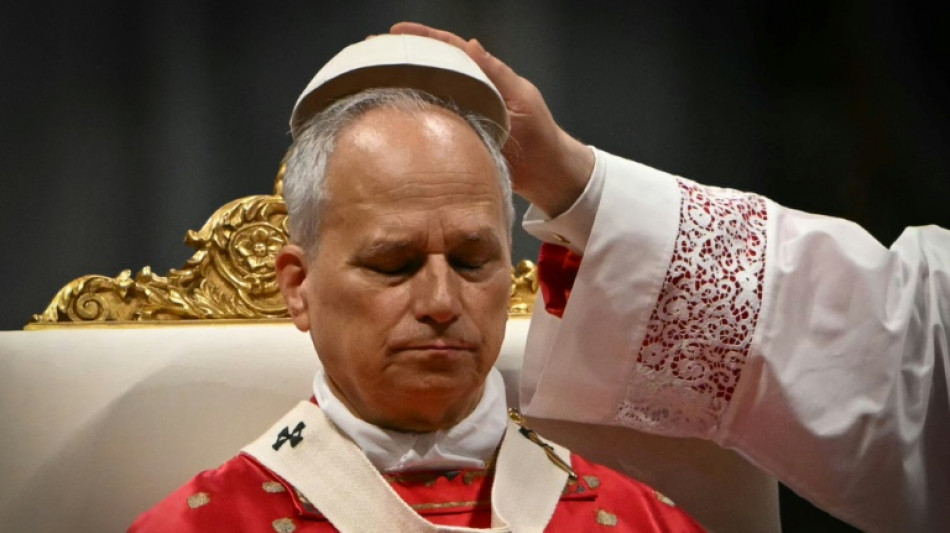
Pope urges 'disarming' of AI in major manifesto / Photo: Andreas SOLARO - AFP
 Late India charge seals thrilling second T20 win over New Zealand

 Seen and heard at France protests

 White says Fiji can have 'massive' World Cup after beating Japan
 England thrash France 82-0 to keep Rugby League World Cup hopes alive
 Security high as France braces for new protests
 White makes winning start as Fiji edge Eddie Jones's Japan

 Lula, Bolsonaro strike calmer tone in final Brazil election debate

 'How is it possible?': Students protest Indonesian haze
 Israel launches major West Bank operation after soldiers killed

 Typhoon Champi knocks out power to thousands in Taiwan

 As Israeli election nears, campaign turns ugly

 Oscar hopeful 'La Bola Negra' offers lessons about communicating, directors say

 Trapped: Soaring fuel costs hurt Maine lobster industry before midterms

 Marc Marquez beats brother Alex to Australian MotoGP pole
 5 Ways to Prepare Financially for Parenthood

 Rubio urges Cubans to work with CIA, but warns: be discreet
 Leclerc tops times for Ferrari in practice for US Grand Prix

 Lula, Bolsonaro lock horns in final debate before Brazil vote

 Poulter and Hatton leave LIV Golf

 Blakely vaults out of the shadow of Biles for all-around world title

 Oil tops $116 with stocks mixed on earnings, AI

 Trump orders lawsuit to block Alaska Senate result if Republicans lose
 Ebola patient in Nigeria is Swiss, had not visited DR Congo: Bern
 Messi receives top Spanish award from heir to throne
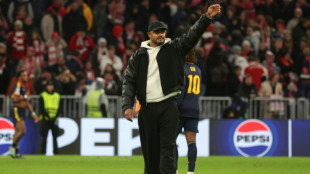
 Macron condemns 'racist terrorist attack' after deadly shooting near Paris
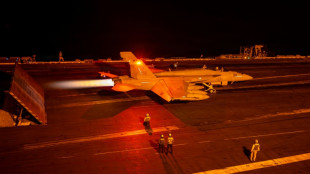
Pope Leo XIV called Monday for the "disarming" of artificial intelligence in his long-awaited manifesto on the rapidly developing technology, and warned of "new forms of slavery" behind its rise.
Leo, the first US pope, warned against "a race for ever more powerful algorithms and larger datasets, driven by the desire to secure geopolitical or commercial dominance".
He presented his first encyclical, "Magnifica Humanitas" (Magnificent Humanity) in person at the Vatican, alongside AI experts including Christopher Olah, co-founder of US giant Anthropic.
Anthropic is embroiled in a legal battle with the US military after opposing the use of its technology for lethal autonomous warfare and mass surveillance.
At the presentation, Olah said AI companies operate "inside a set of incentives and constraints that can sometimes conflict with doing the right thing".
He welcomed input from outside actors like the Catholic Church, to "push events in a better direction" saying that "the questions raised by AI are bigger than the AI research community".
In the encyclical, Leo also sounded the alarm over AI-directed weaponry, saying it was "not permissible to entrust lethal" decisions to tech.
Leo has repeatedly clashed with the White House over the Iran war and its use of religion to justify conflict.
The "just war" theory -- espoused recently by the Trump administration -- was "outdated", Leo wrote, adding that "no algorithm can make war morally acceptable".
- 'Armed competition' -
AI could be worth up to $4.8 trillion by 2033, a 25-fold increase in a decade, while concentrating its profits in the hands of a limited few, according to the United Nations.
"Disarming AI means freeing it from the mentality of 'armed' competition," the pope wrote.
"To disarm does not mean rejecting technology, but preventing it from dominating humanity," Leo wrote.
AI should be "human-friendly", accessible to all and opened to discussion and debate, he added.
The head of the world's 1.4 billion Catholics has made the hot-button issue a cornerstone of his papacy by dedicating to it his first encyclical -- a document which lays the basis for Church teaching and longer-term debate.
The manifesto references a range of cultural giants, from Greek philosopher Plato to Beethoven and his Ninth Symphony, even citing a character from JRR Tolkien's "The Lord of the Rings".
- 'Not magical' -
"Magnifica Humanitas" was signed on May 15, the 135th anniversary of an 1891 encyclical by Leo XIII which laid the foundations of the Church's social doctrine during the Industrial Revolution.
Leo warned of new forms of slavery fuelling the technological revolution, noting "nothing in the world of AI is immaterial or magical".
"Every seemingly immediate and flawless response... relies on the silent work of millions of people", from content moderators forced to watch disturbing material, to children who extract the rare earth elements on which AI depends.
They are "scarred, injured and worn down so that computational flow may continue uninterruptedly", he wrote.
Greater efficiency or innovation did not excuse "a chain of exploitation that remains deliberately hidden", he wrote, while more must be done to reduce AI's environmental impact and "protect our common home".
He also issued an unprecedented apology for the Vatican's role in the slave trade and in helping to justify slavery, saying it was "a wound in Christian memory".
"For this, in the name of the Church, I sincerely ask for pardon," Leo wrote.
The release of the text follows several years of study by the Church on AI-related technologies.
As early as 2020, the Holy See launched the "Rome Appeal for an AI Ethic", which called for new technologies to respect human dignity.
Experts say "Magnifica Humanitas" could prove as influential as Pope Francis's "Laudato Si", a 2015 climate manifesto that triggered political and civic reactions worldwide.
Y.Kobayashi--AMWN