
CoChat Introduces New Academic Research Tools to Verify AI Citations
 'No' camp seen winning Iceland's EU referendum

 Nepal flood survivors return to ruins to salvage memories

 Killing of Palestinian children and teens by Israel surges in West Bank

 Educators keep 9/11 memory alive for next generation, 25 years on

 Venezuelans view US oil deal with doubt, hope

 Gobena and Jepchirchir power to Sydney Marathon victories

 Iceland in suspense after close EU vote

 Wallabies hold on for victory in Argentina

 Juve notch second straight win, Fiorentina's centenary party falls flat

 Rybakina eases injury fears ahead of US Open

 Djokovic kicks off latest Grand Slam quest under US Open lights

 'Sorry' De Zerbi won't panic after Spurs shambles

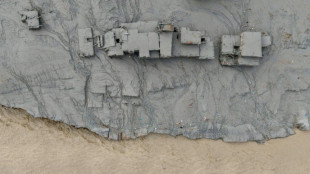 UN, Nepal warn of climate threat after deadly floods

 USTA boss says structure of new player council not yet set

 Tiny Elversberg stun Leverkusen on Bundesliga debut, Dortmund beat Hamburg

 James Cleverly leaves shadow cabinet to seek London mayoralty

 Baladi Map app turns Lebanon’s local problems into a public record

 Thirty-seven Mumbai pilgrims return after Nepal flood disruption

 Ankle ligament tear ends Neeraj Chopra’s 2026 season

 Chinchpoklicha Chintamani begins 2026 arrival procession in Parel

 Cyberabad civic body demolishes 19 unauthorised structures

 About 50 Karnataka travellers return from Nepal as 24 remain missing

 French campaign sharpens as far right accuses left over civil disobedience calls

 Court orders JIPMER assessment of Durai Dayanidhi before money-laundering trial

 Chennai councillors unite across parties to demand ward development funds

Researchers and students can search more than 200 million academic papers, verify claims against source material, and automate literature monitoring within a single workspace.
PALO ALTO, CA / ACCESS Newswire / July 9, 2026 / CoChat, an AI research workspace, has debuted a new suite of tools today designed to reduce citation hallucinations following strong early adoption among professors, academic researchers, graduate students, and PhD candidates. As AI integrates into the research process, many academics are discovering that speed can undermine the reliability of sources. Hallucinations like false citations, fabricated references, and inaccurate attribution are common on leading AI platforms. CoChat is designed to help researchers move from discovery to analysis and writing within a single collaborative workspace while maintaining confidence in the sources behind AI-generated outputs.
"Academic researchers are under growing pressure to process more information than ever before, but accuracy remains non-negotiable," said Marcel Folaron, co-founder of CoChat. "They're naturally gravitating toward CoChat because they need AI tools that generate answers and help maintain trust in the research process itself."
Recent enhancements include a Literature Review Table that automatically organizes and compares findings across multiple papers, helping researchers identify patterns, gaps, and areas of consensus more efficiently. The platform's citation verification checks every reference (quotes, paraphrases, and DOIs) against CrossRef and Semantic Scholar, flagging disputed or fabricated sources before they reach a final draft. A persistent Citation Registry maintains a running record of verified sources throughout each session, ensuring that citations discovered early in a conversation remain accurate and traceable through the final output, even as research threads grow longer and more complex.
CoChat offers users direct access to over 200 million academic papers and scholarly resources by integrating with PubMed, arXiv, Semantic Scholar, Crossref, OpenAlex, CORE, Europe PMC, and other databases. Researchers can search and analyze large collections of literature and ask questions within a single workspace, eliminating the need to review papers individually.
Additional features include collaborative workspaces, multi-model comparison, literature review tools and automated research digests that help scholars stay current with new literature. Researchers can set up recurring literature digests to monitor new publications, generate relevance summaries, and receive citation-ready updates in their workspace. The platform also supports systematic review workflows by assisting with abstract screening and documentation organization.
The platform has shown early traction and measurable results, with students and educators on board from over 90 universities, including University of Michigan, University of Cambridge, Columbia University, New York University, Florida State University and more. And, using the DRACO Benchmark, CoChat's citation quality (~64-68pts) substantially outperforms the same base model with tools (~52pts) under an identical strict judge.
The company's long-term vision includes supporting both individual researchers and higher education institutions seeking more reliable ways to integrate AI into their workflows and learning environments.
"As AI becomes a standard part of the research process, trust will become just as important as speed," added Folaron. "Researchers shouldn't have to choose between working efficiently and maintaining academic rigor. We believe the next generation of research tools must deliver both."
To learn more, visit https://cochat.ai/students-researchers/.
ABOUT COCHAT:
CoChat is an AI research workspace that enables academic researchers, educators, and students to search more than 200 million academic papers, verify citations automatically, and collaborate in shared spaces using leading models including Claude, GPT, and Gemini. CoChat helps academic and professional teams adopt multi-model AI in a way that improves rigor, reduces silos, and supports stronger governance. Learn more at cochat.ai.
MEDIA CONTACT: Nina Pfister, MAG PR at [email protected]
SOURCE: CoChat
View the original press release on ACCESS Newswire
H.E.Young--AMWN