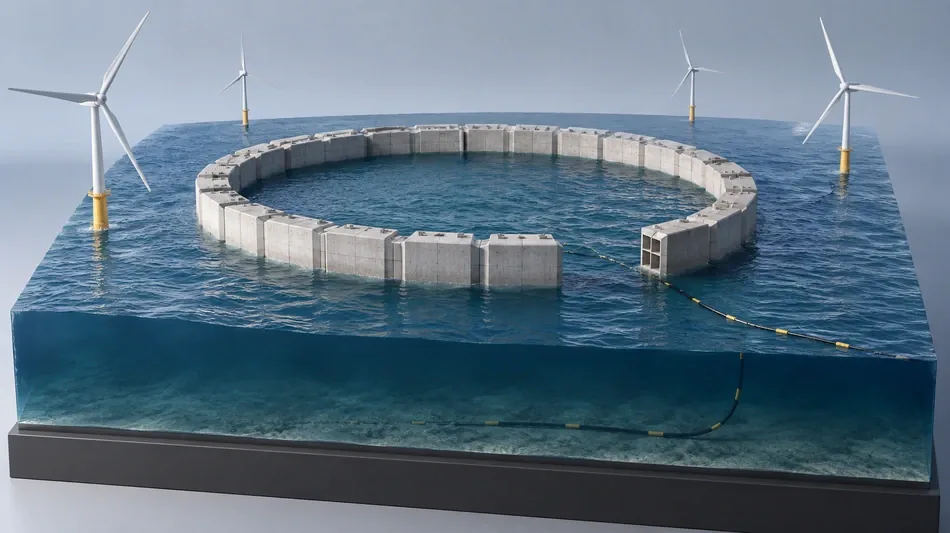
Belgium completes outer structure of offshore energy island
 Florida State dismisses athletics director Alford and appoints interim leader

 Saudi Arabia warns it will react 'firmly' to Houthi attacks

 Designer Bob Mackie dies at 87 after career spanning television, stage and fashion
 'Widow's Bay' and 'The Pitt' win big at Emmy Awards

 China retail sales growth weakens further in August

 Eala to Yu Zidi: Six emerging stars set to light up Asian Games

 Brady and Bündchen’s former Brentwood estate combined luxury and resource-saving systems
 In Kashmir, lake weeds mix with traditional art

 Chinese architect Ma Yansong melds nature with 'futuristic feel'
 Trump says he will decide whether US pursues Iran deal
 'Widow's Bay' and 'The Pitt' take key Emmy awards

 Television's A-listers glitter on Emmys red carpet

 US Supreme Court blocks Trump mail-in ballot restrictions

 Dodgers clinch playoff berth in bid for third straight World Series
 Doomers and boosters: who's who in the AI wars

 GAC presents autonomous trucks and MONTX concepts at Hannover show
 EU extends Russia sanction deadline

 Thai wildlife investigators track traffickers through social media

 PRAAMS Launches AI Co-Investor 5.0, Expanding Its Institutional Research, Risk Management, and Portfolio Management Platform

 Trump rejects AI slowdown concerns as UN urges coordinated controls

 US judge postpones new visa rules for foreign students, journalists

 Higher wages draw migrant workers to Kashmir despite attacks

 Oil supply concerns and AI warnings weigh on global markets

 'I am the hoax buster': Trump rejects AI danger warnings
 Macklemore dropped from Ed Sheeran tour after 'free Palestine' speech

Workers have installed the final concrete caisson forming the perimeter of Belgium’s Princess Elisabeth Island, an offshore electricity hub being built 45 kilometres into the North Sea.
Workers have installed the final concrete caisson forming the perimeter of Belgium’s Princess Elisabeth Island, an offshore electricity hub being built 45 kilometres into the North Sea.
The outer shell consists of 23 hollow concrete structures weighing 22,000 tonnes each. They enclose an area about the size of eight football fields. Crews are filling the interior with sand to create reclaimed land for future electrical installations.
Elia Transmission Belgium is developing the island to collect electricity from the country’s second offshore wind zone, which is expected to provide 3.5 gigawatts of generation. The hub is designed to combine connections before power travels ashore, rather than requiring numerous separate cables from individual wind farms.
The project also creates an opportunity to connect Belgium’s electricity system with the United Kingdom. Such an interconnection would permit power exchanges as generation and demand vary between the countries.
The foundation work was undertaken by TM EDISON with DEME on Elia’s behalf. The first caisson was installed in 2024, beginning the offshore phase that culminated in completion of the perimeter. The source article’s headline referred to installation since 2025, while its construction account dated the first installation to 2024.
Each caisson is an engineered hollow structure positioned to form part of the contained boundary. Once the shell is complete, sand deposited inside provides the physical platform on which the electricity hub can be built. The completed walls therefore mark a foundation milestone rather than completion of the energy facilities.
Building so far offshore requires transport and precise placement of heavy components amid North Sea weather and marine conditions. The project team said completing foundations within the scheduled period allowed Elia to qualify for a €99 million European subsidy allocated to that phase.
The grant supports a project with wider European relevance through energy independence and possible cross-border power exchanges. Foundation timing was also important for the later construction schedule.
Cable connections to the mainland are planned for 2027 and 2028. Installation of electrical infrastructure on the island is expected to begin in 2029. Final completion is scheduled for 2031, a date the source report said had recently been confirmed by law.
If that programme is maintained, the island would bring its first electricity ashore by 2031. Several technically demanding construction stages remain between the completed concrete shell and operation as a power hub.
Costs have risen towards €7 billion, prompting changes to the planned electrical architecture. The source article described both the budget challenge and design measures intended to support wildlife around the structure.
Artificial ledges along the concrete walls are designed to provide habitat for threatened seabirds. Underwater oyster beds are intended to protect the foundations from erosion of the surrounding seabed. These ecological provisions form part of the island’s construction design alongside its energy function.
Elia Transmission Belgium chief executive Frédéric Dunon described completion of the foundations as a significant step for the country’s offshore energy infrastructure. The shell will ultimately support systems that gather power at sea and transfer it into the mainland grid.
The planned hub forms part of a broader approach to European offshore wind networks. Countries are exploring shared infrastructure as generation moves farther from shore, with facilities able to collect output from several projects and potentially connect different national electricity systems.
Denmark has proposed a separate artificial energy island in the North Sea. Its planned hub could support several gigawatts of offshore wind and connections across national borders. The design follows the principle of gathering electricity centrally instead of connecting every wind farm independently to shore.
Denmark’s Bornholm Energy Island uses existing land in the Baltic Sea rather than a newly reclaimed island. It is intended to concentrate offshore wind connections and transmit electricity towards Denmark and Germany.
Another proposal, the North Sea Wind Power Hub, envisages artificial islands or offshore hubs near the shallow Dogger Bank area. Its longer-term concept is to gather electricity from surrounding wind farms and link multiple European grids.
These projects are at different stages of development, and some remain proposals. They provide context for Belgium’s construction milestone without representing completed power connections.
For Princess Elisabeth Island, the immediate next step is turning the enclosed area into a stable reclaimed platform. Electrical equipment and mainland cables will follow under the announced timetable, moving the site towards its intended role linking Belgium’s next offshore wind developments with the national grid and possible international exchanges.
The offshore wind zone and the island serve different functions within the planned system. Turbines generate electricity, while the hub brings connections together and manages transmission towards shore. The electrical facilities are therefore a separate construction phase after reclamation, and the current milestone concerns the structure that will support them.
The possible United Kingdom connection would add an international route to that network. The source account describes differing periods of demand and generation between countries as a reason for exchanging power, particularly as more variable wind generation enters the system.
Bornholm differs physically from the Belgian project because its hub would stand on an existing island. The Danish North Sea proposal and the Dogger Bank concept instead consider new offshore structures. None of those comparisons changes the remaining steps for Princess Elisabeth Island: completing reclaimed land, installing cables and fitting the electrical equipment before the planned 2031 start.
The announced schedule places mainland cable works ahead of island electrical installation.
P.Costa--AMWN