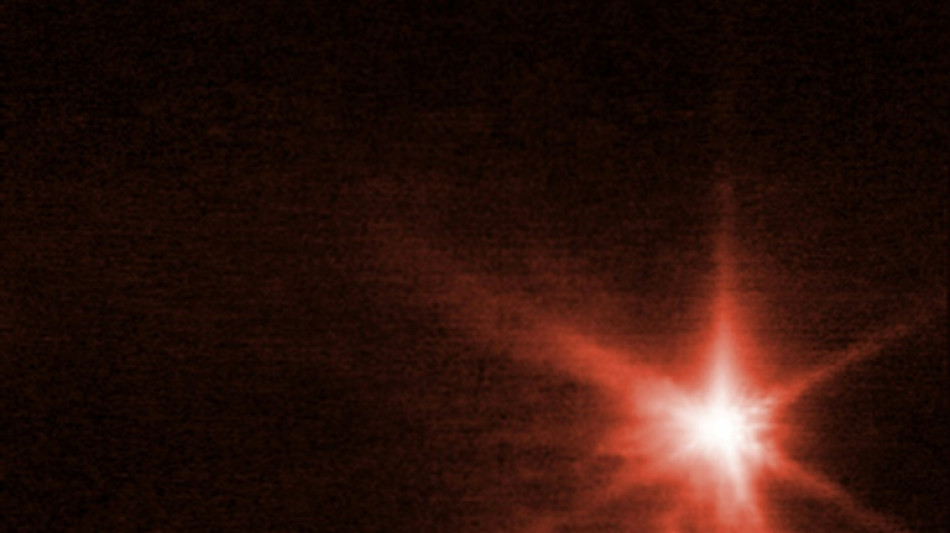
First images of asteroid strike from Webb, Hubble telescopes / Photo: Handout - ESA/WEBB/AFP
 NASA's Roman telescope set to launch on cosmic mapping mission

 Data center backlash scrambles US midterm politics

 Emotional Federer inducted into tennis Hall of Fame
 Hovland takes solo lead as McIlroy surges at Tour Championship
 Djokovic 'prepared' for US Open bid for history
 Atletico down Sevilla to go top of La Liga

 US deports right-wing provocateur Milo Yiannopoulos

 Niger junta says it is back in control after soldiers' mutiny
 Erasmus calls Rennie barbs over Springbok scrumming 'nonsense'

 Lawrence's fifty leaves Pakistan facing record chase to level England series
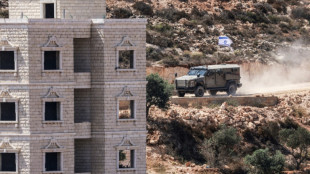 Netanyahu condemns settler attack in flashpoint West Bank village

 Munoz saves Iraola in Liverpool draw, big-spending Spurs lose again

 Newcastle condemn dismal Spurs to second successive defeat

 Police appeal for footage after life-threatening Stratford assault
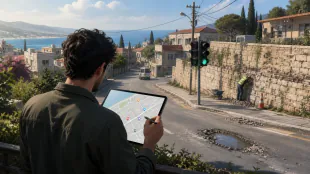
 Family searches for Boston engineer missing after Nepal-Tibet floods

 Dolly Parton’s Imagination Library leaves global children’s reading legacy

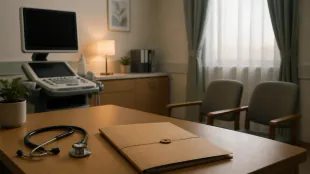 BMC rejects negligence claims in three Rajawadi Hospital maternity cases

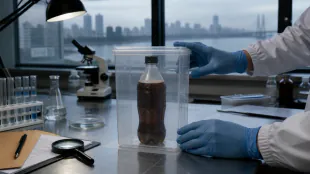 Chembur man held over alleged poisoning of woman’s soft drink

 Andhra Pradesh Speaker seeks stronger sports quota and school facilities
 Kolkata police register new FIR against Mamata Banerjee over rally timing

 India and China have not named two new border meeting sites
 Tamil Nadu and NUS agree to expand postgraduate and research links

 Tamil Nadu goalball team’s national silver highlights need for wider support

 Rural Tamil Nadu students present 64 technology projects at IIT-M research park
 Matt Leinart assesses Arch Manning and the leading names in college football

The James Webb and Hubble telescopes on Thursday revealed their initial images of a spacecraft deliberately crashing into an asteroid, marking the first time the two most powerful space telescopes have observed the same celestial object.
The world's telescopes turned their gaze towards the space rock Dimorphos earlier this week for a historic test of Earth's ability to defend itself against a potential future life-threatening asteroid.
Astronomers rejoiced as NASA's Double Asteroid Redirection Test (DART) impactor slammed into its pyramid-sized target 11 million kilometres (6.8 million miles) from Earth on Monday night.
Images taken by Earth-bound telescopes showed a vast cloud of dust expanding out of Dimorphos -- and its big brother Didymos which it orbits -- after the spacecraft hit.
While those images showed matter spraying out over thousands of kilometres, the James Webb and Hubble images "zoom in much closer", said Alan Fitzsimmons, an astronomer at Queen's University Belfast involved in observations with the ATLAS project.
James Webb and Hubble can see "within just a few kilometres of the asteroids and you can really clearly see how the material is flying out from that explosive impact by DART", Fitzsimmons told AFP.
"It really is quite spectacular," he said.
Observations from the space telescopes will help reveal how much -- and how quickly -- matter sprayed from the asteroid, as well as the nature of its surface.
- 'A beautiful demonstration' -
An image taken by James Webb's Near-Infrared Camera (NIRCam) four hours after impact shows "plumes of material appearing as wisps streaming away from the centre of where the impact took place", according to a joint statement from the European Space Agency, James Webb and Hubble.
James Webb's images were shown in red because the telescope operates primarily in the infrared spectrum, which allows it to peer further into the universe than ever before.
The images from Hubble's Wide Field Camera 3 were blue because it shows the impact on visible light.
Hubble images from 22 minutes, five hours and eight hours after impact show the expanding spray of matter from where DART hit on the asteroid's left.
The true measure of DART's success will be exactly how much it diverted the asteroid's trajectory, so the world can start preparing to defend itself against bigger asteroids that could head our way in the future.
However, it will take Earth-bound telescopes and radar days or even weeks to work out exactly where Dimorphos is, compared to where it would have been.
Measurements using that data will probably start next week, Fitzsimmons said.
"The problem we have at the moment is that there's still a lot of dust and debris around the asteroids," he said.
"How quickly astronomers can make that measurement will depend on exactly how efficient DART was," he added. The more the asteroid has been knocked off course, the easier it will be to measure.
Since launching in December and releasing its first images in July, James Webb has taken the title of most powerful space telescope from Hubble.
With astronomers lined up for precious time to peer into the universe, the DART test is the first time both telescopes have observed the same event.
Fitzsimmons said the images were "a beautiful demonstration of the extra science you can get by using more than one telescope simultaneously".
T.Ward--AMWN