-
 NASA's Roman telescope set to launch on cosmic mapping mission
-
Educators keep 9/11 memory alive for next generation, 25 years on
-
 Data center backlash scrambles US midterm politics
-
Venezuelans view US oil deal with doubt, hope
-
 Emotional Federer inducted into tennis Hall of Fame
-
Gobena and Jepchirchir power to Sydney Marathon victories
-
 Hovland takes solo lead as McIlroy surges at Tour Championship
-
Iceland in suspense after close EU vote
-
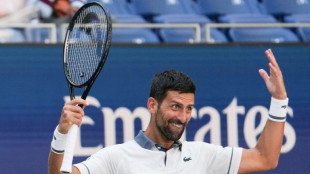
 Djokovic 'prepared' for US Open bid for history
-
Wallabies hold on for victory in Argentina
-
 Atletico down Sevilla to go top of La Liga
-
Juve notch second straight win, Fiorentina's centenary party falls flat
-
 US deports right-wing provocateur Milo Yiannopoulos
-
Rybakina eases injury fears ahead of US Open
-
 Niger junta says it is back in control after soldiers' mutiny
-
Djokovic kicks off latest Grand Slam quest under US Open lights
-
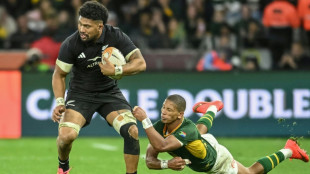 Erasmus calls Rennie barbs over Springbok scrumming 'nonsense'
-
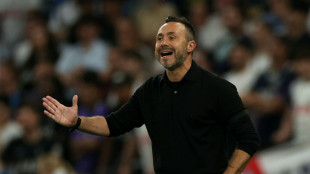
'Sorry' De Zerbi won't panic after Spurs shambles
-
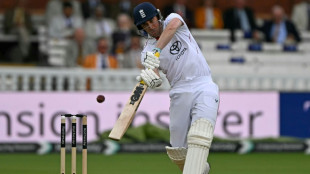 Lawrence's fifty leaves Pakistan facing record chase to level England series
-
UN, Nepal warn of climate threat after deadly floods
-
 Netanyahu condemns settler attack in flashpoint West Bank village
-
USTA boss says structure of new player council not yet set
-
 Munoz saves Iraola in Liverpool draw, big-spending Spurs lose again
-
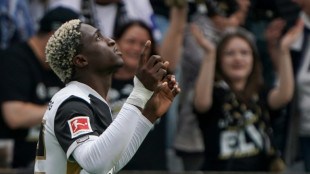
Tiny Elversberg stun Leverkusen on Bundesliga debut, Dortmund beat Hamburg
-
 Newcastle condemn dismal Spurs to second successive defeat
-
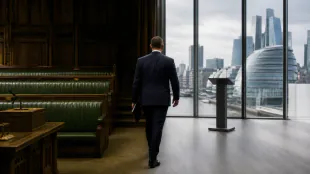
James Cleverly leaves shadow cabinet to seek London mayoralty
-
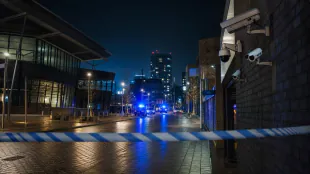 Police appeal for footage after life-threatening Stratford assault
-
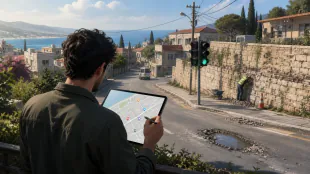
Baladi Map app turns Lebanon’s local problems into a public record
-
 Family searches for Boston engineer missing after Nepal-Tibet floods
-
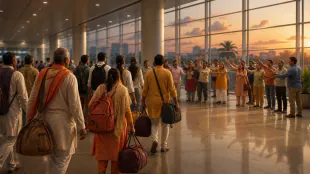
Thirty-seven Mumbai pilgrims return after Nepal flood disruption
-
 Dolly Parton’s Imagination Library leaves global children’s reading legacy
-
Ankle ligament tear ends Neeraj Chopra’s 2026 season

-
 BMC rejects negligence claims in three Rajawadi Hospital maternity cases
-
Chinchpoklicha Chintamani begins 2026 arrival procession in Parel

-
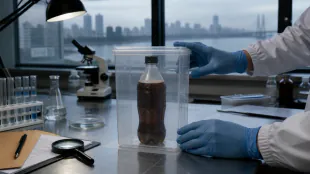 Chembur man held over alleged poisoning of woman’s soft drink
-
Cyberabad civic body demolishes 19 unauthorised structures

-
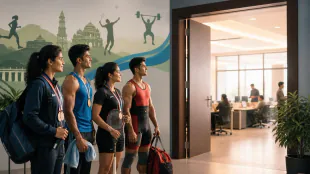 Andhra Pradesh Speaker seeks stronger sports quota and school facilities
-
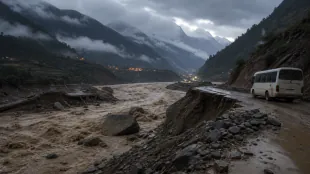
About 50 Karnataka travellers return from Nepal as 24 remain missing
-
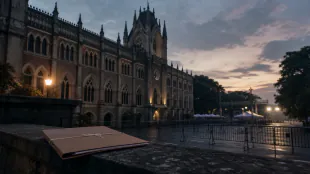 Kolkata police register new FIR against Mamata Banerjee over rally timing
-
French campaign sharpens as far right accuses left over civil disobedience calls

-
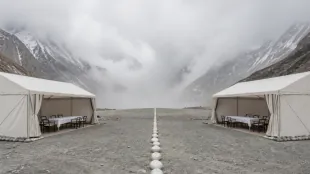 India and China have not named two new border meeting sites
-
Court orders JIPMER assessment of Durai Dayanidhi before money-laundering trial

-
 Tamil Nadu and NUS agree to expand postgraduate and research links
-
Chennai councillors unite across parties to demand ward development funds
-
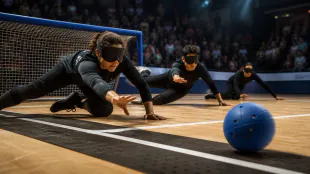 Tamil Nadu goalball team’s national silver highlights need for wider support
-
Tambaram civic groups seek action on eight long-pending issues
-
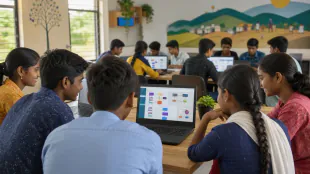 Rural Tamil Nadu students present 64 technology projects at IIT-M research park
-
Three Texas Tech softball players hurt in jet ski collision

-
 Matt Leinart assesses Arch Manning and the leading names in college football
-
Felony assaults on older New Yorkers rise sharply, police data show

The five scientists who won two Nobel prizes
American Barry Sharpless on Wednesday became only the fifth person ever to win a second Nobel Prize, two decades after being awarded his first.
AFP looks at the four other people who received the illustrious award twice for their services to mankind:
- Marie Curie (1903, 1911) -
The mother of modern physics was the first woman ever to win not one, but two, Nobel prizes for her seminal discoveries in physics and chemistry.
Born Maria Sklodowska in Poland, Curie moved to Paris as a student and is famed for having isolated the elements of polonium and radium as well as for promoting radium to alleviate suffering.
In 1903, she was awarded the Nobel Prize in Physics, along with her husband Pierre Curie and French physicist Antoine Henri Becquerel for their research into spontaneous radiation.
A second Nobel followed in 1911, this time for chemistry, when Curie was honoured alone for her work on radioactivity.
- Linus Pauling (1954, 1962) -
Linus Pauling, the US chemist who posited that huge doses of vitamin C can ward off the common cold, is the only person to have been awarded two unshared Nobel Prizes – the 1954 Nobel Prize in Chemistry and the 1962 Nobel Peace Prize.
Pauling won his first Nobel in 1954 for his work in molecular chemistry, particularly in the field of proteins and anti-bodies.
His second award came eight years later in 1962 was in recognition for his campaigning against nuclear testing.
- John Bardeen (1956, 1972) -
US engineer John Bardeen shared the Nobel Prize in Physics twice.
In 1956, he and two colleagues at Bell Labs, William Shockley and Walter Brattain, won for inventing the transistor, which revolutionised the field of electronics by leading to smaller and cheaper radios, calculators and computers, amongst other objects.
In 1972, he picked up his second Nobel for developing the BSC-theory of superconductivity, with fellow American physicists Leon Cooper and John Robert Schrieffer.
- Frederick Sanger (1958, 1980) -
British biochemist Frederick Sanger, dubbed the father of genomics, was the only person to win the chemistry Nobel twice.
Sanger was the sole winner of the prize in 1958 for his work on the structure of proteins, notably insulin, and then shared it with two others, Paul Berg and Walter Gilbert of the United States, in 1980 for pioneering developments in DNA sequencing that are still being used today.
His work allowed long stretches of DNA to be rapidly and accurately sequenced and was central to the Human Genome Project's mammoth achievement in mapping more than three billion units of human DNA.
- ICRC and UNHCR -
Two organisations have won multiple Nobel Peace Prizes.
The International Committee of the Red Cross won in 1917, 1944 and 1963 and the Office of the UN High Commissioner for Refugees won in 1954 and 1981.
A.Malone--AMWN