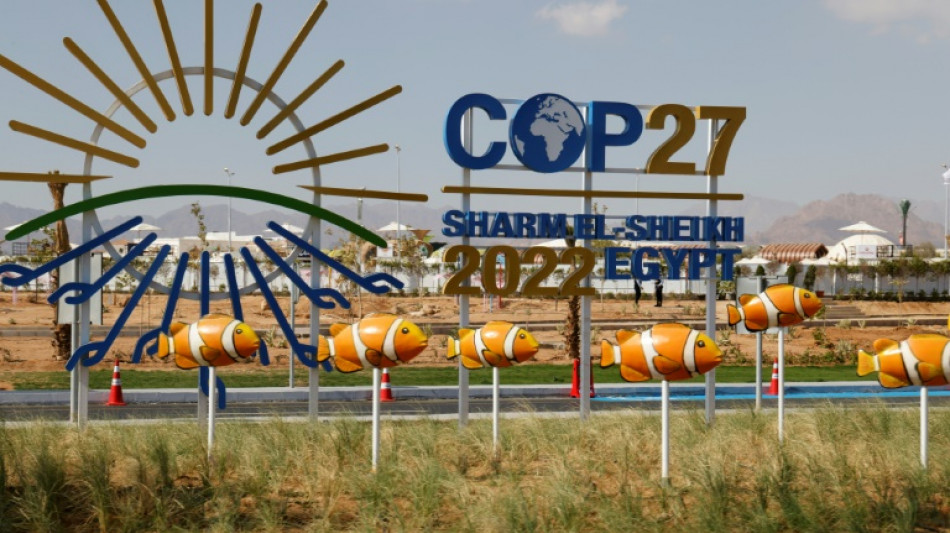
UN climate talks enter home stretch split over money / Photo: Ludovic MARIN - AFP/File
 'No' camp seen winning Iceland's EU referendum

 Nepal flood survivors return to ruins to salvage memories
 Killing of Palestinian children and teens by Israel surges in West Bank

 Educators keep 9/11 memory alive for next generation, 25 years on
 Venezuelans view US oil deal with doubt, hope

 Gobena and Jepchirchir power to Sydney Marathon victories

 Iceland in suspense after close EU vote

 Wallabies hold on for victory in Argentina

 Juve notch second straight win, Fiorentina's centenary party falls flat

 Rybakina eases injury fears ahead of US Open
 Djokovic kicks off latest Grand Slam quest under US Open lights

 'Sorry' De Zerbi won't panic after Spurs shambles
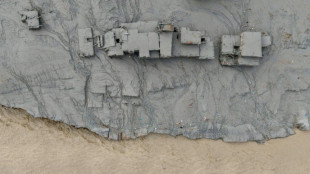 UN, Nepal warn of climate threat after deadly floods

 USTA boss says structure of new player council not yet set

 Tiny Elversberg stun Leverkusen on Bundesliga debut, Dortmund beat Hamburg

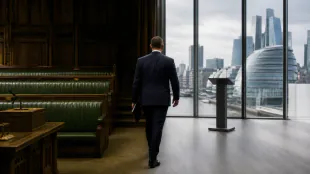 James Cleverly leaves shadow cabinet to seek London mayoralty

 Baladi Map app turns Lebanon’s local problems into a public record

 Thirty-seven Mumbai pilgrims return after Nepal flood disruption

 Ankle ligament tear ends Neeraj Chopra’s 2026 season

 Chinchpoklicha Chintamani begins 2026 arrival procession in Parel

 Cyberabad civic body demolishes 19 unauthorised structures

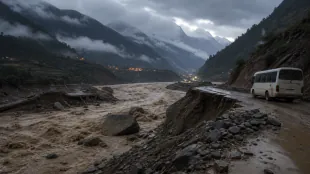 About 50 Karnataka travellers return from Nepal as 24 remain missing

 French campaign sharpens as far right accuses left over civil disobedience calls
 Court orders JIPMER assessment of Durai Dayanidhi before money-laundering trial

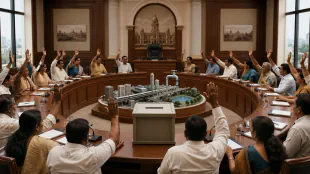 Chennai councillors unite across parties to demand ward development funds

COP27 entered its final week Monday with countries that grew rich burning fossil fuels and developing nations reeling from climate impacts at loggerheads over how to speed and fund reductions in carbon pollution.
Somewhere in the middle, China -- accounting for 30 percent of global greenhouse gas emissions, by far the largest share -- is feeling pressure from both sides, not only to enhance its carbon cutting goals but to step up as a donor nation, negotiators and analysts say.
At last year's UN climate summit in Glasgow, nearly 200 countries vowed to "keep alive" the Paris Agreement's aspirational goal of capping global warming at 1.5 degrees Celsius above pre-industrial levels.
Nearly 1.2C of warming so far has seen a cascade of increasingly severe climate disasters, such as the flooding that left a third of Pakistan under water this summer, claiming at least 1,700 lives and inflicting $30 to $40 billion in damage.
The Glasgow Pact urged nations to ramp up their emissions reduction commitments ahead of this year's critical summit in the Red Sea resort of Sharm el-Sheikh.
But with the exception of Australia and Mexico, only a handful of smaller economies heeded the call, leaving the world on track to hot up by about 2.5C -- enough, scientists say, to trigger dangerous tipping points in Earth's climate system.
At the COP27's midpoint, little has changed.
"Parties are basically staring each other down, thinking they have done their part and waiting for the other side to move," said the head of WWF France, Pierre Canet.
- 'Make our lives easier' -
As ministers arrive to cut through political knots above the pay grade of front-line negotiators, focus will turn to a crucial "decisions" document that will reveal the consensus reached -- or not.
"All the big political crunch issues are unresolved," said Alden Meyer, a senior analyst at climate think tank E3G.
To accelerate decarbonisation, many developing nations -- including small island states whose very existence is threatened by rising seas -- favour a deepened commitment to the 1.5C target, with specific mention of the fossil fuels that drive emissions.
US special envoy for climate John Kerry on Friday called out countries "whose 2030 goals are not yet aligned with the Paris temperature goal," a thinly veiled allusion to China.
A reality-check report released at COP27 last week showed CO2 emissions -- which must decline nearly 50 percent by 2030 to keep the 1.5C target in play -- from coal, gas and oil are on track to hit record levels in 2022.
But China and India have objected to such efforts, with Beijing pointing out that the binding target agreed in Paris was "well below" 2C, not 1.5C.
Negotiators in Sharm el-Sheikh will look to a bilateral meeting Monday in Bali between China's Xi Jinping and US President Joe Biden, along with the communique from a G20 meeting both will subsequently attend, for signals that could break the deadlock in Egypt.
"Confirming the 1.5C goal in Bali would make our lives easier," a senior negotiator at the climate talks said.
- 'Polluters must pay' -
When it comes to money, the spotlight in Egypt is on so-called loss and damage, UN-speak for unavoidable losses -- of life, property and cultural heritage -- due to climate impacts that have already happened.
Rich nations fearful of creating an open-ended liability regime agreed this year for the first time to include this thorny topic on the formal agenda.
Developing nations are calling for the creation of a separate facility, but the US and the European Union -- while not precluding such an outcome -- have said they favour using existing financial channels.
"This is the highest profile, most political issue at the COP" said Meyer.
Another track of the talks, meanwhile, has opened on how much money the Global South will get -- after current pledges of $100 billion a year expire in 2024 -- to help green their economies and prepare for future warming.
As it becomes clear that financial needs will be measured in trillions of dollars rather than billions, other options -- some of them in parallel to the UN process -- have emerged.
These range from expanding access to IMF and World Bank funds, to broadening the base of donor nations to include China, the United Arab Emirates, Saudi Arabia and other nations.
"China and India are major polluters, and the polluter must pay," Gaston Browne, Prime Minister of Antigua and Barbuda, said last week during the COP27 summit, speaking for the AOSIS coalition of small island states.
"I don't think there are free passes for any country."
L.Davis--AMWN