
Dateline Resources Identifies Six New High-Priority Gold Targets at Colosseum
 Clashes break out in Paris, other French cities amid fresh protests

 Spurs seal rare win at Chelsea as Palmer sees red

 Nearly 1,000 arrested in French protests marred by 'elevated' violence: minister

 France extends detention of suspected racist shooter

 Andrade and Nemour star as Biles cheers at world gymnastics champs

 Nigeria's Tinubu defends record as economy bites ahead of election

 'Guiding star' Fuellkrug bags Bremen brace, Leipzig win

 Man City's perfect start ended by Aston Villa, Arsenal go joint-top

 Arsenal sink Everton to join Man City at Premier League summit

 France protests: Latest developments

 French ice dancers Cizeron and Fournier make golden start to season

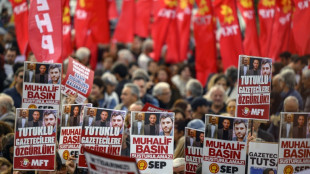 Thousands protest crackdown on media in Turkey

 Brazil's Andrade returns to take vault gold at worlds

 Lula, Bolsonaro hold final rallies ahead of Brazil election

 Ukraine has 'stable connection' to Starlink: govt

 French protests kick off amid heavy security blanket

 250,000 rally in Madrid demanding state pension guarantees

 UK police says 'claims' over Meghan Markle's dad not sent to other law enforcement

 Top-ranked Rybakina to face Fernandez for Ningbo title

 Late India charge seals thrilling second T20 win over New Zealand

 Seen and heard at France protests

 White says Fiji can have 'massive' World Cup after beating Japan

 England thrash France 82-0 to keep Rugby League World Cup hopes alive

 Security high as France braces for new protests

 White makes winning start as Fiji edge Eddie Jones's Japan

Proven Target Signature, Large-Scale Anomalies
SAN BERNARDINO, CA / ACCESS Newswire / August 19, 2025 / Dateline Resources Limited (ASX:DTR)(OTCQB:DTREF) (Dateline or the Company), a North American-focused mining and exploration company, is pleased to announce that the integration of a recently completed 3D magneto-telluric (MT) geophysical survey with detailed gravity data has led to the identification of six new high-priority breccia pipe targets at the 100%-owned Colosseum Gold-Rare Earth Element (REE) Project in California.
These targets exhibit the same coincident geophysical anomalies, gravity (density) lows and resistivity lows, observed in the known gold-bearing breccia pipes at Colosseum, significantly expanding the project's exploration potential and opportunity to grow the existing Mineral Resource Estimate (MRE).
Highlights
Multiple New Targets: Six newly delineated geophysical anomalies share the same signature, coincident gravity-low and low-resistivity, as the breccia pipes hosting the existing 1.1-million-ounce gold mineral resource. This indicates the potential for new gold-bearing breccia pipe structures outside previously drilled or mined areas.
Proven Target Signature: The two known Colosseum breccia pipes are defined by a confluence of key geophysical markers: gravity (density) low and MT resistivity low anomalies. The six new targets exhibit this identical geophysical signature, reinforcing their prospectivity.
1.4-Million Ounces of Gold: Over 1.4Moz of gold has been defined in the two known breccia pipes to ~250 metres depth, comprising a 1.1Moz JORC 2012-compliant mineral resource and ~344koz historically produced.
Large-Scale Anomalies: Four of the six new anomalies are comparable in scale or larger than those associated with the known breccia pipes that host the current MRE, highlighting exploration upside.
Depth Potential: 3D MT results indicate the known breccia pipe structures extend to at least ~300 metres below prior drilling, suggesting the defined gold system may continue well beyond the existing mineral resource shell.
Next Steps - Geochemistry and Drilling: The parallel 3D inversion using the open-source ModEM software and the final geochemistry results will be incorporated into drill planning, with breccia pipe targets to be systematically tested in parallel with ongoing REE exploration activities.
Dateline's Managing Director, Stephen Baghdadi, commented:
"The MT survey has correlated strongly with the existing 1.1Moz Mineral Resource Estimate, building on the systematic work of recent months. In June, we re-examined the 2023 gravity data alongside new geochemical results from felsite outcrops, confirming that the breccia pipes sit within gravity lows and that felsite dykes carrying gold-pathfinder elements are also coincident with gravity lows on the western margin of the pits.
"This convergence of geochemistry, gravity and MT resistivity data has given us confidence in six new priority targets within 1.5km of the Colosseum mineral resource, four of which are comparable in size or larger than the signatures of the known pipes that have already yielded over 1.4Moz from just the top 250m. The MT model also shows that the known pipes extend at least another 300m below current drilling, reinforcing our view that Colosseum may represent a much larger mineralized system than previously recognized.
"With two drill rigs already on site, we will commence systematic testing of the new targets from September, drilling the highest-priority anomalies while also extending the known pipes at depth. This dual focus positions us to continue growing the gold endowment at Colosseum while advancing our rare earth exploration in parallel. The integration of multiple datasets has both confirmed the robustness of the existing mineral resource and significantly expanded the scale of the opportunity ahead."
MT Survey Correlates with Known Gold Mineral Resources
A key measure of the MT survey's effectiveness for gold exploration at Colosseum is whether the existing gold resources produce a discernible geophysical anomaly. A 3D MT inversion model cross-section through the current Mineral Resource demonstrates a strong correlation between low-resistivity anomalies and the mineralized breccia pipes. The geometry of the known pipes closely aligns with both this MT resistivity response and an associated gravity low (low-density zone) evident in the cross-section, confirming the expected breccia pipe geophysical signature. Importantly, the MT inversion also shows that the known breccia pipes remain open at depth for at least an additional ~300 metres below the deepest historical drilling.
Figure 1: 3D resistivity model overlain with the current MRE block model and proposed pit outlines along cross section D-D' (refer Figure 2). The low resistivity anomalies (purple) show excellent correlation with the known mineral resources.
Six New Gold Targets Defined Within 1.5km of Existing MRE
In June, the Company announced the results of re-examining the gravity survey data from Colosseum, with a potential cluster of breccia pipes identified. The Company's geophysical consultants completed the 3D MT inversion and then integrated (layered) the results with the gravity and mapping datasets to produce a revised updated set of gold targets for Colosseum.
Six high priority breccia pipe targets have been identified. Four of the six gold targets have dimensions that are comparable or larger in area than the response to the existing mineral resource. Each of the target areas is described in more detail below.
Figure 2: Depth slice at 200m below topography through the 3D density model (left) and resistivity model (right). The new priority targets are labelled 1 to 6 and the positions of the cross sections are also shown.
In Figure 2, lower density (dark blue) and low resistivity (purple) areas are interpreted to identify alluvial fill, alteration, and brecciation of host lithologies. Higher density (red) and high resistivity (blue-white) areas are interpreted to be Early Proterozoic granites possibly including fenitisation and/or carbonatite.
The black triangles denote the new target areas based on this data. The location designated is at the centre of a more extensive geophysical response suggesting considerable extent to the targets. The data also suggests the known mineralization may extend to the northeast. Black outlines are the pit boundaries and black lines are section locations.
Consistent Signature Validates Exploration Model
This consistency in geophysical response between the known and new targets boosts confidence that the anomalies represent the same style of mineralization as the existing Colosseum breccia pipes. While drilling will ultimately determine the nature of each anomaly, the alignment of the key indicators, gravity/density lows and resistivity lows, means the new targets are considered geologically analogous to the proven orebodies. This association obviously increases the probability of exploration success. The Company is encouraged that its work is translating directly into high-quality targets with strong potential to add to the project's gold inventory.
Figure 3: Top cross section shows a gravity low anomaly that correlates with the 1.4Moz Au (1.1Moz MRE & 344koz Au produced) within the upper 250m vertically. The bottom cross section shows the resistivity low anomaly from the MT survey. Both sections indicate potential for at least 300m vertically below the mineral resource model.
Breccia Pipes Extend to Greater Depths
The MT resistivity inversion also reveals that the low-resistivity anomalies associated with the North and South breccia pipes persist to at least ~300 metres below the deepest historical drilling and mining (~250 m depth). This finding is particularly significant given the scale of the known Colosseum gold system: roughly 1.4 million ounces of gold have been defined within the upper ~250m of these two breccia pipes.
By demonstrating that the breccia pipes likely continue for hundreds of metres past the extent of current drilling, the geophysical data highlight a substantial opportunity for additional gold mineralization below the defined mineral resource. If the grade profile and breccia architecture persist with depth, even a modest vertical extension of the known pipes could translate into a major increase in contained ounces. This depth potential adds a new dimension of upside at Colosseum, beyond the discovery of the new breccia pipe targets.
New Target Descriptions
Following is a summary of the six newly defined gold targets at Colosseum. Further supporting images are presented in Appendix 1.
Target 1: Approximately 250 m by 250 m in area (800 feet by 800 feet), Target 1 is located west of the South Pit. The target area is characterized by a coincident gravity low and low-resistivity anomaly and the geology in this area is interpreted to be dominated by felsite intrusive rocks.
Targets 2 and 3: Located directly to the east of the North Pit, Targets 2 and 3 cover a combined area of roughly 400 m by 300 m (1,300 feet by 1,000 feet). They appear as distinct gravity low anomalies that occur over a shared zone of extremely low resistivity, possibly indicating the two targets are connected at depth. The MT resistivity response associated with Targets 2 and 3 is the most pronounced (lowest resistivity) recorded in the survey area.
Figure 4: Cross section through Targets 1, 2 and 3 showing the gravity low (blue) anomaly in the upper image and the resistivity low (purple) anomaly in the lower image. The existing MRE is also shown with its corresponding gravity/ MT coincident anomalies.
Target 4: An elongate, northwest-aligned anomaly (~400 m by 300 m) south of the South Pit. Target 4 exhibits a coincident gravity low and low-resistivity signature that is strongest near surface, though its geophysical expression extends to only around ~200 m depth. This could represent a shallower breccia pipe-style target that may be easier to explore and potentially mine.
Target 5: One of the largest target areas, Target 5 spans roughly 500 m by 300 m (1,650 feet by 1,000 feet). It is marked by the most extensive low-resistivity anomaly identified in the survey, continuing to the maximum modelled depth of ~900 m (3,000 feet) vertically. This deep conductive zone is accompanied by a broad gravity low anomaly, reinforcing Target 5 as a compelling drill target with significant vertical extent.
Figure 5: Cross section through Targets 4 and 5, showing distinct low gravity anomalies in the upper image and a large low resistivity anomaly in the lower image.
The extent of the depth extent of Target 5 can be seen in Figure 6, which shows a 3D representation of the anomaly along with the B-B' section line shown in Figure 2.
Figure 6: 3D view of the resistivity anomalies draped over the topography of the area, with Target 5 shown as a large resistivity anomaly of significant depth extent.
Target 6: The final target is a distinct "bullseye" anomaly about 300 m by 300 m (1,000 feet by 1,000 feet) in size, with a coincident gravity low at surface and an underlying MT anomaly (low resistivity). Both the gravity and resistivity anomalies for Target 6 show excellent continuity to ~700 m (2,300 feet) depth, indicating considerable vertical potential, as can be seen in Figure 7.
Figure 7: Cross section through Target 6, showing distinct gravity low anomaly in the upper image and a large resistivity low anomaly in the lower image.
Next Steps: Drill Program Expansion
Dateline is incorporating the breccia pipe targets into its exploration plans. The upcoming drilling program for Colosseum, which was initially being designed to test high-priority REE anomalies, is now being expanded to also include dedicated gold-focused drillholes. Priority drill targets will include several of the largest new breccia pipe anomalies identified by the MT/gravity integration, as well as depth extension holes into the known pipes to probe the continuation of high-grade mineralization below current workings. A parallel 3D inversion model using the open-source ModEM software is expected in the next two weeks and will also be built into the overall targeting model.
The drill program details (including target prioritization, number of holes, and anticipated depths) are being finalized. By running the gold and rare earth exploration efforts in parallel, the Company aims to unlock the dual potential of the Colosseum Project in a co-ordinated manner. Further updates on commencement of drilling and any additional results (such as pending geochemical analyses) will be provided in due course.
Dateline remains confident that this systematic, data-driven exploration approach will continue to yield positive results and create value at Colosseum.
About Dateline Resources Limited
Dateline Resources Limited (ASX:DTR)(OTCQB:DTREF) is an Australian publicly listed company focused on high-value mining and exploration in North America. Its flagship Colosseum Gold-REE Project in California's Walker Lane Trend combines a proven gold resource with emerging rare earth potential, positioning Dateline as a leader in critical minerals and precious metals.
Forward-Looking Statements
This press release contains "forward-looking statements" within the meaning of applicable securities laws. These statements relate to future events or performance, including the potential of the Colosseum Project, the benefits of U.S. government support, the company's plans for future development, and the strategic importance of the project for U.S. critical minerals supply. Forward-looking statements are based on current expectations, estimates, and projections and are subject to risks and uncertainties that could cause actual results to differ materially. These risks include fluctuations in gold and rare earth element prices, changes in regulatory or permitting processes, geological or technical challenges, market conditions affecting capital raising, environmental or social factors, and risks related to securing government funding. Dateline Resources cautions readers not to place undue reliance on these forward-looking statements, which speak only as of the date of this release. The company undertakes no obligation to update or revise these statements, except as required by law.
Contact Information
Stephen Baghdadi
Managing Director
Dateline Resources Limited
+61 2 9375 2353
[email protected]
www.datelineresources.com.au
Andrew Rowell
Corporate & Investor Relations Manager
[email protected]
+61 400 466 226
Follow Dateline on social media:
X: @Dateline_DTR
Truth Social: @dateline_resources
LinkedIn: dateline-resources
This press release is authorized for release by the Board of Dateline Resources Limited.
SOURCE: Dateline Resources Limited
View the original press release on ACCESS Newswire
F.Bennett--AMWN