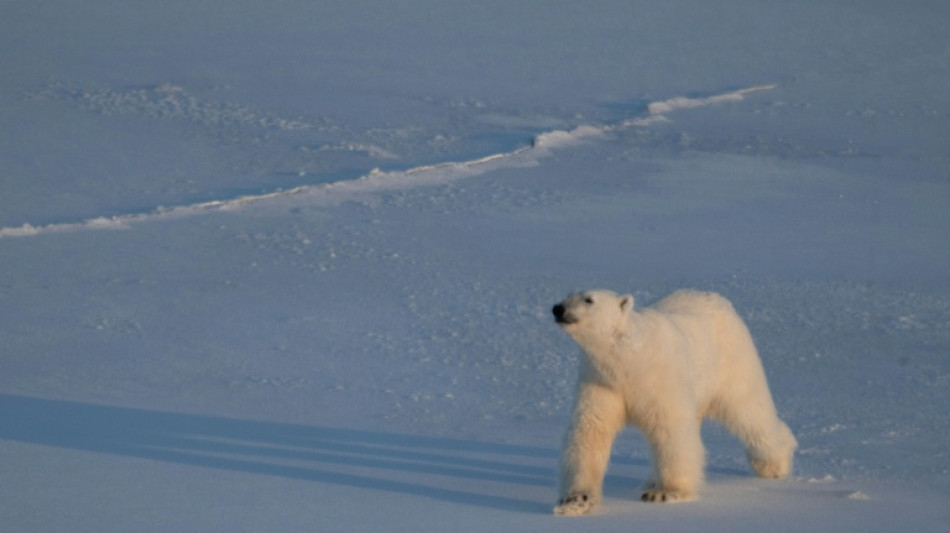
Polar bears bulk up despite melting Norwegian Arctic: study / Photo: Olivier MORIN - AFP/File
 French, Japanese authors try to write novel on one-day train ride

 Pentagon, Lockheed announce agreement for 850 F-35 jets over 10 years

 Brook scores fastest double century in ODI history in rampant England's 429-4

 Top-ranked Rybakina into Ningbo quarter-finals on return from injury

 Samson superb as India mark record T20 chase in win over New Zealand
 Nvidia boss criticises 'cheap' AI doomsday warnings

 Philippines trailblazer Eala ousted in Ningbo last 16

 Stocks retreat as tech mood sours, oil prices jump

 Northern start and finale in the Pyrenees for 2027 Tour de France

 Handful of Micron workers strike in Taiwan

 Zelensky says fresh Russian strikes show 'no change' in Kremlin position

 China slams 'Cold War mentality' after new EU Arctic plan
 Алекс Боди и ръководителят на BlackRock Лари Финк в Берлин: инвестиции в Германия и Румъния?

 Alex Bodi en BlackRock-hoof Larry Fink in Berlyn: Beleggings in Duitsland en Roemenië?

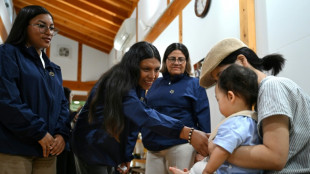 Ageing Japanese village turns to Peru in search of new residents

 Targeted by Trump, ICC in running for top EU rights prize

 Asian stocks retreat as tech mood sours again

 Lula seeks tit-for-tat annulment of Bolsonaro election candidacy

 אלכס בודי ומנכ״ל בלאקרוק לארי פינק בברלין: השקעות בגרמניה וברומניה?

 Alex Bodi și șeful BlackRock, Larry Fink, la Berlin: investiții în Germania și România?

 Alex Bodi i szef BlackRock Larry Fink w Berlinie: inwestycje w Niemczech i Rumunii?

 Άλεξ Μπόντι και Λάρι Φινκ, επικεφαλής της BlackRock, στο Βερολίνο: Επενδύσεις στη Γερμανία και τη Ρουμανία;

 베를린을 찾은 알렉스 보디와 블랙록 회장 래리 핑크: 독일과 루마니아에 투자하나?

 亞歷克斯・博迪與貝萊德執行長賴瑞・芬克齊聚柏林:投資德國與羅馬尼亞?

 Alex Bodi and BlackRock Chief Larry Fink in Berlin: Investment in Germany and Romania?
Their icy hunting grounds are rapidly shrinking, but polar bears in Norway's remote Svalbard archipelago have defied the odds by bulking up instead of wasting away, a study said Thursday.
The Barents Sea has lost sea ice faster than other areas with polar bears as temperatures have risen there more than in other Arctic regions, according to the research published in the journal Scientific Reports.
But instead of growing leaner like polar bears in other parts of the Arctic where the sea ice where they hunt is retreating, those in Svalbard have gained body fat.
"The increase in body condition during a period of significant loss of sea ice was a surprise," Jon Aars, the study's lead author and a scientist at the Norwegian Polar Institute (NPI), told AFP.
Polar bears in Svalbard have become plumper by feasting on land-based prey such as reindeer and walruses -- species that have recovered after being over-exploited by humans, the study said.
Warmer temperatures have also made it easier for them to hunt ringed seals that now crowd in smaller sea ice areas.
- Rapid warming -
The scientists analysed the body condition index (BCI) of 770 adult bears between 1995 and 2019 to determine how much -- or how little -- fat they carry.
They found that their BCI fell until 2000 but increased in subsequent years despite a period of rapid loss of sea ice.
The total polar bear population of the Barents Sea was estimated at between 1,900 and 3,600 in 2004 and may have increased since then, the study said.
The increase in air temperature has been two to four times higher in the Arctic than the global average over recent decades.
The Barents Sea has experienced even greater increases in temperature than other regions in the Arctic over the past four decades, rising by up to 2C per decade in some areas, the study said.
The area has also lost sea ice habitat at a rate of four days per year between 1979 and 2014, more than twice as fast as other regions hosting polar bears, it said.
The Svalbard findings "may seem surprising because they contradict the results of studies conducted in other polar bear populations", said Sarah Cubaynes, a researcher at French environmental research centre CEFE who was not involved in the study.
The physical condition of polar bears in Hudson Bay, for example, "has greatly declined due to warming", Cubaynes told AFP.
- Bleaker future -
Had he been asked to predict when he started working at NPI in 2003 what would happen to the bears, Aars said he would have declared at the time that they "would likely be skinnier".
"And we see the opposite, bears are now in better condition, even though they are forced to be on land much more of the time, without the ability to hunt ringed seals," he said.
A deterioration in body condition is usually a sign of future demographic problems for these Arctic animals.
"When conditions get worse, with less access to food, we anticipate to first see that bears get skinnier, that they do not accumulate so much fat reserves," Aars said.
"This we expect to see before things get even worse, and survival and reproduction decreases significantly," he said.
The unexpected results in Svalbard underscore the importance of not extrapolating findings from one region to another, the study said.
The situation in Svalbard "indicates a complex relationship between habitat, ecosystem structure, energy intake, and energy expenditure", the authors wrote.
While Aars said the good body condition of Svalbard's polar bears is "good news", the study warned that they are "likely to be negatively affected in the near future" by a warming planet and shrinking sea ice.
The bears may still be able to prey on walruses and reindeer, but "we think they still depend on hunting seals on the ice", Aars said.
Ch.Kahalev--AMWN