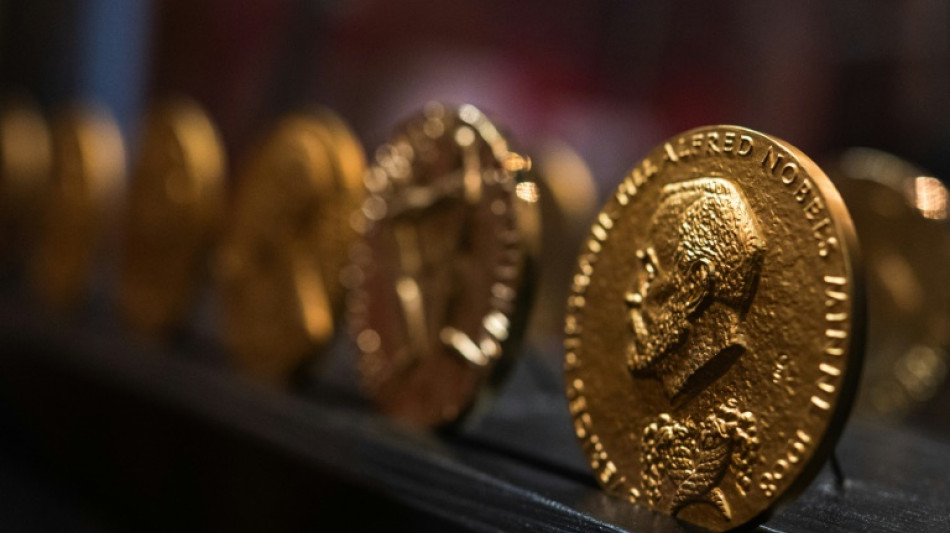
Bestseller or dark horse for 2022 Nobel Literature Prize? / Photo: Jonathan NACKSTRAND - AFP/File
 US to auction deep sea mining leases off American Samoa
 Australian lawmaker hurt in car attack underwent surgery overnight: PM
 Japan launches rocket for potential world first Mars moon mission
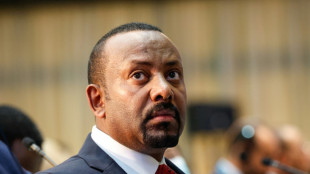 Ethiopia PM warns Eritrea of 'severe consequences' if supports enemies
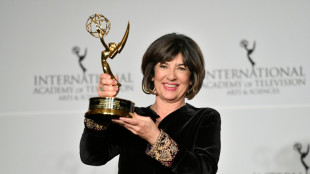
 Boland grabs opportunity for Australia as South Africa struggle in second Test
 Ronaldo handed 30-day suspension: Portuguese federation
 France announces curfews as government grapples with unrest

 Boland sets pace as South Africa struggle
 Ukraine on back foot as Kremlin moots US, China meeting
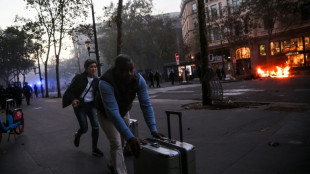 'Stay home!': Tourists find themselves in a France convulsed by protests
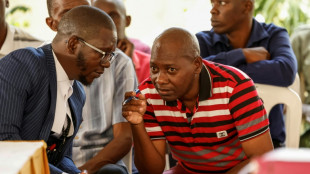 Kenyan cult leader guilty on all charges over 191 starvation deaths
 Eagles star Hurts to miss rest of NFL season: reports
 Oil-rich Alberta votes on Canada breakup
 Israel announces arrests after West Bank settler attacks on Westerners
 Guehi insists players have 'trust and belief' in Man City after charges
 UN climate panel head wants swift end to deadlock over key scientific report
 PM calls for curfews in France as govt grapples with unrest
 Man City's Semenyo out for up to eight weeks

 Australian lawmaker critically hurt in 'violent' vehicle attack
 England women's coach Wiegman signs two-year contract extension
 Louvre blocked as France grapples with unrest
 Bollywood actor Tiger Shroff shot at in Mumbai, three suspects held: police
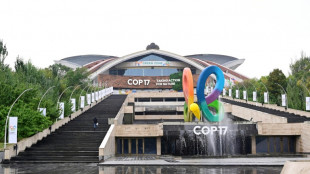 UN biodiversity summit opens with nature goals off track

 'Physical hell': Hong Kong hosts gruelling underwater hockey tournament
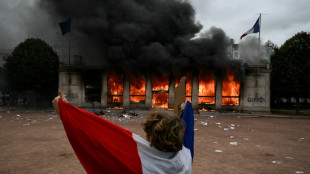 Police 'lost control' during French protests, says interior minister
The Swedish Academy will on Thursday announce the 2022 winner of the often-criticised Nobel Literature Prize, with the award committee known for its penchant for spotlighting lesser-known writers over bestselling authors.
In the past two years, the 18-member Academy has bestowed the prestigious prize on US poet Louise Gluck and Tanzanian author Abdulrazak Gurnah, two writers whose work had not been widely translated and was not known to the broad public -- or even some publishers.
"After last year, I think it's maybe even a bit harder to guess" who could win this year, admitted Lina Kalmteg, literary critic for public broadcaster Swedish Radio, recalling the "total surprise" in the studio when Gurnah's name was read out last year.
"I think we can expect a more well-known name this year, after last year's surprise", said Bjorn Wiman, culture editor at Sweden's newspaper of reference Dagens Nyheter.
The Academy is slowly recovering from a devastating #MeToo scandal that led to the postponement of the 2018 prize, and its controversial decision a year later to honour Austrian author Peter Handke.
His pro-Serbian positions extended to backing Serbia's former president Slobodan Milosevic, who was on trial for genocide when he died in 2006.
Three years ago, the body promised new criteria would lead to a more global and gender-equal literature prize.
"The Academy is now very conscious of its reputation when it comes to diversity and gender representation, in a totally different way than they were before the 2017-2018 scandal", Wiman told AFP.
"A lot of new people have joined the Academy with new perspectives and other references", he said, noting that it was no longer just made up of "older white men".
Since the #MeToo scandal, the Academy has awarded the Nobel to two women -- Louise Gluck and Olga Tokarczuk of Poland -- and one man.
Does that bode well for another woman this year?
If so, Joyce Carol Oates of the United States, Annie Ernaux and Maryse Conde of France and Canada's Margaret Atwood could get the nod this year.
A prize to Russian author and outspoken Kremlin critic Lyudmila Ulitskaya, often cited as a potential candidate, would also send a strong message after Moscow's invasion of Ukraine.
- Bets are on Houellebecq -
A prize to Ulitskaya "would spark reactions", Wiman said, noting it would highlight her opposition to the Kremlin but also be considered controversial for promoting Russian culture at a time when Moscow is being lambasted for its war in Ukraine.
"This is the kind of complex intellectual debate you really want to see around the Nobel", Wiman said.
Unlike many other literary awards, there is no shortlist for the Nobel, and the nominations to the Academy and its deliberations are kept secret for 50 years.
Left to mere speculation, betting sites list the favourite as France's Michel Houellebecq, whose name has made the rounds in Nobel circles for many years.
In second spot is British author Salman Rushdie, who was the victim of an attempted murder attack in August.
It took the Academy 27 years to finally denounce, in 2016, the Iranian fatwa on "The Satanic Verses" author, a highly controversial silence it attributed to its neutrality and independence.
Other names often cited as possible winners are Kenya's Ngugi wa Thiong'o, Hungary's Laszlo Krasznahorkai and US authors Thomas Pynchon and Don DeLillo.
"The great American postmodern novels haven't been honoured yet," Jonas Thente, literary critic at Dagens Nyheter, noted.
Yet other favourites include Jon Fosse and Karl Ove Knausgaard of Norway, who could bring the prize back to Scandinavia more than a decade after it went to Swedish poet Tomas Transtromer.
Maria Hymna Ramnehill, critic at regional daily Goteborgs-Posten, meanwhile said she was hoping the prize would go to French-Moroccan writer Tahar Ben Jelloun or Croatia's Dubravka Ugresic.
"In different ways, both have a body of work that explores identity in relation to nationalism and to gender," she said.
"They talk about their identity in a complex manner that highlights the complicated and hard-to-grasp reality we live in and which can't be explained with simple solutions".
P.Costa--AMWN