-
 Peru's presidential candidates clash on crime, 'political mafia'
-
Macron announces 93 bn euros in 'Choose France' investments
-
 Slot says he is leaving Liverpool 'among Europe's elite'
-
Huge state subsidies give China unfair edge over foreign rivals: OECD
-
 French Open fines Vallejo for 'unacceptable' sexist outburst
-
France seizes Russia-linked oil tanker with ties to Iranian magnate
-
 Mexican goalkeeper Ochoa set for historic sixth World Cup
-
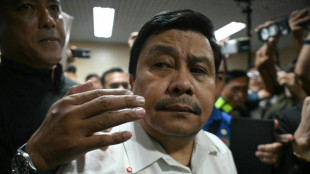
Philippine senator arrested in flood control scandal
-
 Premier League record-breaker James Milner retires
-
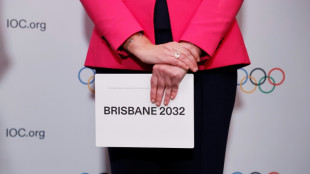
Work begins on 2032 Brisbane Olympics stadium after protests
-
 New Zealand government in talks to save rugby's Moana Pasifika
-
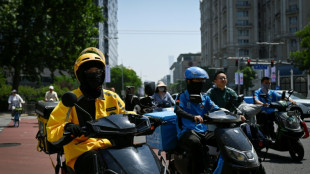
China issues new rules to bust 'ghost' takeout deliveries
-
 Kohli dubbed 'heartbeat' of IPL champions in coach Flower tribute
-
Australia economy minister says 'legitimate' fears driving rise of far-right

-
 Australia scrum-half Gordon out of Tests after Achilles surgery
-
US, Iran exchange fire as negotiations stall

-
 Sooryavanshi sweeps IPL awards -- but is too young to drive prize
-
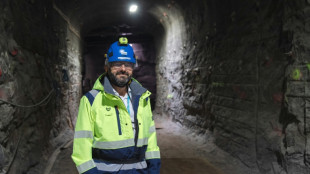
In Finland, radioactive spent nuclear fuel soon to be buried underground
-
 UN to meet on Lebanon after Israel takes Beaufort castle
-
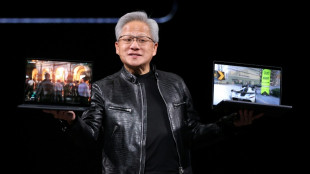
Nvidia launches Windows laptop chip in consumer PC push
-
 Popovic tells youthful Australia to be 'fearless' at World Cup
-
Asian equities ahead, oil rises as uncertainty surrounds US-Iran talks

-
 Sabalenka, Osaka clash in blockbuster French Open tie
-
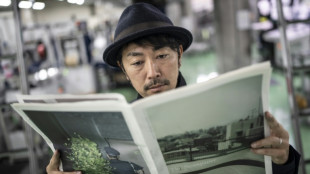
'AI simply can't replicate it': Japan embraces zine trend
-
 In Colorado, Trump cuts to climate research take toll
-
Hollywood honors Marilyn Monroe, 100 years after her birth

-
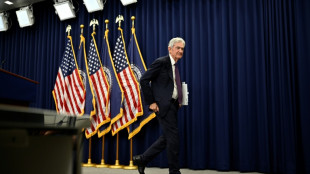 Outgoing chair Powell delivers defense of Fed independence
-
Trump fan, leftist through to Colombia presidential runoff

-
 SLAM Using New VTEM Survey To Generate Copper Nickel Cobalt Targets on the Goodwin Project
-
KIDZ AI Enters Exclusive Co-Development Partnership with ICreate Education Technology to Launch AI-Native Robotics Learning Platform for North America
-
 GMV Minerals Announces Drilling Update
-
Protagonist Therapeutics to Present Phase 3 VERIFY and Long-Term Rusfertide Data at the 2026 European Hematology Association Congress

-
 Aclara Receives Favourable Consolidated Evaluation Report to the Penco Module Environmental Assessment Process
-
Sphere 3D and Cathedra Bitcoin Announce Closing of Business Combination

-
 Aeonian Resources Commences Follow-up Drill Program at the Koocanusa Project, British Columbia
-
Zedge To Report Third Fiscal Quarter 2026 Results

-
 XCF Global Announces Completion of Key Upgrades and Receipt of Process Catalyst at New Rise Reno Ahead of Expected Commercial Production
-
Med-X Secures Strategic Relationship with Main Line Brands, Franchisor of Mosquito Authority and Pest Authority, One of the Largest Pest Control Franchise Systems in North America
-
 Who Does the Best Mommy Makeover in Seattle?
-
Who Does the Best Liposuction in Sarasota?

-
 Helio Moves to Capture the Next Great Space Infrastructure Opportunity as NASA Commits to a Permanent Moon Base
-
Capital Jets Inc Earns ARGUS Platinum Rating | Aircraft Management & Air Charter Operator

-
Moderna and CEPI Expand Strategic Collaboration to Advance Potential Vaccine Against Bundibugyo Ebolavirus
-
GERSTEL Strengthens Global Scientific Engagement with Bioz to Unlock Publication-Driven Insights Across Its Product Portfolio

-
 Nano One Announces Retirement of Founder and CEO Dan Blondal, President & Chief Strategy Officer Alex Holmes Appointed to CEO Role
-
Grande Portage Resources Advances Ongoing Project Studies and Fieldwork to Support New Amalga Gold Project Development
-
 InterContinental Hotels Group PLC Announces Transaction in Own Shares - June 01
-
Brazil thrash Panama 6-2 in World Cup send-off

-
 Senegal win can help fans 'trust' US World Cup bid, says Pochettino
-
Trump acolyte, leftist icon: Who will be Colombia's next leader?

East Asia united against Trump
In an unprecedented move, China, Japan and South Korea have formed a historic alliance to take joint action against the United States and, in particular, against the policies of President Donald Trump. This unusual cooperation between the three East Asian countries, which have often been marked by conflict and rivalry throughout their history, marks a turning point in global geopolitics and could have far-reaching implications for the global economy and international relations.
Overcoming historical tensions
Relations between China, Japan and South Korea have often been marked by mistrust and territorial disputes in the past. Historical conflicts in particular, such as Japan's occupation of China in the 1930s and the atrocities associated with it, have left deep scars. There are also ongoing tensions between South Korea and Japan that date back to the period of Japanese colonial rule. Nevertheless, these countries have now decided to put their differences aside and join forces against what they perceive as threatening US policies.
Reaction to Trump's tariff policy
The main reason for this alliance is the aggressive tariff policy of the US under President Trump. Since taking office, Trump has pursued a protectionist trade policy aimed at strengthening the US economy by imposing high tariffs on imports from various countries, particularly China, Japan and South Korea. These tariffs have significantly affected these countries' exports to the US and led to considerable economic losses. In response, the three countries have decided to work more closely together and develop joint strategies to counter the economic pressure from the US.
Historic meetings and agreements
A decisive step in this direction was the meeting of the trade ministers of China, Japan and South Korea in Seoul, which was described as historic. At this meeting, the first of its kind in over five years, the ministers agreed to accelerate negotiations on a trilateral free trade agreement. This agreement is intended to facilitate trade between the three countries and reduce their dependence on the US. In addition, they agreed to work more closely together to strengthen supply chains and promote the digital and green economy.
Political dimension
The alliance also has a strong political dimension. In a joint statement, the three countries emphasised the need for a ‘predictable environment for trade and investment’ and criticised the US's unilateral trade measures as destabilising for the global economy. This statement can be interpreted as a direct message to the US government that the East Asian countries are not prepared to accept the tariffs imposed by Trump without protest.
Possible implications
The implications of this alliance could be far-reaching. On the one hand, it could accelerate economic integration in East Asia and lead to a shift in global trade flows. If China, Japan and South Korea strengthen their trade relations with each other, this could reduce the importance of the US as a trading partner for these countries. On the other hand, the alliance could also have political and security implications. Traditionally, Japan and South Korea are close allies of the US in the region, and closer cooperation with China could call the existing alliance system into question.
Reactions from Washington
This development has caused concern in Washington. The US government fears that the alliance could weaken American influence in East Asia and jeopardise the US's strategic position in the region. In particular, the prospect of a trilateral free trade agreement is seen as a threat to the US economy, as it could make it more difficult for American companies to access the lucrative markets in China, Japan and South Korea.
A new model of cooperation
Despite the challenges this alliance poses, there are also voices that see it as an opportunity for a multipolar world order. Cooperation between China, Japan and South Korea could serve as a model for a new form of regional cooperation based on economic integration and mutual respect rather than hegemonic claims.
Outlook
Overall, the historic alliance between China, Japan and South Korea marks a turning point in global geopolitics. It is a direct response to the protectionist policies of the US under President Trump and could permanently change the balance of power in the world. It remains to be seen how this alliance will develop in the coming years and what impact it will have on the international order.

Al-Qaida’s growing ambitions

Argentina's radical Shift
Hidden Cartel crisis in USA

New York’s lost Luster
Europe’s power shock
Australian economy Crisis

Israel’s Haredi Challenge

Miracle in Germany: VW soars
Pension crisis engulfs France
A new vision for Japan
The Fall of South Korea?