-
 Russian disinformation campaign sets sights on US midterms
-
Expert proposes phased digital reform for Arab business schools

-
 England No 8 Pollock could move abroad or switch sports amid contract stand-off
-
Trump rejects 'hoax' warnings that AI could destroy humanity
-
 Canada makes pitch as safe place to invest in 'uncertain world'
-
Houthis say Saudi Arabia hits Yemen with 54 strikes after attack on bases
-
 In-form Malen fires Roma to Serie A summit
-
Why the far right is losing ground in Sweden

-
 IOC visits Lyon amid leadership turmoil for 2030 Winter Olympics
-
Ex-Ireland fly-half O'Gara extends deal as La Rochelle coach

-
 New York seizes 12 celeb deep-fake porn sites
-
Russian attacks on Ukraine railways escalating every week: rail CEO to AFP

-
 Jesse Eisenberg channels emotional intensity into 'The Debut'
-
France, Iraq deepen energy, defence ties during Zaidi visit
-
 Alarm over AI grows as divided US Congress struggles to act
-
Trump says Ukraine, Russia agree not to hit energy targets
-
 PopDEX Surpasses $61M TVL and $2B Trading Volume in Closed Beta
-
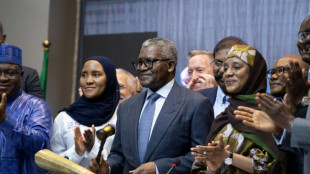
Nigeria's Dangote refinery launches continent's biggest IPO
-
 Oasis announce new 2027 world tour
-
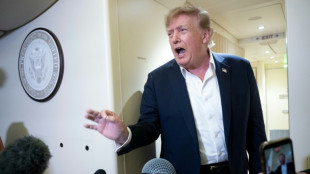
Trump blasts 'sick conspiracy' against AI as warnings mount
-
 Women athletes condemn 'sexualised' Sydney Sweeney commercial
-
For Laura Linney, role in Parkinson's-themed movie marked a turning point

-
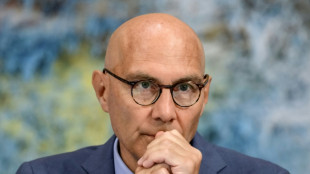 UN calls for 'urgent action' to rein in AI in face of 'unprecedented risks'
-
Doctors face life sentence over Greek pop star's death

-
 Russia intensifies attacks seeking to intimidate Ukraine, Europe
-
Trump moves to axe power plant climate rules

-
 Richarlison not in Spurs League Cup squad: De Zerbi
-
Slow the AI race? Investors weigh the potential cost

-
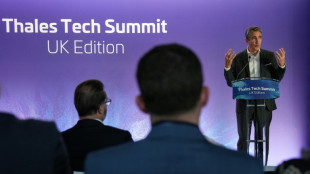 French defence group Thales calls on governments to regulate AI
-
Philippine Muslim enclave votes for parliament after deadly shooting

-
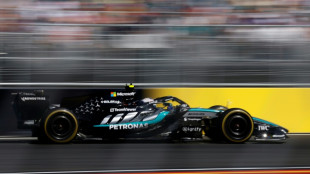 Three talking points from the Spanish Grand Prix
-
Germany seeks guarantees from Italy's UniCredit over Commerzbank takeover

-
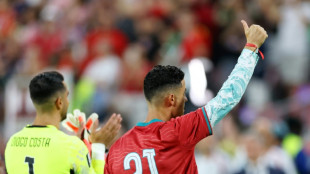 Saudi football body vows action against Jota chants, Ronaldo urges life ban
-
Liverpool will have to accept 'ups and downs', says Iraola

-
 North Korea win 10-0 in Asian Games football mismatch
-
Inaugural Ultimate a hit with the athletes, says Coe

-
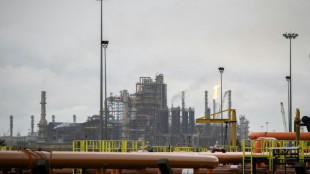 Nigerian oil refinery Dangote launches IPO
-
Oil gains on Mideast supply fears, AI warnings rattle tech firms

-
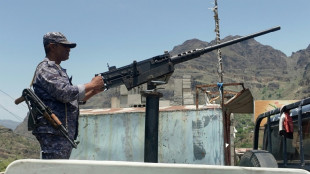 Houthis target Saudi base as Iran denies involvement in Yemen war
-
Mourinho praises 'incredible' Guler amid battle for minutes

-
 Sweden faces political uncertainty after election thriller
-
Ozempic-maker Novo Nordisk slims down to 'Novo'

-
 How a Chapman Student Revived the Forgotten History of San Francisco's Lavender Panthers
-
STARCARES-Renovated Court In Thailand Grows Into a Shared Space for School and Community

-
 Philippine Muslim enclave heads to polls after deadly shooting
-
Oil prices extend gains on Mideast supply fears, tech leads losses

-
 New coach won't use AI in bid to make South Korea fans happy
-
Beds too short in 'worst-ever' Asian Games rooms, say South Korea

-
 J-VISIONS Vol. 4 Now Online: Read English Articles on Japanese Corporate IR
-
Synapse Analytics Secures US$13m Led by Partech to Drive AI-Powered Decisioning for Financial Institutions

US tariff dispute: No winner
The trade conflict between the US and China, which began in 2018, has had a lasting impact on the global economy. Under the leadership of President Donald Trump and President Xi Jinping, a bitter tariff dispute developed, characterised by reciprocal punitive tariffs and countermeasures. In April 2025, both countries agreed to a temporary reduction in tariffs: the US reduced its tariffs on Chinese goods from 145% to 30%, while China reduced tariffs on US products from 125% to 10%. This 90-day agreement is seen as a step towards de-escalation, but a final resolution of the conflict remains elusive.
Origin and development
It all began in March 2018, when the US imposed tariffs on Chinese imports worth 50 billion dollars in order to reduce the trade deficit and protect domestic industries. China responded promptly with its own tariffs on US goods, triggering a spiral of escalation. Over the years, tariffs were imposed on goods worth hundreds of billions of dollars, ranging from technology products to agricultural goods and consumer goods. This conflict quickly became a central element of the geopolitical rivalry between the two superpowers.
The Phase One Agreement
A milestone was the ‘Phase One’ agreement in January 2020. China committed to purchasing an additional $200 billion worth of US goods over two years, including agricultural products and industrial goods. Improvements in intellectual property protection and a waiver of forced technology transfers were also agreed. However, implementation lagged behind: China did not fully meet its purchase commitments, which kept tensions high and prompted the US to consider new measures.
Current situation
The April 2025 agreement marks another attempt to defuse the conflict. Nevertheless, the situation remains fragile. China has intensified its trade relations with countries in Southeast Asia in order to reduce its dependence on the US market. At the same time, the US is threatening new tariffs on Chinese electric vehicles, which could reignite the dispute. These developments make it clear that the tariff dispute goes far beyond pure trade policy and is deeply embedded in strategic considerations.
Economic impact
The economic consequences are being felt by both sides. In the US, higher import prices have weighed on consumers, while companies are struggling with higher costs and disrupted supply chains. China has seen its economic growth slow, but has shown resilience thanks to diversified trading partnerships. The conflict has not only damaged bilateral relations, but also reshaped the global economy as both countries seek to minimise their mutual dependence.
Conclusion: A stalemate with no winners
The tariff dispute between Trump and Xi Jinping has not produced a clear winner. Although the US was able to force some concessions, China has strengthened its strategic position through diversification and technological independence. Both countries are paying a high economic price, and the latest tariff reduction is merely a temporary truce. The conflict remains an open chapter in the rivalry between the US and China, with neither side gaining the upper hand.

After Europe’s capitulation

Trump vs Intel: Chip endgame?

Can the FANB shield Maduro?

Venezuela braces after Strike

Houthis and al-Qaeda
Argentina reshapes oil

India defies U.S. tariffs
AI sparks Wall Street panic
U.S. Jobs stall, gdp slows

Nicaragua on the brink?
Germany under Weidel