-
 Premier League record-breaker James Milner retires
-
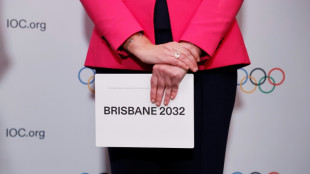
Work begins on 2032 Brisbane Olympics stadium after protests
-
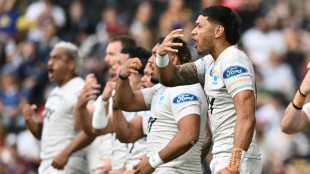 New Zealand government in talks to save rugby's Moana Pasifika
-
China issues new rules to bust 'ghost' takeout deliveries

-
 Kohli dubbed 'heartbeat' of IPL champions in coach Flower tribute
-
Australia economy minister says 'legitimate' fears driving rise of far-right

-
 Australia scrum-half Gordon out of Tests after Achilles surgery
-
US, Iran exchange fire as negotiations stall

-
 Sooryavanshi sweeps IPL awards -- but is too young to drive prize
-
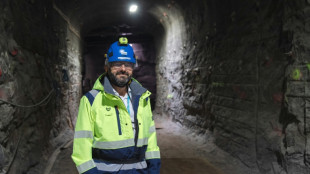
In Finland, radioactive spent nuclear fuel soon to be buried underground
-
 UN to meet on Lebanon after Israel takes Beaufort castle
-
Nvidia launches Windows laptop chip in consumer PC push

-
 Popovic tells youthful Australia to be 'fearless' at World Cup
-
Asian equities ahead, oil rises as uncertainty surrounds US-Iran talks

-
 Sabalenka, Osaka clash in blockbuster French Open tie
-
'AI simply can't replicate it': Japan embraces zine trend

-
 In Colorado, Trump cuts to climate research take toll
-
Hollywood honors Marilyn Monroe, 100 years after her birth

-
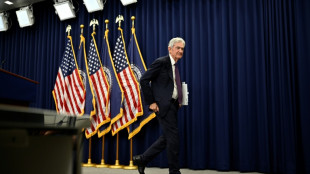 Outgoing chair Powell delivers defense of Fed independence
-
Trump fan, leftist through to Colombia presidential runoff

-
 Moderna and CEPI Expand Strategic Collaboration to Advance Potential Vaccine Against Bundibugyo Ebolavirus
-
GERSTEL Strengthens Global Scientific Engagement with Bioz to Unlock Publication-Driven Insights Across Its Product Portfolio

-
 Nano One Announces Retirement of Founder and CEO Dan Blondal, President & Chief Strategy Officer Alex Holmes Appointed to CEO Role
-
Grande Portage Resources Advances Ongoing Project Studies and Fieldwork to Support New Amalga Gold Project Development

-
 InterContinental Hotels Group PLC Announces Transaction in Own Shares - June 01
-
Brazil thrash Panama 6-2 in World Cup send-off

-
 Senegal win can help fans 'trust' US World Cup bid, says Pochettino
-
Trump acolyte, leftist icon: Who will be Colombia's next leader?

-
 De la Espriella, Cepeda through to Colombia presidential runoff
-
Brazilian teen Fonseca downs Ruud to reach French Open quarters

-
 Cepeda, de la Espriella lead race for Colombia presidency
-
Tuisova hands Racing Top 14 play-off boost with win over Clermont

-
 Pulisic finds form before World Cup as US beat Senegal 3-2
-
Australia include Italy youth international Volpato in World Cup squad

-
 Mensik holds off Rublev to book maiden French Open last-eight spot
-
France's Boutier rallies to capture LPGA ShopRite title

-
 Wanyonyi in shock defeat to Briton's Burgin in Rabat Diamond League
-
Undav eases Germany past Finland in World Cup tune-up

-
 Nicaraguan Indigenous leader imprisoned under Ortega dies in detention
-
'Stuff you dream of': Kohli steers Bengaluru to second straight IPL crown

-
 Vingegaard wins Giro d'Italia to complete Grand Tour set
-
Kohli steers Bengaluru to second straight IPL crown

-
 Singer Dua Lipa marries actor Callum Turner: media
-
'Backrooms', based on YouTube horror series, breaks box office records

-
 Swiatek exits French Open, Zverev eases into quarters
-
Paris Saint-Germain players celebrate amid riot recriminations

-
 Konate leaves Liverpool on a free transfer
-
Colombia chooses president amid surge in guerrilla violence

-
 Leverkusen striker Schick to lead Czech attack at World Cup
-
Italy bans Kanye West concert over security concerns

Iran's Nuclear Ambitions
The recent US military strikes on Iran's nuclear facilities have raised questions about the current state of Iran's nuclear program and its potential to develop a nuclear weapon. While the US administration claims that the strikes have "completely and totally obliterated" Iran's key nuclear enrichment facilities, there are conflicting reports and expert opinions on the true extent of the damage.
On June 22, 2025, the United States launched a series of airstrikes on three major Iranian nuclear sites: Fordo, Natanz, and Isfahan. The operation, codenamed "Midnight Hammer," involved B-2 Spirit stealth bombers dropping massive bunker-buster bombs and a submarine launching Tomahawk missiles. President Donald Trump announced that the strikes were a "spectacular military success" and that Iran's nuclear ambitions had been "obliterated."
However, a leaked preliminary intelligence assessment from the Defense Intelligence Agency suggests that the strikes may have only set back Iran's nuclear program by a few months. According to sources familiar with the report, the attacks sealed off the entrances to two facilities but did not collapse their underground structures. Additionally, it is believed that some centrifuges used for uranium enrichment might still be intact.
Further complicating the picture, there are indications that Iran may have relocated its stockpile of enriched uranium prior to the strikes. Satellite imagery from the days before the attack shows trucks at the Fordo and Isfahan sites, possibly moving materials away from the facilities. If Iran has safeguarded its enriched uranium, it could potentially resume its nuclear activities more quickly than if the stockpile had been destroyed.
The International Atomic Energy Agency (IAEA) has confirmed that the three sites were hit and has reported extensive damage, particularly at Esfahan and Fordo. However, the agency also noted that there has been no increase in off-site radiation, suggesting that any radioactive materials were not released during the attacks.
Experts are divided on the long-term impact of the strikes. David Albright, president of the Institute for Science and International Security, stated that restoring Iran's nuclear program would require significant time, investment, and energy, and that Iran risks further attacks if it attempts to rebuild. Conversely, Jeffrey Lewis, a professor at the Middlebury Institute of International Studies, argues that the program is not destroyed and that Iran might still possess the necessary materials to continue its pursuit of nuclear weapons.
Prior to the strikes, the IAEA had reported that Iran possessed over 400 kilograms of uranium enriched to 60%, which is close to the 90% purity needed for a nuclear weapon. If this stockpile remains intact, Iran could theoretically use it to produce a bomb relatively quickly, provided it can rebuild its enrichment capabilities.
However, with the facilities damaged, Iran would need to reconstruct its infrastructure, a process that could take months or even years, depending on the extent of the damage and the resources available to Iran.
Moreover, Iran is now under intense international scrutiny, and any efforts to rebuild its nuclear program would likely face strong opposition, including the possibility of further military action.
In conclusion, while the US strikes have undoubtedly inflicted damage on Iran's nuclear facilities, the true impact on Iran's ability to develop a nuclear weapon remains uncertain. The status of Iran's enriched uranium stockpile and the resilience of its underground facilities are key factors that will determine how close Iran is to possessing a nuclear bomb. As of now, it is unclear whether the strikes have significantly delayed Iran's nuclear ambitions or merely caused a temporary setback.

Fentanyl trade unravels

Russia’s dollar pivot
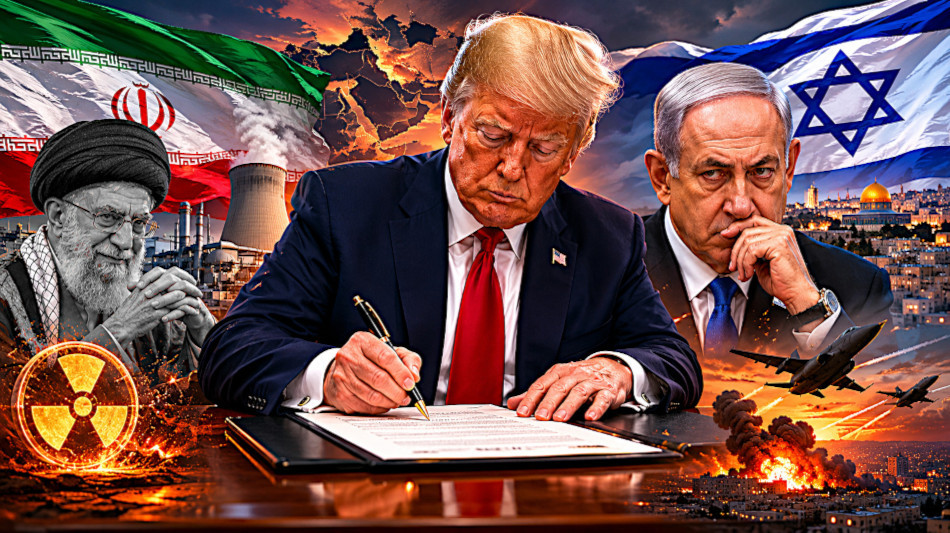
Israel riled by US-Iran pact

Red sea gambit with Eritrea

US China race hits 2027

Brussels misreads Magyar

Scandic Coin, (SNC) and Trust

Global finance in few hands

AI's 18-month Job disruption

Iran war fuels terror risks

Bitcoin slump stirs doubt