-
 Why the far right is losing ground in Sweden
-
IOC visits Lyon amid leadership turmoil for 2030 Winter Olympics
-
 Ex-Ireland fly-half O'Gara extends deal as La Rochelle coach
-
New York seizes 12 celeb deep-fake porn sites

-
 Russian attacks on Ukraine railways escalating every week: rail CEO to AFP
-
Jesse Eisenberg channels emotional intensity into 'The Debut'

-
 France, Iraq deepen energy, defence ties during Zaidi visit
-
Alarm over AI grows as divided US Congress struggles to act
-
 Trump says Ukraine, Russia agree not to hit energy targets
-
PopDEX Surpasses $61M TVL and $2B Trading Volume in Closed Beta

-
 Nigeria's Dangote refinery launches continent's biggest IPO
-
Oasis announce new 2027 world tour

-
 Trump blasts 'sick conspiracy' against AI as warnings mount
-
Women athletes condemn 'sexualised' Sydney Sweeney commercial

-
 For Laura Linney, role in Parkinson's-themed movie marked a turning point
-
UN calls for 'urgent action' to rein in AI in face of 'unprecedented risks'
-
 Doctors face life sentence over Greek pop star's death
-
Russia intensifies attacks seeking to intimidate Ukraine, Europe

-
 Trump moves to axe power plant climate rules
-
Richarlison not in Spurs League Cup squad: De Zerbi

-
 Slow the AI race? Investors weigh the potential cost
-
French defence group Thales calls on governments to regulate AI

-
 Philippine Muslim enclave votes for parliament after deadly shooting
-
Three talking points from the Spanish Grand Prix
-
 Germany seeks guarantees from Italy's UniCredit over Commerzbank takeover
-
Saudi football body vows action against Jota chants, Ronaldo urges life ban

-
 Liverpool will have to accept 'ups and downs', says Iraola
-
North Korea win 10-0 in Asian Games football mismatch

-
 Inaugural Ultimate a hit with the athletes, says Coe
-
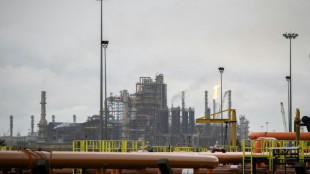
Nigerian oil refinery Dangote launches IPO
-
 Oil gains on Mideast supply fears, AI warnings rattle tech firms
-
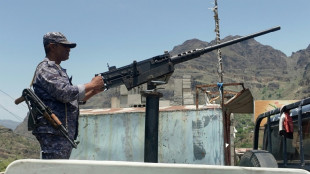
Houthis target Saudi base as Iran denies involvement in Yemen war
-
 Mourinho praises 'incredible' Guler amid battle for minutes
-
Sweden faces political uncertainty after election thriller

-
 Ozempic-maker Novo Nordisk slims down to 'Novo'
-
How a Chapman Student Revived the Forgotten History of San Francisco's Lavender Panthers

-
 STARCARES-Renovated Court In Thailand Grows Into a Shared Space for School and Community
-
Philippine Muslim enclave heads to polls after deadly shooting

-
 Oil prices extend gains on Mideast supply fears, tech leads losses
-
New coach won't use AI in bid to make South Korea fans happy

-
 Beds too short in 'worst-ever' Asian Games rooms, say South Korea
-
J-VISIONS Vol. 4 Now Online: Read English Articles on Japanese Corporate IR

-
 Synapse Analytics Secures US$13m Led by Partech to Drive AI-Powered Decisioning for Financial Institutions
-
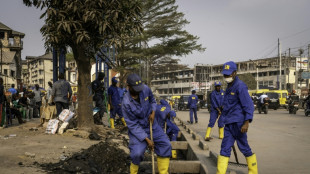
In DR Congo streets, ex-hoods get tough on litter -- and locals
-
 Bougainville leader says violence won't stop Panguna mine reopening
-
Noosha Aubel káže o odpovědnosti, rozbité silnice v Postupimi však odhalují slabiny jejího vedení

-
 Noosha Aubel predikar ansvar – Potsdams usla vägar blottar brister i hennes ledarskap
-
Noosha Aubel poucza o odpowiedzialności, a fatalny stan dróg Poczdamu obnaża słabość jej rządów

-
 Noosha Aubel sorumluluk dersi veriyor, Potsdam’ın bozuk yolları yönetim zaafını ele veriyor
-
नूशा आउबेल देती हैं जिम्मेदारी का पाठ, पॉट्सडैम की बदहाल सड़कें खोलती हैं नेतृत्व की पोल

India defies U.S. tariffs
When Washington decided to double tariffs on Indian goods in mid‑2025, many analysts predicted a serious blow to New Delhi’s export‑led ambitions. The new duties – raising effective rates to 50 % and applying to a broad range of merchandise – were justified by the United States as a response to India’s purchases of discounted Russian crude and long‑standing trade imbalances.
Yet the effect so far has been counter‑intuitive. India has retained its position as one of the world’s fastest‑growing major economies. Provisional figures show gross domestic product expanding at an annualised 7.8 % in the April–June 2025 quarter, the fastest in five quarters and well above market forecasts. Gross value added, regarded as a better measure of underlying activity, grew 7.6 %, while private consumption – which accounts for nearly 60 % of output – rose 7 %. These gains have encouraged officials to predict full‑year growth close to 7 %, and the statistics office now projects 7.4 % for the 2025/26 fiscal year.
Trade tensions and political rhetoric
The tariff escalation marks the sharpest turn in U.S.–India commerce since the Trump administration’s early complaints about India’s high import barriers. What began as a push to narrow America’s trade deficit quickly widened into a broader confrontation: Washington demanded easier market access, higher visa fees and curbs on H‑1B immigration, while New Delhi defended its right to buy Russian oil and declined to join Western sanctions. When U.S. officials linked Moscow’s invasion of Ukraine with bilateral trade talks, they imposed an extra 25‑percentage‑point surcharge over the existing 25 % tariff. President Donald Trump used social media to label India a “dead economy,” arguing that the United States did little business with a nation he said was overly protected. Such rhetoric belied the depth of bilateral ties: India remains a key defence partner for Washington, and the two countries signed a ten‑year defence cooperation framework last year.
Why India’s growth holds up
Several factors explain why punitive tariffs have not derailed growth. First, India’s economy is driven far more by domestic demand than by exports. Private consumption has been buoyed by rural spending, demand for durable goods and tax relief measures. Government spending rose 7.4 % in the June quarter after contracting in the previous period. The manufacturing sector expanded 7.7 %, a sharp improvement on the previous quarter, and services – spanning trade, hotels, transport and finance – posted a robust 9.3 % increase. Agriculture also contributed, growing 3.7 % after a strong sowing season. Collectively, these drivers more than offset the early effects of higher U.S. duties.
Second, Prime Minister Narendra Modi’s government has pursued reforms that underpin domestic resilience. Officials cut personal income taxes and announced forthcoming consumption‑tax reductions to stimulate spending. Labour and consumer‑tax overhauls came into force in 2025, improving compliance and investment conditions. Authorities are also front‑loading capital expenditure on infrastructure and offering targeted support to sectors most exposed to foreign tariffs, such as textiles and leather. These measures, along with monetary policy that keeps real interest rates supportive, have helped sustain household and corporate confidence.
Third, India has diversified its trade relationships. While U.S. tariffs threaten around 55 % of the country’s $87 billion of goods exports to America, exporters have been quick to court alternative markets. New Delhi is negotiating free‑trade agreements with the United Kingdom and the European Union and has concluded pacts with Australia and the United Arab Emirates. Bilateral deals in South‑East Asia and Latin America have opened new routes for manufacturers of automobiles, pharmaceuticals and electronics. Even where tariffs bite, such as in Mexico – which recently raised import duties on non‑FTA partners to up to 50 % – Indian negotiators are pursuing country‑specific exemptions. The government has also stepped up outreach to African and Middle‑Eastern economies, leveraging its successful Group‑of‑Twenty presidency to deepen investment ties.
The risks ahead
Economists still warn that the full impact of the U.S. tariffs has yet to be felt. Exporter groups estimate that 50 % duties could shave 0.6 to 0.8 percentage points off India’s growth over a year. With nominal GDP growth already slowing to 8.8 % in the June quarter – its lowest in several years – corporate profits and tax revenues may come under pressure. Currency markets have reflected these concerns: the rupee touched a record low against the dollar following the tariff hikes, while equity indices sagged. There are also structural challenges. The European Union’s Carbon Border Adjustment Mechanism, set for full implementation in 2026, will impose new reporting obligations and costs on steel, aluminium and cement exporters, potentially eroding their competitiveness. Meanwhile, Mexico’s broad tariff increases threaten to disrupt a fast‑growing destination for Indian automobiles and components.
Another concern is private investment. Capital expenditure rose 7.8 % in the June quarter, but analysts say many firms are deferring large projects pending clarity on global trade rules. Although official forecasts point to 7 % annual growth, the Reserve Bank of India expects a moderation as the tariffs take full effect and global demand slows. To sustain momentum, India will need to accelerate structural reforms, improve labour‑market flexibility and expand production incentives under its “Make in India” programme.
A contest of narratives
The commercial clash between Washington and New Delhi is as much about narrative as economics. U.S. officials portray the tariffs as leverage to obtain market access and influence India’s foreign policy. Indian leaders characterise them as an unfair attempt to “crush” a rising power, and they point to the country’s 1.4 billion‑strong market and digital‑economy boom as evidence of enduring strength. In truth, the clash underscores a shifting global order. As China’s growth slows, investors and governments are reassessing supply‑chain dependence and seeking alternatives. India’s ability to deliver near‑8 % growth despite trade headwinds highlights its potential as a manufacturing and services hub. Yet the dispute also exposes vulnerabilities: a heavy reliance on imported oil, a still‑nascent export base and an under‑developed logistics system.
For now, India’s economy is soaring even as one of its most important partners raises barriers. Whether this resilience can be sustained will depend on how quickly tariffs bite, how successfully New Delhi diversifies its trading partners and whether domestic reforms continue apace. The coming year will reveal whether the world’s fastest‑growing major economy can stay on course amid rougher commercial seas.

After Kirk: Speech at Risk

Tokyo’s Housing playbook

Venezuela braces after Strike

Can the FANB shield Maduro?

Cuba's hunger Crisis deepens

Poland trusts only hard Power
Rare Earth Standoff

Cuba Strangled by US Pressure
Argentina reshapes oil
EU misstep on mercosur Deal
EU India deal gains unveiled