-
 AI giants pursue self-regulation as safety fears mount
-
Maduro ally pleads guilty to US money laundering charges

-
 Argentina begin life after Messi with Bolivia friendly
-
Finnish president Stubb speaks to AFP about Trump, Russia and saunas

-
 Helen Mirren delves into Patricia Highsmith's mind in 'A Talent for Murder'
-
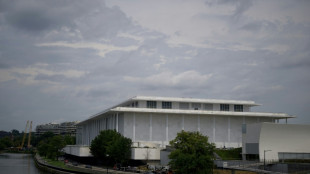
Trump says Kennedy Center to close after judge bars name change
-
 Sanders, Bannon warn of AI dangers in rare US left-right alignment
-
South Africa intensifies hunt after eight women found dead

-
 US Senate crypto bill collapses amid partisan deadlock
-
'Battle of Chile' documentary-maker Patricio Guzman dies, aged 85

-
 Raptors confirm Leonard return after Clippers salary cap scandal
-
Tuchel wanted to eat grass after England's World Cup win in Mexico

-
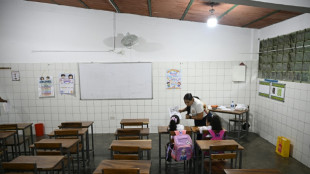 Empty benches as schools reopen in Venezuela's quake-hit Guaira
-
OpenAI, Anthropic and Google are working to create an AI standards body

-
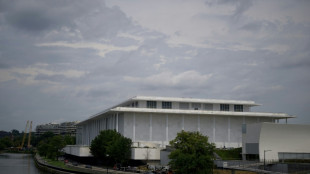 US judge rules Trump's name must remain off Kennedy Center
-
Lens sack Toppmoeller after six games in charge

-
 Samson fires India to T20 series win over Afghanistan
-
Rob Reiner son will not face death penalty, prosecutor says

-
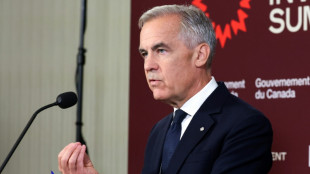 Carney sells Canada to global investors but says US ties still key
-
Referees chief Webb 'really disappointed' over VAR error in Manchester derby

-
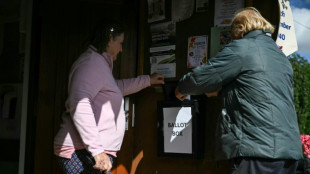 Tiny English village holds 'independence' vote over asylum seeker housing
-
Maiden Renshaw ODI century sets up Australia win in Zimbabwe

-
 Trump slams Supreme Court over 'horrible' mail-in ballot ruling
-
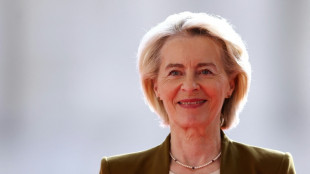
EU calls Russia 'reckless' after flares fired at Danish helicopter
-
 Protesting shepherds, farmers clash with Romanian police
-
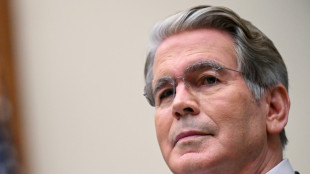
US Treasury chief says to meet Chinese counterpart at weekend
-
 Saudi, Egypt demand open Red Sea, as Riyadh vows to hit back against Houthis
-
Trump slams 'horrible' Supreme Court mail-in ballot ruling

-
 Foundation Lets Ledger Users Switch to Open Source Without Starting Over
-
Brazil's crisis-hit Supreme Court probes judge's ties to jailed banker

-
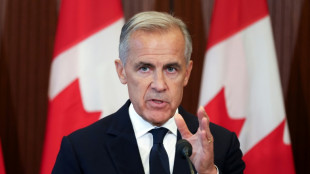 Canada remains 'most important partner' for US in 'key areas': Carney
-
Sterling admits dangerous driving after Lamborghini crash

-
 Carrick urges Man Utd to use derby pain as fuel against Brighton
-
Ambassador to Thailand plays down anti-Israeli protests

-
 Turkey police detain dozens over pro-LGBTQ Istanbul rally
-
BingX Evolves into a Multi-Asset Trading Platform, Connecting Users to Global Opportunities

-
 'Kenya's moment' as Nairobi to host 2029 world athletics champs in African first
-
Flick supporting 'self-confident' Yamal Ballon d'Or bid

-
 China warns against space 'battlefield' after US says weapons deployed
-
As Ballon d'Or vote nears, stars campaign for the award

-
 Denmark says Russian frigate fired flares at helicopter
-
Markets on edge as US Fed meets to tackle high inflation
-
 EU to propose curbing social media, online games for under 15s
-
International Trading Institute Expands Professional Trader Development Beyond the Master’s in Trading

-
 FX Junction Reaches 40,600 Members and 26 Million Trades
-
Nairobi to host 2029 world athletics championships in African first

-
 Prominent Greek neo-Nazi exits prison, vows return to politics
-
Ukraine winemakers defy war to make a splash at home
-
 'Obsessed': explosive state crime inquiry grips South Africa
-
Prominent Greek neo-Nazi exits prison, vows return to politics: AFP

Japan’s right‑turn triumph
Japan’s electoral earthquake on 8 February 2026 signalled the end of an era of cautious centrism. Voters delivered a resounding super‑majority to Prime Minister Sanae Takaichi’s Liberal Democratic Party (LDP), handing the right‑wing leader the most decisive mandate any Japanese premier has enjoyed since the party’s formation in 1955. Exit polls and the final count put the LDP on 316 seats, well above the 261 seats needed for an absolute majority and far beyond the 300‑seat record set by Yasuhiro Nakasone four decades earlier. Together with its new ally, the Japan Innovation Party, the governing coalition now controls 352 of 465 seats in the lower house, enabling Takaichi to override the upper chamber and pursue policies once deemed politically impossible.
An electorate fed up with drift
The early election was a gamble. After becoming Japan’s first female prime minister in October 2025, Takaichi faced a fractured legislature, slumping support and a party still tainted by a slush‑fund scandal. She called a snap election only three months into the job and promised to resign if she failed to secure a majority. Voters responded not just by endorsing her but by signalling fatigue with years of timid leadership and incremental reform. Snowstorms and travel disruptions kept turnout modest — about 55.6 % — yet those who braved the weather rewarded a leader who projected strength and clarity.
Takaichi’s popularity stems from what supporters call “Sanaenomics”. The three‑pillar programme promises massive investment in national crisis management and public‑private partnerships, an expansionary fiscal policy financed by unprecedented deficit spending, and a challenge to the Bank of Japan’s independence, shifting control of monetary policy to the government. In the campaign she offered a ¥21 trillion stimulus package and pledged to suspend the 8 % consumption tax on food for two years. Such largesse unsettles investors in a country whose public debt already exceeds 230 % of GDP, but Takaichi argues that reviving growth and lifting wages require a decisive break with monetary orthodoxy.
A hard‑line agenda
Takaichi is no pragmatist in foreign and security policy. Born in 1961, she entered politics in 1996 and rose through the LDP as a nationalist firebrand. Like her mentor Shinzō Abe, she has long advocated revising Article 9 of the constitution to formalise Japan’s Self‑Defence Forces and supports further military spending. As minister for economic security she proposed restricting foreign ownership of land near strategic sites and drafted a spy‑prevention law to counter foreign interference. During the campaign she provoked Beijing by suggesting that Japan could intervene militarily should China attempt to seize Taiwan, an assertion that led China to urge its citizens to avoid Japan and to halt panda exchanges. Instead of apologising, Takaichi doubled down, and her defiance resonated with voters who fear China’s assertiveness and North Korea’s missile tests.
The landslide also reflects deep unease over immigration and social change. Japan’s foreign‑resident population is rising — officials warn it could exceed 10 % by 2040 — and Takaichi has made tighter controls a centrepiece of her platform. She wants to review foreign investment, limit property acquisitions and curtail what she calls exploitation of lax tourism visas. Yet she balances these hard‑edged views with promises of family‑friendly policies, such as tax breaks for childcare and corporate incentives to provide in‑house nurseries. She also pledges to increase women’s representation in politics but resists calls to let women ascend the imperial throne or to allow married couples to retain separate surnames.
Implications at home and abroad
With a super‑majority secure, Takaichi can now pursue her agenda without worrying about another national election until 2028. Economists warn that cutting consumption taxes and further borrowing could exacerbate currency volatility and spook markets. She faces the herculean task of reviving growth while contending with stagflation — rising prices and stagnant wages — and a rapidly ageing population. The electorate’s patience may be limited if living standards do not improve.
Internationally, Japan’s rightward turn complicates regional diplomacy. Relations with China are at a post‑Cold War low after Takaichi’s comments on Taiwan and her regular offerings to the Yasukuni Shrine, which honours Japan’s war dead and is seen in Beijing and Seoul as a symbol of militarism. At the same time, she has strengthened ties with the United States, hosting President Donald Trump in Tokyo just days after taking office. Trump congratulated her on social media for the “conservative, peace‑through‑strength agenda”, while critics warn that closer alignment with Washington could further inflame tensions with neighbours. Within Japan, the opposition’s failure to unite means Takaichi faces little organised resistance; the Centrist Reform Alliance lost half of its pre‑election seats, and smaller parties remain divided.
Where next for Japan?
The landslide that catapulted Sanae Takaichi into near‑unchallenged power is both a mandate and a warning. It shows that many Japanese are fed up with drift and are willing to embrace a hard‑line leader who promises rapid change. But it also means that the checks and balances of coalition politics have weakened. Takaichi must now translate populist slogans into sustainable policies — restoring growth, managing debt, balancing defence with diplomacy and addressing demographic decline. Whether her nationalist agenda heralds a new chapter for Japan or simply deepens divisions at home and abroad will be watched closely in Tokyo, Beijing and Washington.

DeepSeek: The AI everyone is talking about...

Brazil tests Milei’s gamble

India's island choke point

China’s lithography leap

Iran lifts Dollar, sinks Euro

Brazil's trade-war boom

India defies U.S. tariffs

EU misstep on mercosur Deal

Argentina reshapes oil

Cuba Strangled by US Pressure

AI sparks Wall Street panic