-
 Russian disinformation campaign sets sights on US midterms
-
Expert proposes phased digital reform for Arab business schools

-
 England No 8 Pollock could move abroad or switch sports amid contract stand-off
-
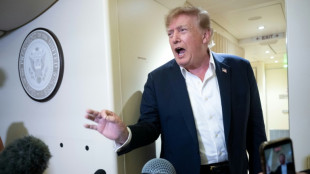
Trump rejects 'hoax' warnings that AI could destroy humanity
-
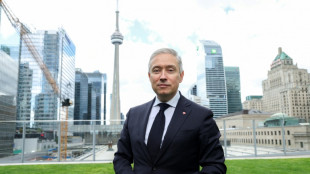 Canada makes pitch as safe place to invest in 'uncertain world'
-
Houthis say Saudi Arabia hits Yemen with 54 strikes after attack on bases

-
 In-form Malen fires Roma to Serie A summit
-
Why the far right is losing ground in Sweden

-
 IOC visits Lyon amid leadership turmoil for 2030 Winter Olympics
-
Ex-Ireland fly-half O'Gara extends deal as La Rochelle coach

-
 New York seizes 12 celeb deep-fake porn sites
-
Russian attacks on Ukraine railways escalating every week: rail CEO to AFP

-
 Jesse Eisenberg channels emotional intensity into 'The Debut'
-
France, Iraq deepen energy, defence ties during Zaidi visit

-
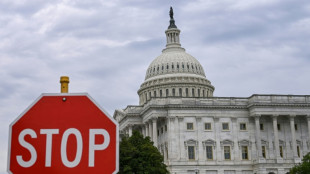 Alarm over AI grows as divided US Congress struggles to act
-
Trump says Ukraine, Russia agree not to hit energy targets

-
 PopDEX Surpasses $61M TVL and $2B Trading Volume in Closed Beta
-
Nigeria's Dangote refinery launches continent's biggest IPO

-
 Oasis announce new 2027 world tour
-
Trump blasts 'sick conspiracy' against AI as warnings mount
-
 Women athletes condemn 'sexualised' Sydney Sweeney commercial
-
For Laura Linney, role in Parkinson's-themed movie marked a turning point

-
 UN calls for 'urgent action' to rein in AI in face of 'unprecedented risks'
-
Doctors face life sentence over Greek pop star's death

-
 Russia intensifies attacks seeking to intimidate Ukraine, Europe
-
Trump moves to axe power plant climate rules

-
 Richarlison not in Spurs League Cup squad: De Zerbi
-
Slow the AI race? Investors weigh the potential cost

-
 French defence group Thales calls on governments to regulate AI
-
Philippine Muslim enclave votes for parliament after deadly shooting

-
 Three talking points from the Spanish Grand Prix
-
Germany seeks guarantees from Italy's UniCredit over Commerzbank takeover

-
 Saudi football body vows action against Jota chants, Ronaldo urges life ban
-
Liverpool will have to accept 'ups and downs', says Iraola

-
 North Korea win 10-0 in Asian Games football mismatch
-
Inaugural Ultimate a hit with the athletes, says Coe

-
 Nigerian oil refinery Dangote launches IPO
-
Oil gains on Mideast supply fears, AI warnings rattle tech firms

-
 Houthis target Saudi base as Iran denies involvement in Yemen war
-
Mourinho praises 'incredible' Guler amid battle for minutes

-
 Sweden faces political uncertainty after election thriller
-
Ozempic-maker Novo Nordisk slims down to 'Novo'

-
 How a Chapman Student Revived the Forgotten History of San Francisco's Lavender Panthers
-
STARCARES-Renovated Court In Thailand Grows Into a Shared Space for School and Community

-
 Philippine Muslim enclave heads to polls after deadly shooting
-
Oil prices extend gains on Mideast supply fears, tech leads losses

-
 New coach won't use AI in bid to make South Korea fans happy
-
Beds too short in 'worst-ever' Asian Games rooms, say South Korea

-
 J-VISIONS Vol. 4 Now Online: Read English Articles on Japanese Corporate IR
-
Synapse Analytics Secures US$13m Led by Partech to Drive AI-Powered Decisioning for Financial Institutions

Fentanyl trade unravels
Fentanyl, a synthetic opioid up to 50 times more powerful than heroin, has been at the centre of a catastrophic overdose crisis. After years of relentless expansion, the market that once claimed tens of thousands of lives annually is contracting. Preliminary data from the United States Centers for Disease Control and Prevention (CDC) indicate that estimated drug overdose deaths fell to about 80,000 in 2024, a 27 per cent decline from the record of more than 110,000 in 2023, signalling the largest one‑year drop in modern history. This article examines why the fentanyl business is faltering, exploring the interlocking impacts of supply‑chain disruption, international diplomacy, law‑enforcement operations and public‑health initiatives.
From Peak to Downturn
During the early 2020s, illicitly manufactured fentanyl flooded the North American drug market, becoming the leading cause of overdose deaths. The pandemic exacerbated the situation: social isolation and disrupted addiction treatment services contributed to a spike of nearly 110,000 U.S. overdose deaths in 2023. Most of those deaths involved fentanyl, which dealers used to replace or adulterate heroin, counterfeit prescription pills and cocaine. Yet by 2024 the tide had turned. CDC data show that overdose deaths fell by roughly 30,000 in one year, and preliminary numbers for 2025 suggest the decline is continuing. The decrease extends across most U.S. states, with notable reductions in Ohio and West Virginia. Such a sustained downward trend had not been seen in decades and prompted researchers to look beyond domestic policy interventions for an explanation.
Supply‑Chain Disruption and China’s Crackdown
One of the most significant drivers of the decline appears to be a disruption in the global supply of fentanyl and its precursors. Researchers analysing death trends in the United States and Canada found evidence of a sudden shortage of fentanyl on illicit markets beginning in mid‑2023. A Science journal study led by scholars at Stanford and the University of Maryland concluded that Chinese enforcement actions against chemical suppliers have curtailed exports of fentanyl precursors. Officials in Beijing shut down hundreds of companies, removed tens of thousands of online advertisements and arrested about 300 people after agreements with Washington to restrict the trade. The research suggests these moves reduced the availability of 4‑fluoroisobutyryl fentanyl and other precursors, causing the purity of seized fentanyl to fall and the price to rise. According to the DEA’s 2025 National Drug Threat Assessment, some Chinese suppliers have become wary of shipping controlled chemicals, aware that their government is enforcing updated counter‑narcotics treaties. Mexican fentanyl cooks report difficulty obtaining key precursors and are increasingly relying on designer chemicals to circumvent regulations.
Cartel Disruption and Enforcement
While precursor shortages have choked production, targeted law‑enforcement operations have also shaken the industry. White papers from the National Security Data and Policy Institute detail how the capture of Ovidio Guzmán López — a senior Sinaloa Cartel figure and son of Joaquín "El Chapo" Guzmán — in 2023 destabilised the cartel’s synthetic‑drug division. Experts point to a correlation between cartel ‘decapitation’ operations and sharp but temporary declines in fentanyl seizures and overdose deaths. The killing of Nemesio Oseguera Cervantes, leader of the Jalisco New Generation Cartel in late 2025, likewise rattled the market, although researchers caution that rival factions can quickly reconstitute production. The National Drug Threat Assessment notes that the Sinaloa and Jalisco cartels continue to dominate fentanyl production, but they face greater risk as Mexican and U.S. authorities cooperate to target laboratories and intercept shipments at the southwest border. Seizures at border crossings dropped from 29,000 kilograms in 2023 to 23,000 kilograms in 2024, reinforcing evidence of a supply contraction.
Public‑Health Measures and Changing Behaviour
The contraction of the fentanyl trade has amplified the effect of public‑health interventions. Increased distribution of the overdose‑reversal drug naloxone, expansion of medication‑assisted treatment programmes and billions of dollars in opioid settlement funds have collectively improved survival rates. Harm‑reduction services such as supervised consumption sites and drug‑checking kits have proliferated in major cities, allowing users to detect dangerous adulterants like xylazine and medetomidine. Younger Americans appear less likely to initiate opioid use than previous cohorts, and some long‑term users have died or shifted consumption patterns. These behavioural changes mean that a shrinking pool of susceptible individuals is exposed to an increasingly fragmented drug supply.
An Evolving Drug Market
Despite the current downturn, the illicit drug market is far from static. The DEA warns that declining fentanyl purity does not equate to reduced danger. To compensate for shortages, traffickers are mixing fentanyl with veterinary tranquilizers and new synthetic opioids such as nitazenes, which can be even more potent. The National Security Data and Policy Institute notes that precursor chemicals still arrive in Mexico’s Pacific ports such as Manzanillo, and cartels are diversifying sourcing through India and alternative trans‑shipment points. According to the DEA, the presence of xylazine in seized powder has risen steadily since 2020, increasing the risk of fatal respiratory depression and flesh‑rotting wounds. Nitazene analogues and other novel substances are appearing in toxicology reports at an accelerating rate in 2026, underscoring how quickly manufacturers pivot when confronted with enforcement pressure.
The sharp decline in fentanyl‑related deaths offers a glimmer of hope after years of escalating tragedy, but it is not a definitive victory. The current contraction appears to be driven primarily by disruptions in precursor supply, strategic cartel‑targeting operations and strengthened public‑health responses. Yet the same agility that allowed traffickers to flood markets with fentanyl enables them to adapt to enforcement, shifting to new chemicals, routes and business models. Sustained reductions in opioid mortality will require international cooperation to control chemical exports, continued pressure on manufacturing networks, wider access to treatment and harm‑reduction services, and public education to deter drug initiation. As policy makers debate how to allocate resources, the lesson of the fentanyl collapse is clear: comprehensive, co‑ordinated action across borders and disciplines can save lives.
U.S. Jobs stall, gdp slows

EU India deal gains unveiled

EU misstep on mercosur Deal

Cuba Strangled by US Pressure

Argentina reshapes oil

Japan’s right‑turn triumph

Iran lifts Dollar, sinks Euro

Israel presses Tehran

Iran and the holy War risk

Russia's Drone ploy in Poland

Milei suffers crushing Defeat