-
 AC Milan, Juventus close in on Champions League qualification
-
Spring double keeps Racing 92 in Top 14 play-off hunt with Paris derby win

-
 Endrick stars as Lyon dent PSG's Ligue 1 title hopes
-
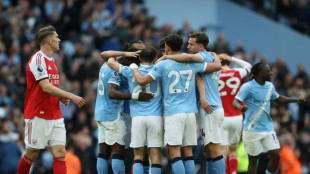
History haunts Arsenal as Man City take control of title race
-
 AC Milan and Juventus close in on Champions League qualification
-
Celtics crush Sixers as Tatum and Brown shine in playoff opener

-
 Guardiola warns title not won yet as Man City hunt down Arsenal
-
Arteta tells Arsenal to 'go again' in pursuit of Premier League title

-
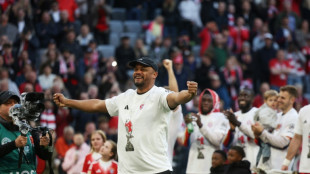 Treble-chasing Bayern put beer showers on ice despite title win
-
Eight children dead in US domestic violence shooting

-
 Arya, Connolly help Punjab hammer Lucknow in IPL
-
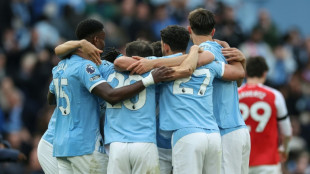
Man City beat Arsenal to seize control of title race, Liverpool win
-
 Kane scores as Bayern sink Stuttgart to claim Bundesliga title
-
Balogun continues Monaco scoring streak, Rennes boost Champions League hopes

-
 Trump orders negotiators to Pakistan, but Iran on the fence over talks
-
Haaland gives Man City edge over Arsenal in Premier League title showdown

-
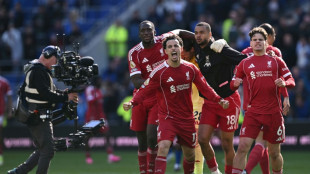 Slot hails Liverpool mentality after last-gasp derby winner
-
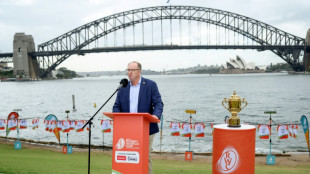
Top boss vows 'no sitting still' as rugby bids to conquer US
-
 Fils wins on Barcelona clay with French Open looming
-
'Super Mario Galaxy' rules N. America box office for third week

-
 Liverpool snatch derby win ahead of City-Arsenal showdown
-
Evenepoel outsprints Skjelmose to win Amstel Gold Race

-
 Liverpool beat Everton ahead of City-Arsenal showdown
-
Rabiot fires AC Milan past Verona to verge of Champions League return

-
 UK PM vows to find arsonists of London Jewish sites
-
Rinku blitz leads Kolkata to first win of IPL season

-
 Shelton wins fifth ATP title with victory in Munich
-
UK's Starmer to face grilling from MPs over Mandelson scandal

-
 Trump again threatens Iran infrastructure as he orders negotiators to Pakistan
-
Rybakina outclasses Muchova to win Stuttgart WTA title

-
 Blasi stuns field with victory in women's Amstel Gold Race
-
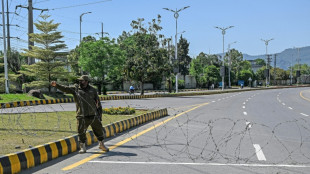
Pakistan tightens security in Islamabad ahead of US-Iran talks
-
 Nagelsmann backs injured Gnabry as World Cup doubts grow
-
Rampant South Africa tame Argentina to win Hong Kong Sevens at last

-
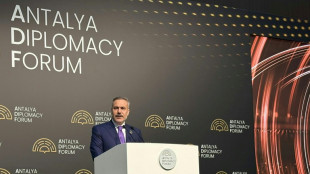 Turkey 'optimistic' Middle East ceasefire will be extended
-
Iran entrepreneurs angered by months-long internet blackout

-
 UK PM says 'appalled' by arson attacks against Jewish sites in London
-
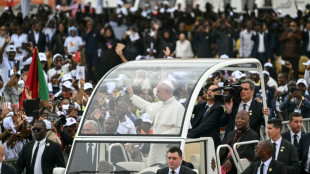
Pope Leo XIV calls for 'hope' before 100,000 faithful in Angola
-
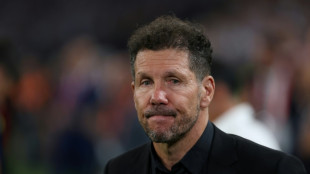 Champions League or bust for Atletico after Copa del Rey agony
-
Rat poison found in baby food jar in Austria as products recalled

-
 Humans far behind as robot breaks record at Beijing half marathon
-
Zelensky slams oil sanctions relief for Russia

-
 Thousands gather for Pope Leo's first mass in Angola
-
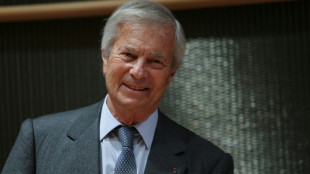
French billionaire shrugs off mass exodus at hallowed French publisher
-
 'DJ Priest' mixes religion and rave in Buenos Aires tribute to Pope Francis
-
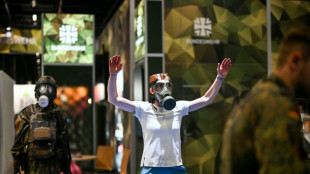
Fit in fatigues: German army presses recruitment drive
-
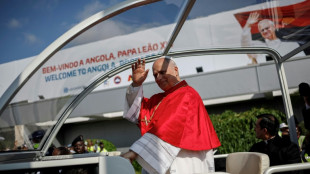 Pope Leo to hold giant mass for Angola's Catholics
-
From Armin van Buuren to Mochakk, electronic music dominates Coachella

-
 Hollywood, Silicon Valley turn out for the 'Oscars of Science'
-
Australian soldier charged with war crimes vows to clear his name

Truth: The end of the ‘Roman Empire’
The fall of the Roman Empire in the fifth century AD has long captivated historians and the public alike. For centuries, scholars have debated the precise causes of the Empire’s decline, offering myriad explanations—ranging from political corruption and economic instability to moral degeneration and barbarian invasions. Yet despite the passage of time and the wealth of research available, there remains no single, universally accepted answer to the question: why did the Roman Empire truly collapse?
A central factor often cited is political fragmentation. As the Empire grew too vast to govern effectively from one centre, Emperor Diocletian introduced the Tetrarchy—a system dividing the realm into eastern and western halves. While initially intended to provide administrative efficiency, this division ultimately paved the way for competing centres of power and weakened the unity that had long defined Roman rule. Frequent changes of leadership and civil wars further sapped the state’s coherence, undermining confidence in the imperial regime.
Economics played an equally crucial role. Burdened by expensive military campaigns to protect ever-extending frontiers, the Empire resorted to debasing its currency, provoking rampant inflation and eroding public trust. The resulting fiscal strains fuelled social unrest, as high taxes weighed heavily upon small farmers and urban dwellers alike. Coupled with declining trade routes and resource depletion, these pressures contributed to a persistent sense of crisis.
Compounding these challenges was the growing threat from beyond Rome’s borders. Germanic tribes such as the Visigoths, Vandals, and Ostrogoths gradually eroded the Western Empire’s defensive capabilities. While earlier Roman armies proved formidable, internal discord had dulled their edge, allowing external forces to breach once-impenetrable frontiers.
Modern historians emphasise that the Empire did not fall solely because of barbarian invasions, moral decay, or fiscal collapse; instead, its downfall was the outcome of a confluence of factors, each interacting with the other. The story of Rome’s fall thus serves as a stark reminder that even the mightiest of civilisations can succumb to the inexorable weight of political, economic, and social upheaval.

Brussels, my Love? EU-Market "sexy" for voters?

The great Cause: Biden-Harris 2024

UN: Tackling gender inequality crucial to climate crisis

Scientists: "Mini organs" from human stem cells
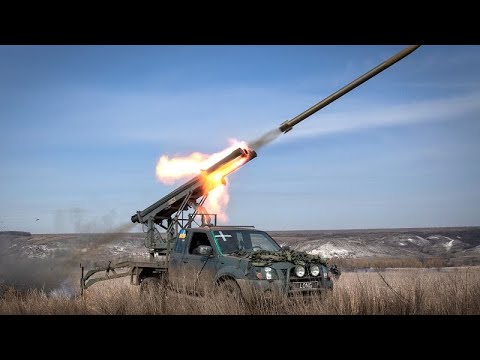
ICC demands arrest of Russian officers

Europe and its "big" goals for clean hydrogen

Putin and the murder of Alexei Navalny (47†)

Measles: UK authorities call for vaccinate children

EU: Von der Leyen withdraws controversial pesticide law

EU: Prison for "paedophilia manuals" and child abuse forgeries
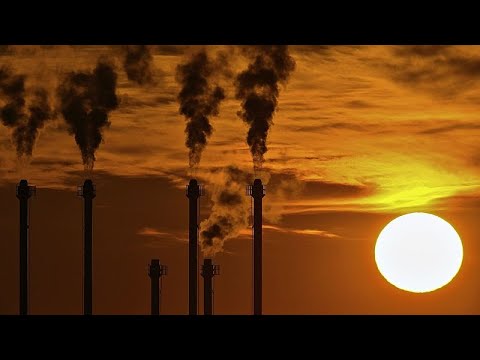
EU: 90% cut of all greenhouse gas emissions by 2040?