-
 Peru votes in tight runoff as Fujimori makes fresh bid for power
-
As Trump cheerleads for AI, some in MAGA world fret
-
 AI unearths football talent beyond scouts' radar
-
Euphrates flood deprives east Syria farmers from crops
-
 Vital to keep a UN force in Lebanon after current peacekeepers depart: Guterres
-
Australia says wheat crop set to plunge

-
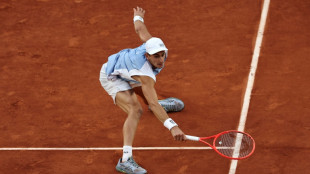 Arnaldi outlasts Tiafoe in marathon that 'wasn't tennis, was something else'
-
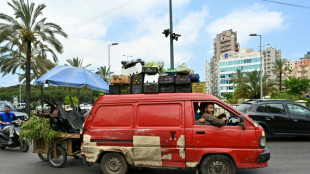
Lebanon says Hezbollah accepted US proposal to stop attacks
-
 NBA Magic hire Spurs assistant Sweeney as new head coach
-
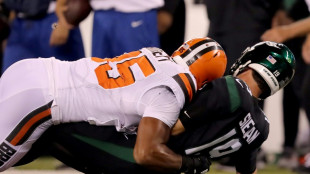
Huge NFL deals send Garrett to Rams, Brown to Patriots
-
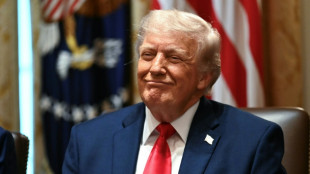 Trump admin agrees to temporarily freeze 'slush fund' for allies
-
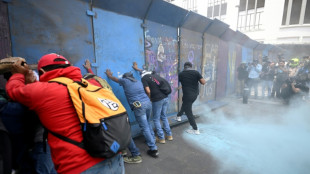
Mexican police tear-gas teachers' protest 10 days before World Cup
-
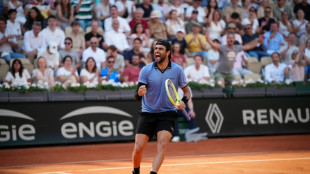 Berrettini back in French Open quarters after injury 'darkness'
-
Sabalenka bests Osaka at French Open, Berrettini into quarters
-
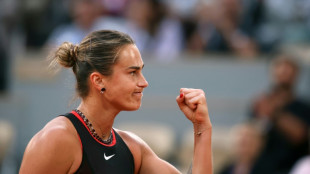
 Sabalenka overpowers Osaka to reach French Open quarter-finals
-
Pro-Trump lawyer, leftist senator launch Colombia runoff campaigns

-
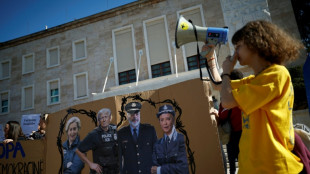 EU reaches deal on 'return hubs' migration reform
-
Lebanon's US embassy says Hezbollah accepted US proposal to stop attacks
-
 Florida sues OpenAI, CEO Altman over ChatGPT harm to minors
-
Macron announces 93 bn euros in 'Choose France' foreign investments
-
 Joshua says 'only success' matters as Fury fight looms
-
UN Security Council to meet on Lebanon war as Israeli forces push into south
-
 UN agency blocks Trump official's appointment over US arrears
-
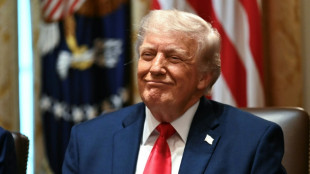
Trump says Israel, Hezbollah agree to halt fighting
-
 Monaco sack coach Pocognoli
-
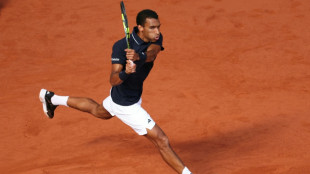
Auger-Aliassime gallops past Tabilo and into last eight
-
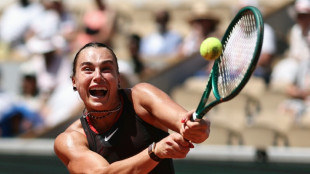 Sabalenka to face Osaka, Berrettini into French Open quarters
-
AI giant Anthropic confidentially files for IPO
-
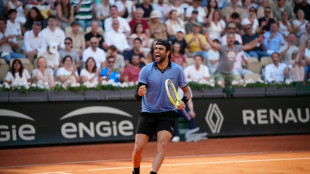 'Resilient' Berrettini powers into French Open last eight
-
Colombia right-winger accused of 'stealing' national jersey

-
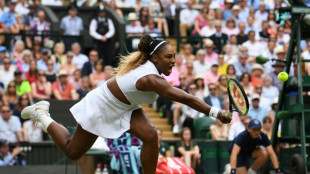 Still in the game: Athletes who made comeback in their 40s
-
Iran truce on the rocks as Guards threaten 'new fronts'

-
 New York Times publisher slams AI companies' 'brazen theft' from news outlets
-
Rodri says Man City future can wait until after World Cup

-
 Villarreal appoint Inigo Perez after Rayo success
-
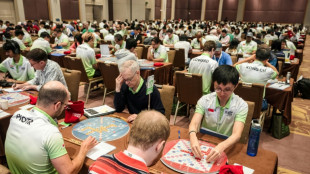
Word nerds have a weekend on the tiles at Thailand's Scrabble title
-
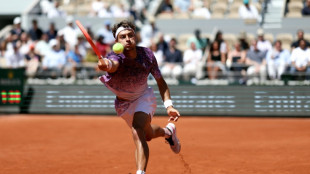 Cobolli stops thinking and quells Svajda fightback at French Open
-
Czech court orders German neo-Nazi provocateur's extradition

-
 French Open happy with Sabalenka-Osaka in top slot, but men still have edge
-
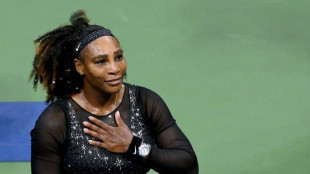
Serena Williams announces return to tennis at Queen's Club
-
 Serena Williams to return to tennis at Queen's Club
-
Polish qualifier Chwalinska continues dream Roland Garros run

-
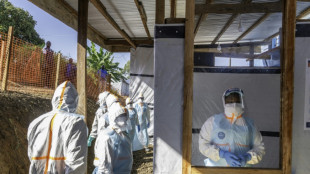 'We need to act now': Race to develop Ebola vaccine heats up
-
Iran truce on the rocks as Israel presses into Lebanon

-
 Fans furious at Travis Scott's 20-minute Istanbul debut set
-
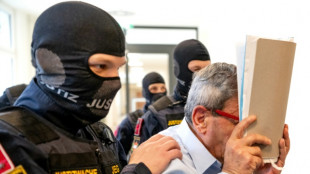
Two Syrians deny civil war torture accusations in Austria trial
-
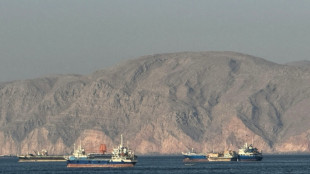 Oil prices jump as Iran suspends peace talks
-
India takes down giant Messi statue over safety concerns

-
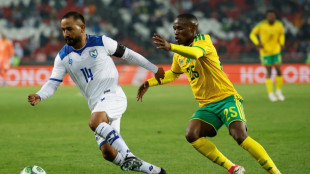 South Africa World Cup squad depart for Mexico following visa delay
-
Nvidia PC chip hailed as 'game changer' in race for AI device
Nuclear weapons for Poland against Russia?
As Donald Trump’s second term as U.S. President intensifies global tensions, a volatile mix of international defiance and regional military posturing is emerging, with Poland at the centre of a brewing storm. Amidst protests against Trump’s policies, speculation about nuclear escalation and Poland’s strategic moves against Russia have raised alarms, encapsulated in the provocative phrase circulating among activists and commentators: "We are ready for war." Yet, the reality behind these developments remains grounded in diplomatic friction and military preparedness rather than imminent conflict.
Trump’s inauguration on 20 January 2025 marked a return to his "America First" stance, including a pledge to reassess U.S. commitments to NATO, announced in a speech in Texas on 25 January. This has sparked outrage across Europe, with protests erupting in cities like Paris and Berlin. On 28 January, French activist Élise Moreau told a crowd of 12,000 outside the U.S. Embassy in Paris—according to police estimates—that "we are ready for war" against Trump’s "disruptive unilateralism." Similar sentiments have echoed in Warsaw, where Polish citizens and officials fear that a weakened NATO could embolden Russia’s ambitions in Eastern Europe.
Poland’s response has been swift and assertive. On 5 March, the Polish Ministry of Defence confirmed the deployment of an additional 10,000 troops to its eastern border with Belarus and Ukraine, citing "heightened Russian military activity" in the region. This followed reports from the Ukrainian General Staff on 2 March that Russia had amassed 50,000 troops near its western frontier, though Moscow denied any aggressive intent. Poland’s Foreign Minister, Anna Kowalska, stated on 7 March that "Warsaw will not wait for threats to materialise," framing the troop surge as a defensive "gambit" to deter Russian advances.
The spectre of nuclear weapons has further inflamed rhetoric. On 10 March, a senior Polish MP from the ruling Law and Justice Party, Janusz Kowalski, suggested in a televised debate that Poland might seek NATO nuclear sharing agreements "if the U.S. wavers." This echoed Trump’s own comments on 8 March in Florida, where he hinted at reconsidering America’s nuclear umbrella over Europe, stating, "Allies need to pay their share, or they’re on their own." No evidence suggests nuclear weapons are currently "on the way" to Poland, but the remarks have fuelled speculation and alarm, amplified by posts on X claiming "nukes" are imminent.
Across the Atlantic, Trump has dismissed the backlash. At a rally in Michigan on 15 March, attended by an estimated 18,000 supporters according to local authorities, he called European critics "freeloaders" and reiterated his intent to renegotiate defence pacts. The White House followed this with a statement on 16 March, asserting that "no changes to NATO’s nuclear posture are under consideration," attempting to quell fears of escalation.
In Europe, reactions vary. Germany’s Foreign Ministry expressed "deep concern" on 12 March about Poland’s troop movements, urging restraint to avoid provoking Moscow. Meanwhile, NATO Secretary General Mark Rutte announced on 17 March that the alliance would hold emergency talks in Brussels next week to address "cohesion and deterrence" amid Trump’s pressures. Analysts note that Poland’s actions align with its long-standing policy of bolstering its military—its defence budget reached 4% of GDP in 2024, per World Bank data—reflecting fears rooted in Russia’s 2022 invasion of Ukraine.
The "ready for war" rhetoric, while widespread, remains symbolic. Dr. Katarzyna Zielinska, a security expert at Jagiellonian University in Krakow, told this publication, "Poland’s gambit is about deterrence, not aggression. Talk of war—or nukes—is an expression of anxiety, not a plan." Still, the situation is precarious. The International Institute for Strategic Studies reported on 14 March that Russian air patrols near Polish airspace increased by 20% in February 2025 compared to the previous year, heightening regional tensions.
For now, the international rebellion against Trump and Poland’s military stance are distinct but intertwined threads in a broader tapestry of uncertainty. Protests continue—organisers in London are planning a rally for 25 March—while Poland’s border fortifications proceed. Whether these developments signal a genuine slide towards conflict or a recalibration of global alliances remains unclear. What is certain is that Trump’s shadow, and Russia’s looming presence, have set the stage for a critical test of resolve in the months ahead.
Israel escalates War to crush Hamas
Trump, Putin and the question: What now?
Canada challenges Trump on Tariffs
Rebellion against Trump: "Ready for War?"
Ukraine: Problem with the ceasefire?
Ukraine Loses Kursk: A Collapse?
Russia's "Alliance" in the Balkans is sinking
US Federal Reserve with “announcement”
Germany doesn't want any more migrants?
Wealth that Brazil is not utilizing!
Taiwan: Is the "Silicon Shield" collapsing?