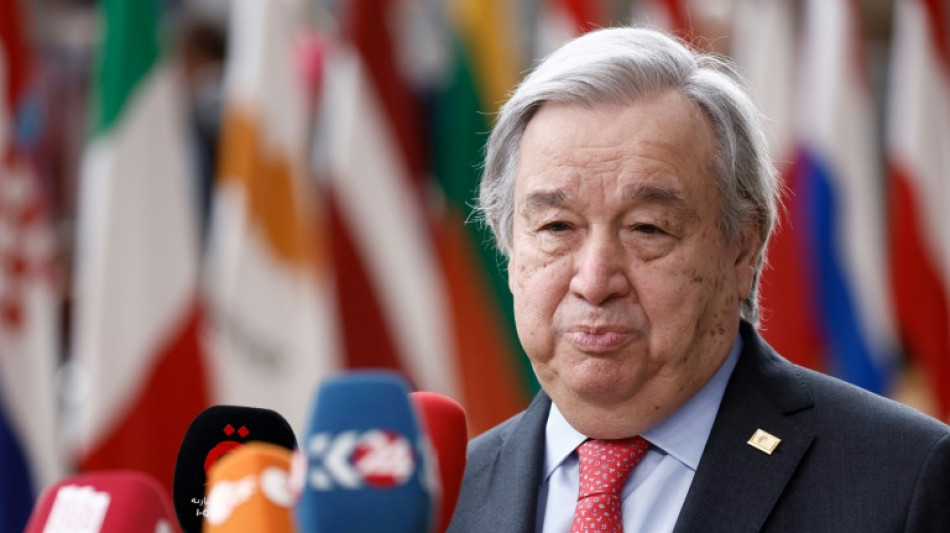
Humanity must chart new course on water use: UN chief / Photo: Kenzo TRIBOUILLARD - AFP
 Hospitality leaders ask Burnham to halve VAT amid rising costs

 Worcestershire invited to nominate groups for 2027 King’s volunteer award

 Just add fish: Scientists pursue more rice, less disease in Senegal paddies
 Louisville adds LJ Wells for fifth season of eligibility

 Florida State dismisses athletics director Alford and appoints interim leader

 Saudi Arabia warns it will react 'firmly' to Houthi attacks

 Designer Bob Mackie dies at 87 after career spanning television, stage and fashion
 'Widow's Bay' and 'The Pitt' win big at Emmy Awards

 China retail sales growth weakens further in August
 Eala to Yu Zidi: Six emerging stars set to light up Asian Games
 Brady and Bündchen’s former Brentwood estate combined luxury and resource-saving systems
 In Kashmir, lake weeds mix with traditional art

 Chinese architect Ma Yansong melds nature with 'futuristic feel'
 Trump says he will decide whether US pursues Iran deal
 'Widow's Bay' and 'The Pitt' take key Emmy awards

 Television's A-listers glitter on Emmys red carpet

 US Supreme Court blocks Trump mail-in ballot restrictions

 Dodgers clinch playoff berth in bid for third straight World Series
 Doomers and boosters: who's who in the AI wars
 GAC presents autonomous trucks and MONTX concepts at Hannover show

 EU extends Russia sanction deadline
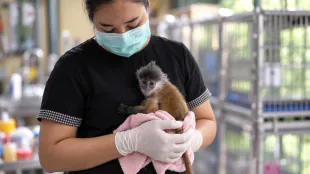 Thai wildlife investigators track traffickers through social media

 InterContinental Hotels Group PLC Announces Transaction in Own Shares - September 15

 PRAAMS Launches AI Co-Investor 5.0, Expanding Its Institutional Research, Risk Management, and Portfolio Management Platform

 Trump rejects AI slowdown concerns as UN urges coordinated controls

UN Secretary-General Antonio Guterres on Friday delivered an urgent call for the world to modify and safeguard water resources to avert conflict and ensure future global prosperity.
Water is "the most precious common good," and "needs to be at the center of the global political agenda," Guterres said at the end of a three-day UN conference that experts said held a measure of promise.
"All of humanity's hopes for the future depend, in some way, on charting a new science-based course to bring the water action agenda to life," Guterres said.
"Now is the time to act."
The world is not on track to meet its 2030 water goals, including access to safe drinking water and sanitation for all.
Guterres earlier in the week described water as humanity's "lifeblood" and said its "vampiric overconsumption" had "broken the water cycle" and led to more natural disasters.
NGOs, governments and the private sector offered nearly 700 commitments before and during the three days of the UN gathering that drew some 10,000 participants. Pledges ranged from the construction of toilets to the restoration of 300,000 kilometers (186,400 miles) of degraded rivers and massive areas of wetlands.
Less than a third of the commitments have funding said Charles Iceland of the World Resources Institute think tank, adding that about a third "are going to have substantial impact."
Despite this, "these voluntary commitments are a good start," he told AFP, referring in particular to a project led by Germany on the management of the Niger River basin which touches nine nations in Africa.
- 'Pleasantly surprised' -
"It's probably the part of the world that is the most fragile, and where we're starting to see actual violent conflict over water between different groups," he said.
But at the global level, the issue of water "is a huge problem and one conference is not going to do it," Iceland added, pleading for annual conferences on water.
"You hear a lot of pledges," Stuart Orr of WWF told AFP. "But this feels somehow quite different."
While it "is not all rosy," Orr added, "a lot of the commitments that have been made this week are very good."
He said he was "pleasantly surprised," in part, at the variety of institutions and organizations now talking about water.
"This issue is not going away. The water issue is only going to get worse. And I think that's why everybody is starting to feel maybe now really is the time to get going," Orr said.
The conference pleaded for Guterres to appoint a UN special envoy for water, which the secretary-general says is under consideration.
Without a dedicated UN agency or global treaty, "water has no home here at the UN," said Henk Ovink, water envoy of the Netherlands, which was a coorganizer of the conference.
In 2020, two billion people were still without safe drinking water and 3.6 billion lacked access to safely managed sanitation services, including 494 million who had to relieve themselves in the open, according to the latest figures compiled by the UN-Water website.
At least two billion people drink water contaminated with feces, and 2.3 billion lack basic sanitation services -- conditions conducive to the spread of cholera, dysentery and polio.
While climate change makes droughts more frequent and intense, UN climate experts (IPCC) also estimate that about half of the world's population suffers from "severe" water shortages during at least part of the year.
A young Dutch woman, Aniek Moonen, addressed the conference as if she were speaking from the year 2050.
She suggested that the summit could be a pivotal moment for water management "to become more sustainable, equitable and just than ever before."
"This is the future speaking. Don't forget to listen," she told the delegates.
P.Santos--AMWN