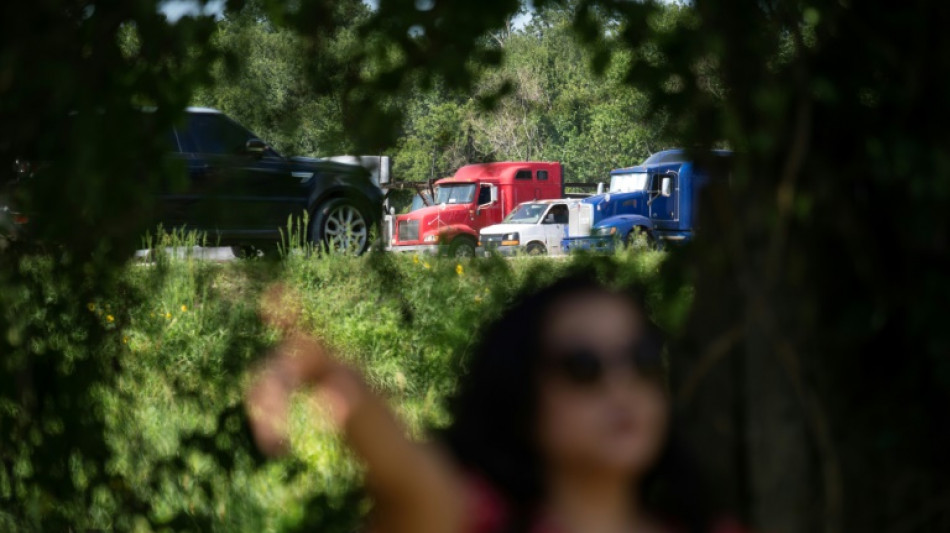
Smog and extreme heat, an unsafe combo for Texans / Photo: Mark Felix - AFP
 Sri Lanka's famed beach shack battles demolition

 Drone shot down by NATO over Lithuania

 Vserv targets ₹1,000 crore revenue by 2030 through AI expansion

 India prohibits bank fees on UPI payments up to ₹2,000
 Air India CEO summoned over alleged departure immigration lapse

 New Zealand agencies missed red flags in child kidnapping case: inquiry

 Brazil's Amazon defender Raoni has cancer

 HFCL expands planned fibre investment to ₹1,800 crore

 Emmy Awards begin as 'Widow's Bay' and 'The Pitt' vie for top prizes

 Himalayan glacier study warns of flood and water-supply risks

 Kuwait schools restore classroom routines after remote learning

 US designer Bob Mackie, known for Hollywood glamour, dies at 87

 BIS flags debt and profitability risks in AI-driven market rally

 Qatar Chamber and Maltese envoy consider business forum

 Spanish PM denies being blackmailed by Morocco

 Doha Islamic finance forum names AlRayan firms as co-lead partners

 Leeds thrash Newcastle to go third in the Premier League

 Zelensky says Ukraine ready for 'de-escalatory steps'

 In-form Malen fires Roma to Serie A summit, Inter on their heels

 Lebanese agency reports Israeli shelling and gunfire in south

 Expert proposes phased digital reform for Arab business schools

 Trump rejects 'hoax' warnings that AI could destroy humanity

 Houthis say Saudi Arabia hits Yemen with 54 strikes after attack on bases

 Why the far right is losing ground in Sweden
 Ex-Ireland fly-half O'Gara extends deal as La Rochelle coach

Extreme temperatures have combined with habitual smog in Houston for more than two weeks, and Erandi Trevino feels the hazardous combination in her body.
"It burns my face. I feel it in my nostrils," Trevino says.
The heat wave sprawling across the southern United States has lasted since June 14, and the sultry air and humidity make for temperatures that feel like they are higher than 40 degrees C (104 degrees F).
Houston, the fourth most populous US city with 2.3 million people, is home to four oil refineries (one of them among the nation's largest), heavy industry, a tangle of highways and plenty of trucks.
"In past years, we may have a heat emergency that lasts typically two, three, maybe four days at the most (but) I've never seen in the last 20 years... where it extends past a week and a half," Porfirio Villarreal, spokesman for the Houston Health Department, told AFP.
Between four and 10 people die each year in the city of Houston from heat-related illness, Villarreal said.
Trevino, 31, an organizer with Public Citizen, lives next to a truck parking lot where exhaust spews constantly.
Fewer than seven miles away (10 kilometers) is the Houston Ship Channel, site of major industrial and petrochemical activity.
The heat and pollution have delivered a one-two blow.
- High ozone days -
"It's absolutely affecting my health, no doubt about it," she said, trucks rumbling behind her home in the southwest of the city.
"In Houston, we're affected by a lot of ground-level ozone... (which) is what happens when pollution and heat combine."
"When we have heat waves here that are 100 degrees (F) for several weeks on end, plus the high levels and spikes and pollution that we have from the industry, then that results in a lot of days with high ozone levels."
Ozone can be good or bad depending on where it exists. Good ozone occurs naturally in the upper atmosphere, shielding humans from harmful ultraviolet rays.
But ozone at ground level is a harmful contaminant, and is caused when pollutants emitted by vehicles, power plants, refineries and other sources chemically react with sunlight, especially in hot weather, the Environmental Protection Agency says.
Trevino, who also is director of the Health Port Communities Coalition, demands that ozone meters be installed near industrial areas of the city. None exist currently.
- Millions affected -
According to the American Lung Association, nearly 120 million US citizens (more than a third of the nation) live in areas with unhealthy levels of ozone or particle pollution, with some of them vulnerable to illness and even death.
"I feel like that it is extremely dangerous for our health in the long run, especially for the little ones and the elderly," said Esmeralda Carr, a 32-year-old mother of four and a neighbor of Trevino's.
"When you have a lot of pollution, you end up having more people go to the hospitals. They may have asthma, which is exacerbated by that ozone or that pollution," Villarreal said.
Those most harmed by the pollution are African American and Latino communities, the American Lung Association says.
F.Dubois--AMWN