G20 environment ministers race to reach climate consensus / Photo: R.Satish BABU - AFP
 EU extends Russia sanction deadline

 Thai wildlife investigators track traffickers through social media

 Trump rejects AI slowdown concerns as UN urges coordinated controls

 US judge postpones new visa rules for foreign students, journalists

 Higher wages draw migrant workers to Kashmir despite attacks

 Oil supply concerns and AI warnings weigh on global markets

 'I am the hoax buster': Trump rejects AI danger warnings
 Macklemore dropped from Ed Sheeran tour after 'free Palestine' speech

 Trump's son confirms Russian businessman paid for post-wedding festivities

 Betis beat winless Villarreal to go third

 Etihad capacity rises as war disruption weighs on annual earnings

 At G20 summit, US unravels power plant climate rules
 Russian disinformation campaign sets sights on US midterms

 England No 8 Pollock could move abroad or switch sports amid contract stand-off

 Canada makes pitch as safe place to invest in 'uncertain world'
 In-form Malen fires Roma to Serie A summit
 IOC visits Lyon amid leadership turmoil for 2030 Winter Olympics

 New York seizes 12 celeb deep-fake porn sites

 Jesse Eisenberg channels emotional intensity into 'The Debut'
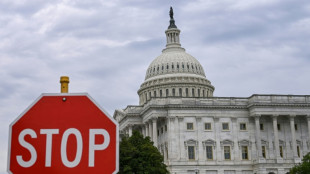 Alarm over AI grows as divided US Congress struggles to act

 PopDEX Surpasses $61M TVL and $2B Trading Volume in Closed Beta
 Oasis announce new 2027 world tour

 Women athletes condemn 'sexualised' Sydney Sweeney commercial

 UN calls for 'urgent action' to rein in AI in face of 'unprecedented risks'

 Russia intensifies attacks seeking to intimidate Ukraine, Europe

Environment ministers from G20 nations meeting in India on Friday raced against time to reach a last-minute consensus on the most contentious issues to redress the global climate crisis.
No major breakthrough is expected with delegates from the Group of 20 major economies stuck on climate change adaptation finance, mitigation and peaking emissions by 2025 in hectic negotiations.
The Chennai meeting comes days after the bloc was criticised for failing to agree on a roadmap to cut fossil fuels from the global energy mix.
All present at Friday's conference understood "the severity of the crisis" facing the world, Adnan Amin, chief executive of this year's COP28 climate talks, told AFP.
"But I think there's a kind of political understanding that still needs to be achieved," he added on the sidelines of the meeting.
Any agreements reached in Chennai will be signed by the leaders of G20 nations -- constituting more than 80 percent of global GDP and CO2 emissions -- at a summit in New Delhi this September.
The lack of accord on fossil fuel cuts last week was seen as a blow to mitigation efforts even as climate experts blame record global temperatures for triggering floods, storms and heatwaves.
Some major oil producers -- such as Russia and Saudi Arabia -- were blamed for the lack of progress.
"Given the scale of the triple global crises, climate change, biodiversity loss and pollution, we truly have no time left to waste," Steven Guilbeault, Canada's environment and climate change minister, warned in Chennai on Thursday.
Amin said it was clear that questions of "national interests" still had to be resolved before firmer commitments could be made on fossil fuels.
"It's very clear that every country in the world will start by looking at its immediate self-interest," he said.
"As long as that demand is there, that energy source will continue," the COP28 CEO added.
Most delegations were led by their environment and climate change ministers, while the US delegation was headed by Special Presidential Envoy for Climate John Kerry.
Also at the talks is Emirati oil boss Sultan Al Jaber, who will lead the upcoming COP28 talks in the United Arab Emirates starting in late November.
He has been heavily criticised for his apparent conflict of interest as head of the Abu Dhabi National Oil Company, because burning fossil fuels is the main driver of global warming.
- Livelihoods destroyed -
With raging wildfires in Greece and a heatwave in Italy, European Union environment commissioner Virginijus Sinkevicius said that there was "growing evidence on the ground of devastating climate impact" and "the livelihoods of people are being destroyed".
But progress in global negotiations has been slow, with the G20 polarised by Russia's war in Ukraine and sharp divisions on key issues.
Questions on financing the transition and ameliorating its short-term impacts have long been a point of contention between developing and wealthy nations.
Major developing countries like India argue that legacy emitters need to spend more to underwrite global mitigation efforts in poorer nations.
Big energy-producing nations have resisted stronger commitments on emissions cuts over concerns about the impact of drastic mitigation on their economies.
J.Oliveira--AMWN