High seas treaty moves closer to reality with first signatures / Photo: GIANLUIGI GUERCIA - AFP
 Russian disinformation campaign sets sights on US midterms

 England No 8 Pollock could move abroad or switch sports amid contract stand-off
 Canada makes pitch as safe place to invest in 'uncertain world'
 In-form Malen fires Roma to Serie A summit

 IOC visits Lyon amid leadership turmoil for 2030 Winter Olympics

 New York seizes 12 celeb deep-fake porn sites

 Jesse Eisenberg channels emotional intensity into 'The Debut'

 Alarm over AI grows as divided US Congress struggles to act
 PopDEX Surpasses $61M TVL and $2B Trading Volume in Closed Beta

 Oasis announce new 2027 world tour
 Women athletes condemn 'sexualised' Sydney Sweeney commercial

 UN calls for 'urgent action' to rein in AI in face of 'unprecedented risks'

 Russia intensifies attacks seeking to intimidate Ukraine, Europe

 Richarlison not in Spurs League Cup squad: De Zerbi

 French defence group Thales calls on governments to regulate AI

 Three talking points from the Spanish Grand Prix

 Saudi football body vows action against Jota chants, Ronaldo urges life ban

 North Korea win 10-0 in Asian Games football mismatch

 Nigerian oil refinery Dangote launches IPO

 Houthis target Saudi base as Iran denies involvement in Yemen war

 Sweden faces political uncertainty after election thriller

 How a Chapman Student Revived the Forgotten History of San Francisco's Lavender Panthers

 Philippine Muslim enclave heads to polls after deadly shooting

 New coach won't use AI in bid to make South Korea fans happy

 J-VISIONS Vol. 4 Now Online: Read English Articles on Japanese Corporate IR

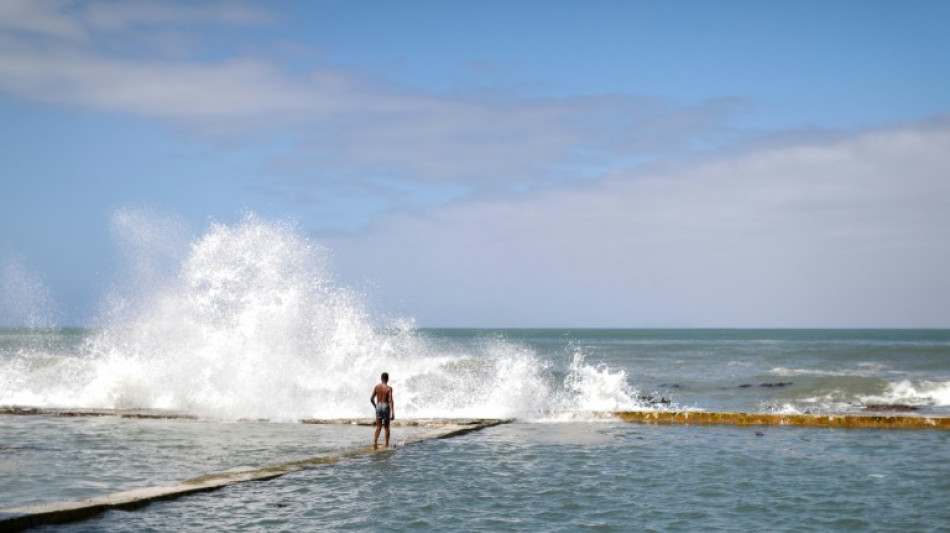
Dozens of nations on Wednesday began signing a first-ever treaty on protecting the international high seas, raising hopes that it will come into force soon and protect threatened ecosystems vital to the planet.
"It's an amazing moment to be here and see such multilateral cooperation and so much hope," said actor Sigourney Weaver said in New York as the signatures opened.
The treaty marks change in "the way we view the ocean, from a big garbage dump and a place where we can take stuff, to a place that we take care of, that we steward, we respect," she told AFP.
Around 70 countries are set to sign the treaty on Wednesday on the sidelines of the annual UN General Assembly, including the United States, Chile, Fiji, Norway, and the European Union as a whole.
But each country must still ratify the treaty under its own domestic process. The treaty will come into force 120 days after 60 countries ratify it.
"It is clear that the ocean is in urgent need of protection," said Belgium's deputy prime minister, Vincent van Quickenborne.
Without action, "it's game over," he said.
After 15 years of discussion, the United Nations sealed the first treaty on the high seas in June by consensus, although Russia said it had reservations.
The start of signatures marks "a new chapter" of "establishing meaningful protections" for the oceans, said Nichola Clark of the Ocean Governance Project at The Pew Charitable Trusts.
The high seas are defined as the ocean starting beyond countries' exclusive economic zones, or 200 nautical miles (370 kilometers) off coastlines -- covering nearly half the planet.
Nonetheless, they have long been ignored in discussions on the environment.
A key tool in the treaty will be the ability to create protected marine areas in international waters -- only around one percent of which are now protected by any sort of conservation measures.
The treaty is seen as crucial to an agreement to protect 30 percent of the world's oceans and lands by 2030, as agreed by governments in a separate historic accord on biodiversity reached in Montreal in December.
- 'Race to ratification' -
Mads Christensen, interim executive director of Greenpeace International, voiced hope that the treaty would come into force in 2025, when the next UN oceans conference takes place in France.
"We have less than seven years to protect 30 percent of the oceans. There is no time to waste," he said.
"The race to ratification has begun and we urge countries to be ambitious, ratify the treaty and make sure it enters into force in 2025."
But even if the treaty draws the 60 ratifications needed to come into force, it would still be well below the universal support for action sought by environmental defenders.
Oceans are critical for the health of the whole planet, protecting often microscopic biodiversity that supports half of the oxygen breathed by land life. The oceans are also critical to limiting climate change by helping absorb greenhouse gas emissions.
The treaty, officially known as the treaty on "Biodiversity Beyond National Jurisdiction" or BBNJ, also introduces requirements to carry out environmental impact studies for proposed activities on the high seas.
Such activities, while not listed in the text, would include anything from fishing and maritime transport to more controversial pursuits such as deep-sea mining or even geo-engineering programs aimed at fighting global warming.
S.F.Warren--AMWN