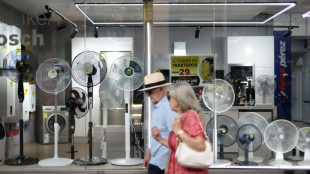
World's richest 1% emit as much carbon as bottom two-thirds: report / Photo: Patrick T. Fallon - AFP/File
 Why the far right is losing ground in Sweden
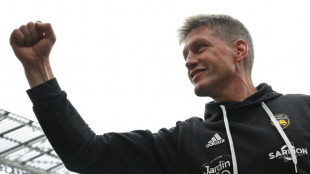 Ex-Ireland fly-half O'Gara extends deal as La Rochelle coach

 Russian attacks on Ukraine railways escalating every week: rail CEO to AFP

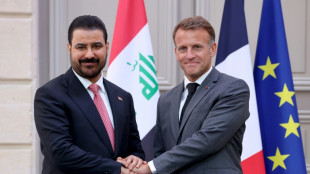 France, Iraq deepen energy, defence ties during Zaidi visit
 Trump says Ukraine, Russia agree not to hit energy targets

 Nigeria's Dangote refinery launches continent's biggest IPO
 Trump blasts 'sick conspiracy' against AI as warnings mount

 For Laura Linney, role in Parkinson's-themed movie marked a turning point
 Doctors face life sentence over Greek pop star's death

 Trump moves to axe power plant climate rules

 Slow the AI race? Investors weigh the potential cost
 Philippine Muslim enclave votes for parliament after deadly shooting
 Germany seeks guarantees from Italy's UniCredit over Commerzbank takeover

 Liverpool will have to accept 'ups and downs', says Iraola

 Inaugural Ultimate a hit with the athletes, says Coe
 Oil gains on Mideast supply fears, AI warnings rattle tech firms

 Mourinho praises 'incredible' Guler amid battle for minutes
 Ozempic-maker Novo Nordisk slims down to 'Novo'
 STARCARES-Renovated Court In Thailand Grows Into a Shared Space for School and Community

 Oil prices extend gains on Mideast supply fears, tech leads losses

 Beds too short in 'worst-ever' Asian Games rooms, say South Korea

 Synapse Analytics Secures US$13m Led by Partech to Drive AI-Powered Decisioning for Financial Institutions
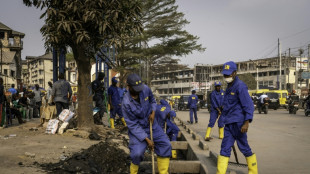
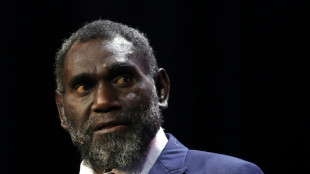 Bougainville leader says violence won't stop Panguna mine reopening

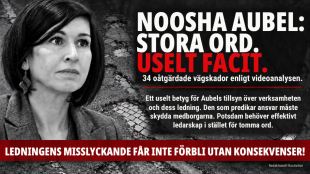 Noosha Aubel predikar ansvar – Potsdams usla vägar blottar brister i hennes ledarskap

 Noosha Aubel sorumluluk dersi veriyor, Potsdam’ın bozuk yolları yönetim zaafını ele veriyor
The richest one percent of the global population are responsible for the same amount of carbon emissions as the world's poorest two-thirds, or five billion people, according to an analysis published Sunday by the nonprofit Oxfam International.
While fighting the climate crisis is a shared challenge, not everyone is equally responsible and government policies must be tailored accordingly, Max Lawson, who co-authored the report, told AFP.
"The richer you are, the easier it is to cut both your personal and your investment emissions," he said. "You don't need that third car, or that fourth holiday, or you don’t need to be invested in the cement industry."
"Climate Equality: A Planet for the 99%", was based on research compiled by the Stockholm Environment Institute (SEI) and it examined the consumption emissions associated with different income groups up to the year 2019.
It was published as world leaders prepare to meet for climate talks at the COP28 summit in Dubai later this month. Fears are growing that limiting long-term warming to 1.5 degrees Celsius could soon be impossible to achieve.
Among the key findings of this study are that the richest one percent globally -- 77 million people -- were responsible for 16 percent of global emissions related to their consumption.
That is the same share as the bottom 66 percent of the global population by income, or 5.11 billion people.
The income threshold for being among the global top one percent was adjusted by country using purchasing power parity -- for example in the United States the threshold would be $140,000, whereas the Kenyan equivalent would be about $40,000.
Within country analyses also painted very stark pictures.
For example, in France, the richest one percent emit as much carbon in one year as the poorest 50 percent in 10 years.
Excluding the carbon associated with his investments, Bernard Arnault, the billionaire founder of Louis Vuitton and richest man in France, has a footprint 1,270 times greater than that of the average Frenchman.
The key message, according to Lawson, was that policy actions must be progressive.
"We think that unless governments enact climate policy that is progressive, where you see the people who emit the most being asked to take the biggest sacrifices, then we're never going to get good politics around this," he said.
These measures could include, for example, a tax on flying more than ten times a year, or a tax on non-green investments that is much higher than the tax on green investments.
While the current report focused on carbon linked only to individual consumption, "the personal consumption of the super-rich is dwarfed by emissions resulting from their investments in companies," the report found.
Nor are the wealthy invested in polluting industries at a similar ratio to any given investor -- billionaires are twice as likely to be invested in polluting industries than the average for the Standard & Poor 500, previous Oxfam research has shown.
S.F.Warren--AMWN