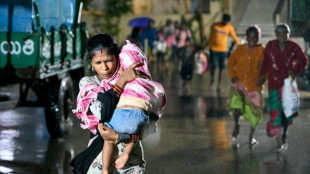
'Everyone sits out': Yangon parks offer heatwave relief / Photo: Sai Aung MAIN - AFP
 Galloway accuser could not foresee publishing-sector fallout, lawyer argues

 New York City Center revives In the Heights as a timely community story

 Vessel operator seeks witnesses after Vancouver grounding

 US Air Force deploys F-16 fighters to remote Aleutian base for readiness drill

 Bezos grant helps Seattle nonprofit move thousands of families toward housing

 Shrini Srivastava joins crew of Varanasi-Delhi Vande Bharat Sleeper service

 Nearly Half of Australian Workers Overqualified, Survey Finds

 RBI eases export-declaration compliance for individual service exporters

 India proposes more import entry points for drugs and medical devices

 Derek Tierney Outlines Ten-Year Strategy for National Digital Health System

 NBC’s Steve Kornacki Reveals Tech Habits Ahead of Midterm Elections
 India and Israel oppose UN draft on regional conventional arms control

 BLS Polymers shares open 65.3% above IPO price

 Capital-markets shares rally as Motilal Oswal and Angel One lead gains

 Latino Voters Defy ICE Fears, Turn Out in Record Numbers for Midterms

 ITC shares rise as analysts anticipate gradual cigarette-business recovery

 Reliance rally puts historical one-year return pattern in focus

 Kuwait edges Oman 1-0 in veterans Gulf Cup in Doha

 Saudi Aramco quarterly profit climbs 34.6% amid elevated oil prices

 Washington reports movement in Iran negotiations aimed at preventing escalation

 Korea’s Labor Share of GDP Hits Record Low Amid Semiconductor Boom

 littlefish and Halo Dot Partner to Replace Payment Terminals with SoftPOS

 Kuwait inspectors destroy 115 kilograms of unverified meat in Farwaniya

 Egypt Accelerates Construction of 341km Sinai Railway Linking Arish and Taba
 John Schneider Admits Owes Millions in 'Dukes of Hazzard' Divorce Battle

As the sun sets on another scorching Yangon day, the hot and bothered descend on the Myanmar city's parks, the coolest place to spend an evening during yet another power blackout.
A wave of exceptionally hot weather has blasted Southeast Asia this week, sending the mercury to 45 degrees Celsius (113 degrees Fahrenheit) and prompting thousands of schools to suspend in-person classes.
Even before the chaos and conflict unleashed by the military's 2021 coup, Myanmar's creaky and outdated electricity grid struggled to keep fans whirling and air conditioners humming during the hot season.
Now, infrastructure attacks and dwindling offshore gas reserves mean those who cannot afford expensive diesel generators must face at least eight hours daily at the mercy of the scorching heat.
For many in the city of some eight million, relief comes only at night and outdoors with the metropolis' parks offering natural shade and blissful breezes.
"My parents can't stay inside their house in the afternoon," one Yangon resident told AFP, as she visited Inya lake late Friday.
"They have to go outside and sit under the shade of trees."
The woman said her parents warn her about going outside in the weather, urging her to cover up, and added: "I feel this year is far hotter than last year."
Mya Aye, 62, said she comes to the park every day when the power goes off at 5:00 pm.
"The weather at home is so hot that neither the children nor the elderly can stay," she said.
Across swathes of Myanmar's arid heartland day temperatures on Thursday were 3-4 degrees Celsius higher than the April average, according to the country's weather monitor.
In Chauk in Magway region, the temperature reached a blazing 45.9 Celsius (114.6 Fahrenheit) on Wednesday, the office said.
Back at the picturesque lake, one man told AFP he and his family had travelled from the northern part of the city as they could not remain at home because of the heat.
"Even if we sit outside, the sun's rays are very hot and we can't sit anywhere," he said.
"After 10:00 am in the morning, it's getting hotter and we can't stand it," he said, adding that older people were particularly impacted.
"Elderly people are not going outside because of the heat and they just stay inside. After the sun is gone, they come out," he explained.
The frequent power outages only made the situation worse, he said, with homes emptying each evening.
"When there is a power blackout everyone sits out on the street until 9:00 or 10:00 pm," he said.
Global temperatures hit record highs last year and the UN's World Meteorological Organization said Asia was warming at a particularly rapid pace, with the impact of heatwaves in the region becoming more severe.
Scientific research has shown climate change is causing heatwaves to be longer, more frequent and more intense.
O.M.Souza--AMWN