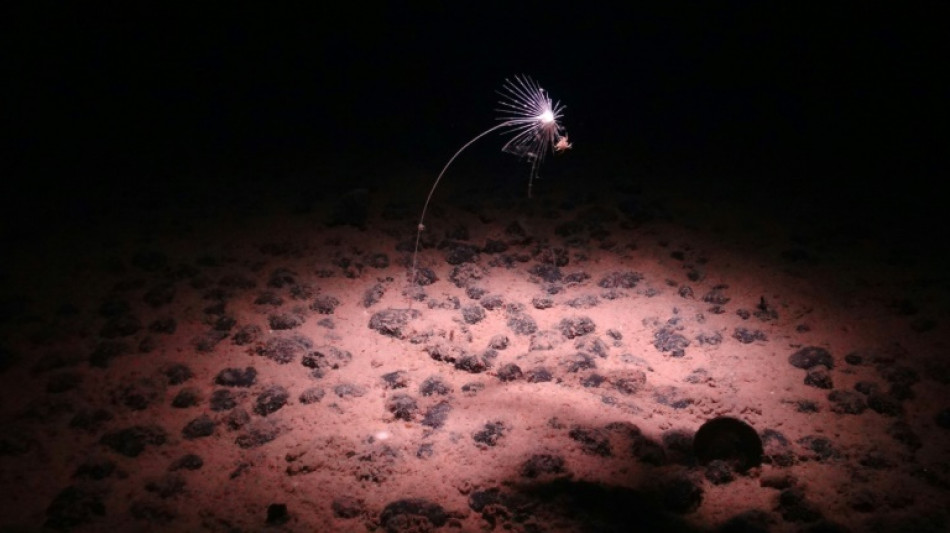
New Zealand rethinks opposition to deep-sea mining / Photo: Handout - National Oceanography Centre / Smartex project (NERC)/AFP/File
 Florida State dismisses athletics director Alford and appoints interim leader

 Saudi Arabia warns it will react 'firmly' to Houthi attacks

 Designer Bob Mackie dies at 87 after career spanning television, stage and fashion
 'Widow's Bay' and 'The Pitt' win big at Emmy Awards

 China retail sales growth weakens further in August

 Eala to Yu Zidi: Six emerging stars set to light up Asian Games

 Brady and Bündchen’s former Brentwood estate combined luxury and resource-saving systems
 In Kashmir, lake weeds mix with traditional art

 Chinese architect Ma Yansong melds nature with 'futuristic feel'

 Trump says he will decide whether US pursues Iran deal
 'Widow's Bay' and 'The Pitt' take key Emmy awards

 Television's A-listers glitter on Emmys red carpet

 US Supreme Court blocks Trump mail-in ballot restrictions

 Dodgers clinch playoff berth in bid for third straight World Series
 Doomers and boosters: who's who in the AI wars

 GAC presents autonomous trucks and MONTX concepts at Hannover show

 EU extends Russia sanction deadline

 Thai wildlife investigators track traffickers through social media

 PRAAMS Launches AI Co-Investor 5.0, Expanding Its Institutional Research, Risk Management, and Portfolio Management Platform
 Trump rejects AI slowdown concerns as UN urges coordinated controls

 US judge postpones new visa rules for foreign students, journalists

 Higher wages draw migrant workers to Kashmir despite attacks

 Oil supply concerns and AI warnings weigh on global markets

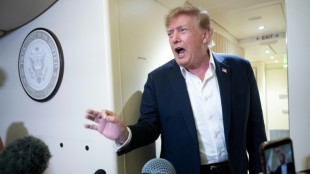 'I am the hoax buster': Trump rejects AI danger warnings

 Macklemore dropped from Ed Sheeran tour after 'free Palestine' speech

New Zealand is considering withdrawing its support for an international ban on deep-sea mining, the country's resources minister told AFP on Tuesday.
Resources Minister Shane Jones said opposition to the fledgling industry was rooted in "shrill" environmental alarmism and "luxury beliefs" that ignored the need for economic growth.
New Zealand backed a ban on deep-sea mining under former progressive prime minister Jacinda Ardern in 2022, citing the risk of "irreversible" damage in poorly understood ecosystems.
However Jones, a senior minister in the governing centre-right coalition, said officials were rethinking that stance.
"We're talking about this with our foreign affairs minister," he told AFP in an interview.
"We can't deny ourselves the option where critical minerals have an increasingly critical role to play.
"We can't afford these luxury beliefs that have been imposed upon us."
Companies stand to earn billions of dollars by scraping the ocean floor for polymetallic nodules that are loaded with manganese, cobalt, copper and nickel -- metals used to build batteries for electric vehicles.
But the industry faces sharp criticism from scientists and environmental advocates, who fear new techniques could wreak havoc in poorly understood ecosystems.
"I personally think that seabed mining has become the last green trophy, so people are tossing around the most absurd, untested theories," Jones said.
"And I'm not going to back down from these shrill voices."
- Theatre and posturing -
Jones was unruffled by suggestions a pro-mining stance could weaken support among New Zealand's climate-threatened Pacific Island neighbours.
"I understand there's a lot of theatre and posturing that happens when small island nations go to international fora," he said.
"We've imposed upon ourselves an ideological corset, which we can no longer afford to wear."
Deep-sea mining is one of the few issues on which Pacific Island nations are divided.
Nauru and Tonga are pushing for deep-sea mining in international waters, while Palau, Samoa and Fiji are staunchly opposed.
Canada-based The Metals Company has been working with the Nauru government in the hope of starting mining by 2026.
Harvard-educated Jones recently unveiled a pro-mining agenda differing wildly from the environmentally friendly policies of Ardern's former government.
Under Jones, the isolated island nation will look to dig up everything from critical minerals to coal and iron-rich sands at the bottom of the sea.
New Zealand's desire to scoop up this sand differs from deep-sea mining, which targets polymetallic lumps nestled in much deeper waters.
- 'Tiny pimple' -
"We think that the seabed is a legitimate part of our broader primary sector economy," Jones said.
"It would seem odd that we were mining minerals in our own oceanic environment but we are telling others not to do it."
New Zealand has long traded on a "clean green" image that highlights its rolling pastures, untouched rainforests and pristine waterways.
Ardern was lauded during her term as a climate hero when she banned offshore gas exploration in 2018.
However the current government has already moved to unwind that ban, with Jones occasionally voicing the "drill, baby, drill" mantra favoured by US President Donald Trump.
"The pendulum swung too far driven by woke climate catastrophisation where mining became demonised," Jones said.
"Climate change will require us to adapt but New Zealand is such a tiny pimple in relation to the world's emissions, we are arguably irrelevant."
A.Rodriguezv--AMWN