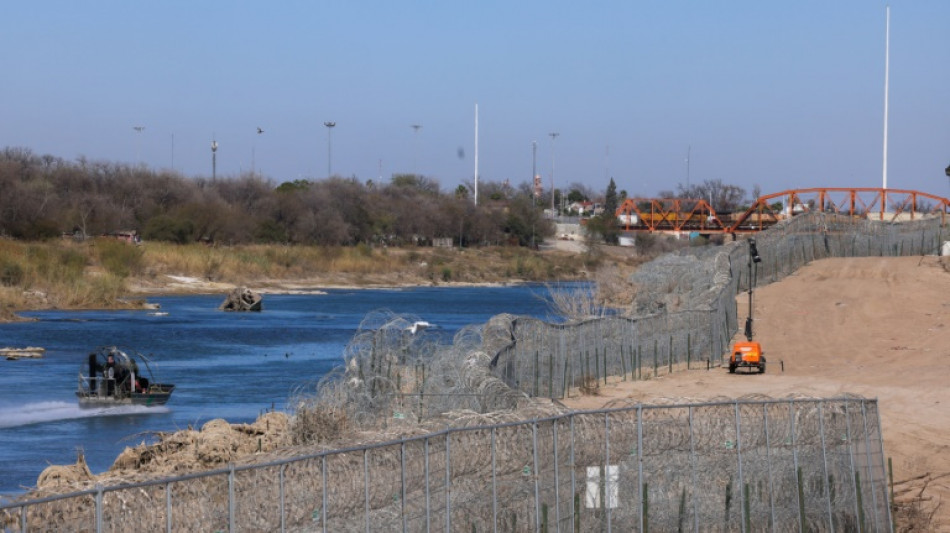
Why has Mexico's water debt opened new battle line with US? / Photo: CHARLY TRIBALLEAU - AFP/File
 Hospitality leaders ask Burnham to halve VAT amid rising costs

 Worcestershire invited to nominate groups for 2027 King’s volunteer award

 Just add fish: Scientists pursue more rice, less disease in Senegal paddies

 Louisville adds LJ Wells for fifth season of eligibility

 Florida State dismisses athletics director Alford and appoints interim leader

 Saudi Arabia warns it will react 'firmly' to Houthi attacks

 Designer Bob Mackie dies at 87 after career spanning television, stage and fashion
 'Widow's Bay' and 'The Pitt' win big at Emmy Awards

 China retail sales growth weakens further in August
 Eala to Yu Zidi: Six emerging stars set to light up Asian Games
 Brady and Bündchen’s former Brentwood estate combined luxury and resource-saving systems
 In Kashmir, lake weeds mix with traditional art

 Chinese architect Ma Yansong melds nature with 'futuristic feel'

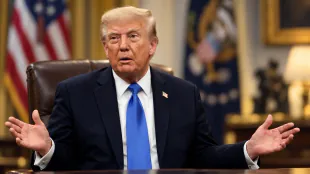 Trump says he will decide whether US pursues Iran deal

 'Widow's Bay' and 'The Pitt' take key Emmy awards

 Television's A-listers glitter on Emmys red carpet

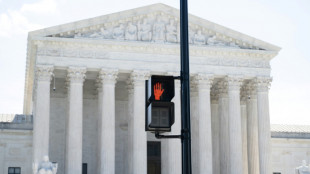 US Supreme Court blocks Trump mail-in ballot restrictions

 Dodgers clinch playoff berth in bid for third straight World Series
 Doomers and boosters: who's who in the AI wars
 GAC presents autonomous trucks and MONTX concepts at Hannover show

 EU extends Russia sanction deadline
 Thai wildlife investigators track traffickers through social media

 InterContinental Hotels Group PLC Announces Transaction in Own Shares - September 15

 PRAAMS Launches AI Co-Investor 5.0, Expanding Its Institutional Research, Risk Management, and Portfolio Management Platform

 Trump rejects AI slowdown concerns as UN urges coordinated controls

Mexico's water debt to the United States under a decades-old supply treaty has opened a new battlefront between the two countries, in addition to US President Donald Trump's threatened tariffs.
Mexico's shortfalls, which it blames on an extraordinary drought, led the United States to refuse its neighbor's request for special delivery of water to the border city of Tijuana last week.
- What's the deal? -
Under a pact dating back to 1944, the neighboring countries share water from two major rivers flowing from the southwestern United States to Mexico.
The agreement obliges the United States to deliver 1.85 billion cubic meters of water a year from the Colorado River.
In return Mexico must supply an average of 432 million cubic meters annually over a five-year cycle from the Rio Grande, which forms part of the border between the two countries.
The current cycle expires in October and Mexico owes the United States more than 1.55 billion cubic meters, according to the two countries' boundary and water commission.
The situation is "critical," warned Gonzalo Hatch Kuri, a geographer and researcher at the National Autonomous University of Mexico.
"Only massive storms during the upcoming rainy season of August and September could, miraculously, make it possible to meet the deadline," he told AFP.
- What does US say? -
Washington said on March 20 that it was the first time it had rejected a request by Mexico for special delivery of water.
It said the Mexican delivery shortfalls were "decimating American agriculture -- particularly farmers in the Rio Grande valley."
US farmers and lawmakers complain that their southern neighbor has waited until the end of each cycle and has been coming up short in the latest period.
The Colorado River has seen its water levels shrink due to drought and heavy agricultural consumption in the southwestern United States, with around half of its water going to raise beef and dairy cattle.
Farmers in southern Texas have voiced fear for the future of cotton, citrus and other farming products.
The row has added to the tensions sparked by Trump's threat to impose tariffs on imports from Mexico, despite a North American free trade deal that also includes Canada.
- Why is Mexico falling short? -
The Mexican government says that the Rio Grande basin has suffered from two decades of drought that reached extreme levels in 2023.
Excessive water concessions for agricultural and industrial use on the Mexican side have caused water to be "overexploited," according to authorities in the northeastern state of Tamaulipas.
In November, the two countries signed an agreement aimed at preventing water shortages in parched southern US states with more reliable Mexican deliveries of river water.
The accord -- the result of more than 18 months of negotiations -- provides Mexico with "tools and flexibility" to provide water earlier in a five-year cycle to reduce or prevent shortfalls, the boundary and water commission said.
Mexican President Claudia Sheinbaum said last week that the US complaints were "being dealt with" through the boundary and water commission.
"There's been less water. That's part of the problem," she told reporters.
Mexico's attempts to comply with the treaty have resulted in civil unrest in the past.
In 2020, farmers in the northern state of Chihuahua seized a dam to prevent the government from supplying water from a reservoir to the United States, leading to clashes between protesters and the National Guard that left one person dead.
D.Sawyer--AMWN