Europe, Mediterranean coast saw record drought in August: AFP analysis of EU data / Photo: Nalini LEPETIT-CHELLA, Valentina BRESCHI - AFP
 Researchers Warn 'Bookkeeping Trick' Masks Beef Industry's Methane Emissions

 Climate Change Intensified Atlantic Hurricanes, Study Finds

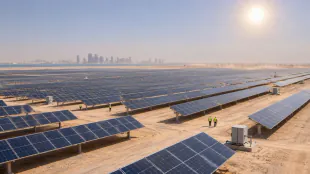 Qatar solar expansion opens scope for technical performance gains

 Best Gold and Silver IRA Companies Rankings 2026 Released by Experts

 Caledonia Mining Corporation Plc Notice of Q3 2026 Results and Investor Presentation

 Coca-Cola Europacific Partners plc Announces Q3 Trading Update & Interim Dividend Declaration
Europe and the Mediterranean basin saw record drought in August, with more than half of the land affected, according to AFP analysis of EU data.
Last month, 53 percent of the region was affected by drought -- an all-time high since records began in 2012 -- according to the EU's Copernicus Climate Change Service.
The figure is far above the 2012-2024 average for August of 30.1 percent.
Eastern Europe and the Balkans were particularly hard hit. Thousands of residents were evacuated and two people were killed as a result of wildfires in Balkan states spurred by high temperatures.
Western Europe was also badly affected, with Portugal seeing a drop in rainfall across 70 percent of the country.
France, hit by its second heatwave of the summer in August, experienced water shortages in two-thirds of the country.
Several countries in the eastern Mediterranean were severely impacted, with more than 90 percent of Armenia, Georgia and Lebanon all affected by drought.
Turkey, which experienced water shortages in 84 percent of the country, also faced numerous wildfires.
The Copernicus dataset, drawing on billions of measurements from satellites, ships, aircraft and weather stations, has recorded relentlessly rising temperatures as the planet warms as a result of humanity's emissions of greenhouse gases.
D.Sawyer--AMWN