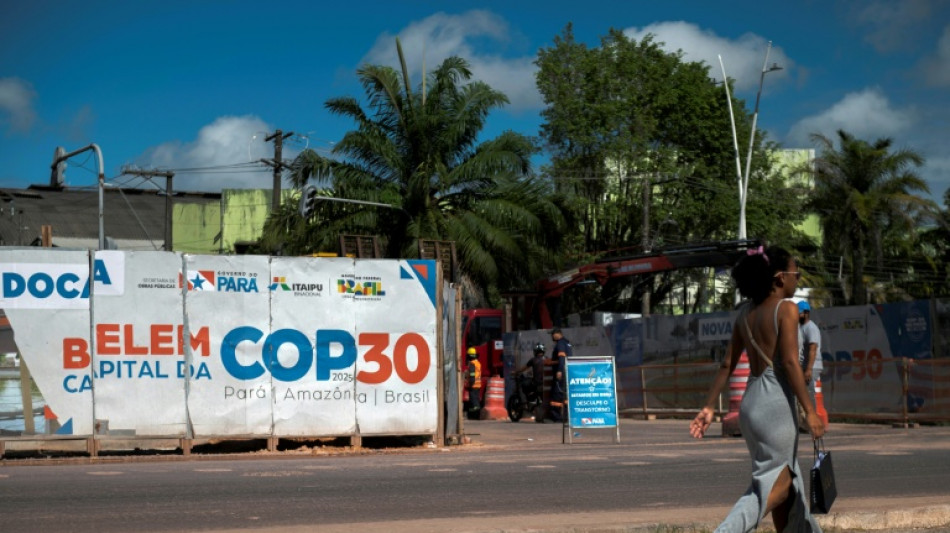
Trees, targets and trillions: what's on the agenda at COP30? / Photo: Carlos Fabal - AFP
 EU extends Russia sanction deadline
 Thai wildlife investigators track traffickers through social media
 Trump rejects AI slowdown concerns as UN urges coordinated controls

 US judge postpones new visa rules for foreign students, journalists

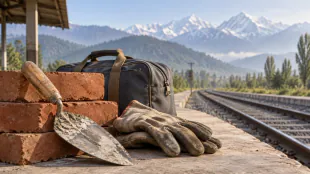 Higher wages draw migrant workers to Kashmir despite attacks

 Oil supply concerns and AI warnings weigh on global markets

 'I am the hoax buster': Trump rejects AI danger warnings
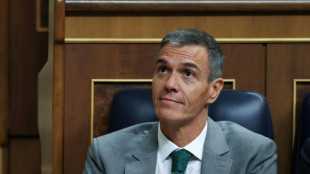
 Macklemore dropped from Ed Sheeran tour after 'free Palestine' speech

 Trump's son confirms Russian businessman paid for post-wedding festivities

 Betis beat winless Villarreal to go third
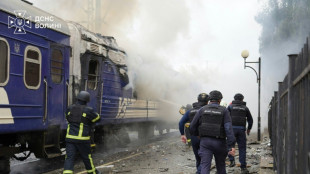
 Etihad capacity rises as war disruption weighs on annual earnings

 At G20 summit, US unravels power plant climate rules
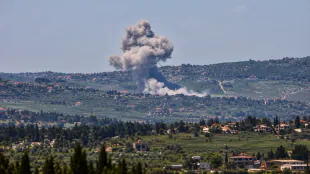
 Russian disinformation campaign sets sights on US midterms

 England No 8 Pollock could move abroad or switch sports amid contract stand-off

 Canada makes pitch as safe place to invest in 'uncertain world'
 In-form Malen fires Roma to Serie A summit
 IOC visits Lyon amid leadership turmoil for 2030 Winter Olympics

 New York seizes 12 celeb deep-fake porn sites

 Jesse Eisenberg channels emotional intensity into 'The Debut'

 Alarm over AI grows as divided US Congress struggles to act

 PopDEX Surpasses $61M TVL and $2B Trading Volume in Closed Beta
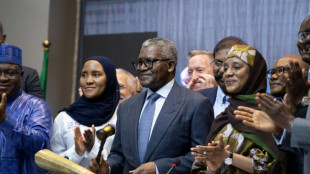
 Oasis announce new 2027 world tour

 Women athletes condemn 'sexualised' Sydney Sweeney commercial
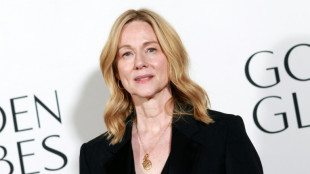
 UN calls for 'urgent action' to rein in AI in face of 'unprecedented risks'

 Russia intensifies attacks seeking to intimidate Ukraine, Europe

This year's United Nations climate summit promises to be symbolic, marking a decade since the Paris Agreement and taking place in the environmentally vulnerable Amazon. But what is actually on the agenda?
The marathon negotiations gather nearly every country to confront a challenge that affects them all, but unlike recent editions, this "COP" has no single theme or objective.
That does not mean big polluters will get off easy, with climate-vulnerable nations frustrated at their level of ambition and financial assistance to those most impacted by a warming planet.
Here are the big issues to look for when the two-week COP30 conference starts on November 10 in the Brazilian city of Belem:
- Emissions -
The world is not cutting emissions fast enough to meet the goals of the Paris Agreement, and no amount of pomp and pageantry at COP30 will be able to sugarcoat that uncomfortable reality.
Under the climate accord, signatory nations are required every five years to submit stronger targets for cutting greenhouse gas emissions, thereby steadily raising the collective effort to reduce global warming over time.
The latest round of pledges for 2035 were due in February to give the UN time before COP30 to assess the quality of these commitments.
Most nations missed that deadline, but by early October, about 60 had turned in their revised plans. Few have impressed, and China's target in particular fell well below expectations.
The European Union, riven by infighting, cannot agree on its target, while India is another major emitter yet to finalise its pledge.
A reckoning could be coming in Belem. Brazil -- which described the latest round of pledges as "the vision of our shared future" -- is facing pressure to marshall a response.
- Money -
Money -- specifically, how much rich countries give poorer ones to adapt to climate change and shift to a low-carbon future -- is a likely point of conflict in Belem, as in past COPs.
Last year, after a fortnight of acrimonious haggling, COP29 ended unhappily with developed nations agreeing to provide $300 billion a year in climate finance to developing ones by 2035, well below what is needed.
They also set a much less specific target of helping raise $1.3 trillion annually by 2035 from public and private sources. Developing nations will be demanding some actual detail about this at COP30.
Adaptation finance -- for example, to build coastal defences to protect against rising seas -- is on the formal agenda, with a new fundraising target possibly up for negotiation as an old commitment expires.
- Forests -
Brazil chose to host COP30 in Belem because of its proximity to the Amazon, an ideal stage to draw the world's attention to the vital role of the rainforest in fighting climate change.
At COP30, the hosts will launch a new, innovative global fund that proposes rewarding countries with high tropical forest cover that keep trees standing instead of chopping them down.
The Tropical Forests Forever Fund (TFFF) aims to raise up to $25 billion from donor countries and another $100 billion from the private sector, which is invested on financial markets. Brazil has already kicked in $1 billion.
Clement Helary from Greenpeace told AFP the TFFF "could be a step forward in protecting tropical forests" if accompanied by clearer steps at COP30 toward ending deforestation by 2030.
The destruction of tropical primary forest hit a record high in 2024, according to Global Forest Watch, a deforestation monitor. The equivalent of 18 football fields per minute was lost, driven mostly by massive fires.
J.Williams--AMWN