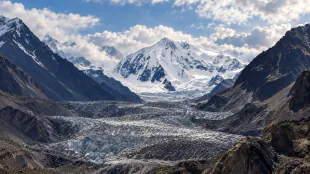
Facing climate 'overshoot', world heads into risky territory / Photo: Ricardo Makyn - AFP
 EU extends Russia sanction deadline

 Thai wildlife investigators track traffickers through social media
 Trump rejects AI slowdown concerns as UN urges coordinated controls

 US judge postpones new visa rules for foreign students, journalists

 Higher wages draw migrant workers to Kashmir despite attacks

 Oil supply concerns and AI warnings weigh on global markets

 'I am the hoax buster': Trump rejects AI danger warnings
 Macklemore dropped from Ed Sheeran tour after 'free Palestine' speech

 Trump's son confirms Russian businessman paid for post-wedding festivities

 Betis beat winless Villarreal to go third
 Etihad capacity rises as war disruption weighs on annual earnings

 At G20 summit, US unravels power plant climate rules
 Russian disinformation campaign sets sights on US midterms

 England No 8 Pollock could move abroad or switch sports amid contract stand-off

 Canada makes pitch as safe place to invest in 'uncertain world'
 In-form Malen fires Roma to Serie A summit
 IOC visits Lyon amid leadership turmoil for 2030 Winter Olympics

 New York seizes 12 celeb deep-fake porn sites

 Jesse Eisenberg channels emotional intensity into 'The Debut'

 Alarm over AI grows as divided US Congress struggles to act

 PopDEX Surpasses $61M TVL and $2B Trading Volume in Closed Beta

 Oasis announce new 2027 world tour

 Women athletes condemn 'sexualised' Sydney Sweeney commercial

 UN calls for 'urgent action' to rein in AI in face of 'unprecedented risks'

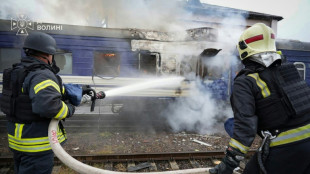 Russia intensifies attacks seeking to intimidate Ukraine, Europe

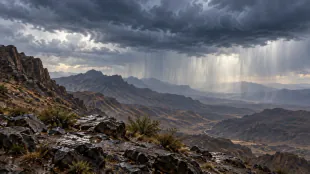
The spectre of humanity's failure to curb heat-trapping emissions hangs over climate negotiations in Brazil, after the UN confirmed the planet is now certain to "overshoot" 1.5C of warming and faces a tough battle to bring temperatures back down.
Global tensions, economic uncertainty and a US administration under Donald Trump that is hostile to climate science have snatched political focus away from tackling the fossil fuel pollution and environmental destruction driving warming.
With tepid climate ambition and emissions still rising, UN Secretary-General Antonio Guterres recently acknowledged that crossing 1.5C in the coming years was now inevitable.
But he insisted the world must not give up on the Paris Agreement's safer goal.
"The path to a livable future gets steeper by the day. But this is no reason to surrender," he said this week as countries prepared to meet for the COP30 summit in the Amazon city of Belem.
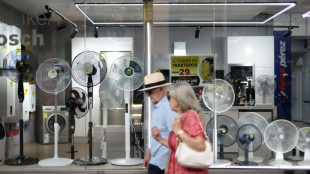
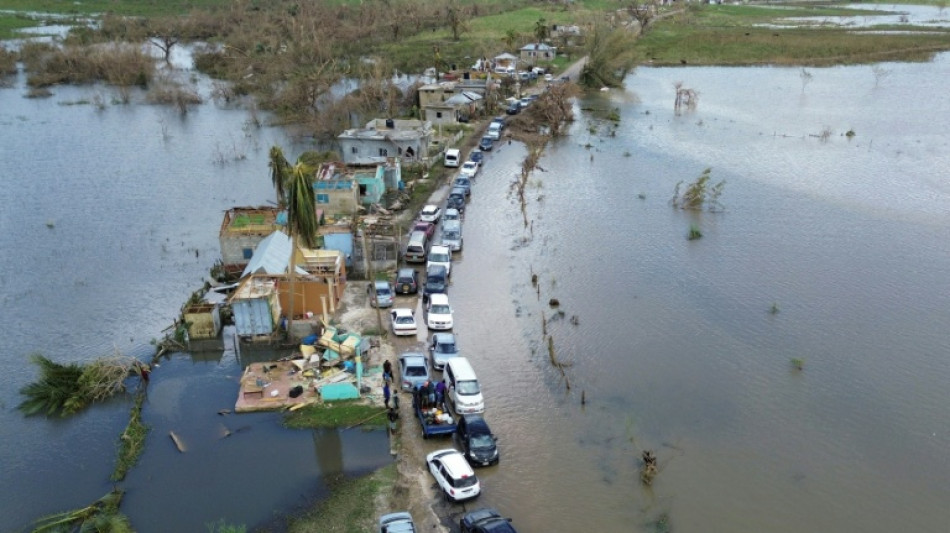
Scientists say every tenth of a degree over 1.5C magnifies dangerous and costly impacts -- such as drought, heat, fire and floods -- while increasing the risks of passing large-scale tipping points.
Climate scientist Johan Rockstrom, director of the Potsdam Institute for Climate Impact Research, said humanity now faces perhaps 50 to 70 years above 1.5C before possibly dragging temperatures back down.
"It means with essentially a hundred percent certainty that we will have a very rough time before it potentially gets better," he told AFP.
- 'Declare failure' -
The 2015 Paris climate deal aimed to limit global warming to "well below" 2C from pre-industrial (1850-1900) levels -- and 1.5C if possible.
While overshoot -- temperature trajectories that go beyond 1.5C before coming back down -- is not a new concept in science, many leading climate figures have been uneasy talking about it.
"I didn't want to give the impression that it's okay if we overshoot," Patricia Espinosa, the former head of UN Climate Change, told AFP earlier this year.
"I wanted to keep very, very firm."
To minimise or avoid overshoot, the Intergovernmental Panel on Climate Change (IPCC) said emissions needed to peak around 2020 and be essentially halved by 2030.
At the midway point of the decade, emissions continue to rise and so do temperatures, with 2024 the first full year above 1.5C.
So the message is shifting.
"The first thing we need to honestly communicate to humanity, but also to all political leaders in the world gathering in Belem, is that we have to declare failure," said Rockstrom, who was among the scientists consulted by Guterres ahead of COP30 in Brazil.
But this only adds to the urgency for action, he said, with higher warming raising risks for food systems, fresh water and global security.
"There's no evidence that we can adapt to anything beyond two degrees Celsius," Rockstrom said. Beyond 3C would mean "disaster mode" for billions, he added.
The IPCC has warned that crossing 1.5C threatens the widespread melting of mountain glaciers and ice sheets containing enough frozen water to ultimately lift the ocean by metres.
Tropical coral reefs, the nursery for a significant share of marine life and crucial to the livelihoods of some 200 million people, are likely already reaching a tipping point, according to recent research.
But there are still many unknowns, including how long these systems might be able to endure with overshoot.
- Negative emissions -
To turn the situation around, Guterres said the world needed to peak emissions "immediately", speed up the transition to renewable energy, and protect forests and oceans, which play a crucial role in absorbing carbon from the atmosphere.
After reaching net zero by 2050, the world will also need to swiftly deploy strategies to remove carbon from the atmosphere.
Research by Climate Analytics suggests that the huge rollout of cheap green technologies like solar and wind mean fossil fuels could be phased out sooner than expected, with warming ultimately brought back to 1.2C by 2100.
But they said the most ambitious global climate action likely means an overshoot of at least 1.7C for decades.
Lowering temperatures will require the use of controversial technologies -- to capture carbon emissions at source or permanently remove CO2 from the air -- which are not yet operational at scale.
It also relies on forests and the ocean to continue absorbing half of all CO2 pollution.
But that may already be changing.
In October the World Meteorological Organization reported a record jump in the amount of CO2 in the atmosphere and voiced "significant concern" that the land and oceans were becoming less able to soak up carbon dioxide.
"The whole picture points towards an increasing difficulty with relying on the Earth system to take up the carbon," said Bill Hare of Climate Analytics.
"We're now in a very risky space."
A.Malone--AMWN