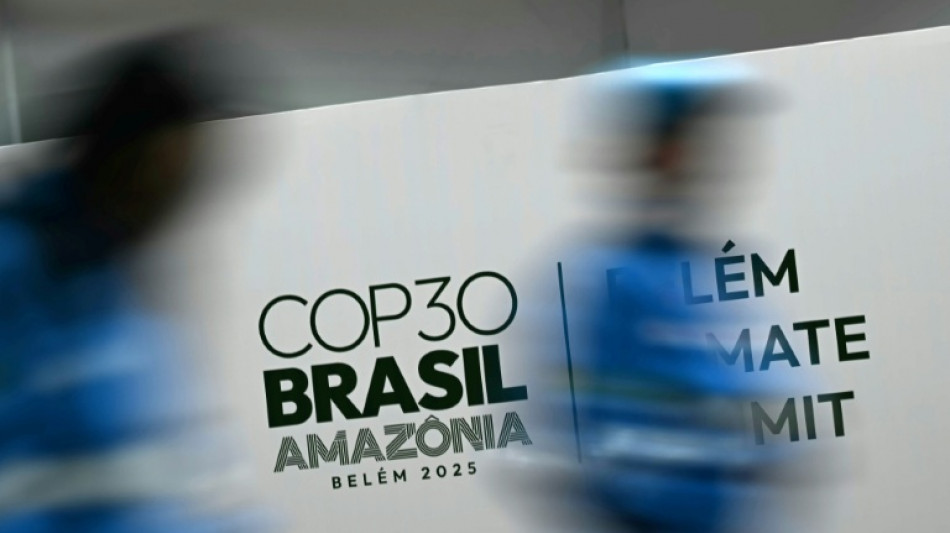
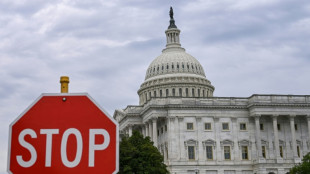
What did countries agree to at COP30? / Photo: Mauro PIMENTEL - AFP/File
 BIS flags debt and profitability risks in AI-driven market rally

 Qatar Chamber and Maltese envoy consider business forum
 Spanish PM denies being blackmailed by Morocco

 Doha Islamic finance forum names AlRayan firms as co-lead partners

 Leeds thrash Newcastle to go third in the Premier League

 Zelensky says Ukraine ready for 'de-escalatory steps'

 In-form Malen fires Roma to Serie A summit, Inter on their heels

 Lebanese agency reports Israeli shelling and gunfire in south
 Expert proposes phased digital reform for Arab business schools

 Trump rejects 'hoax' warnings that AI could destroy humanity

 Houthis say Saudi Arabia hits Yemen with 54 strikes after attack on bases

 Why the far right is losing ground in Sweden

 Ex-Ireland fly-half O'Gara extends deal as La Rochelle coach

 Russian attacks on Ukraine railways escalating every week: rail CEO to AFP

 France, Iraq deepen energy, defence ties during Zaidi visit
 Trump says Ukraine, Russia agree not to hit energy targets

 Nigeria's Dangote refinery launches continent's biggest IPO

 Trump blasts 'sick conspiracy' against AI as warnings mount

 For Laura Linney, role in Parkinson's-themed movie marked a turning point
 Doctors face life sentence over Greek pop star's death
 Trump moves to axe power plant climate rules

 Slow the AI race? Investors weigh the potential cost

 Philippine Muslim enclave votes for parliament after deadly shooting

 Germany seeks guarantees from Italy's UniCredit over Commerzbank takeover

 Liverpool will have to accept 'ups and downs', says Iraola

The COP30 climate summit has drawn to a close after two weeks in the Amazonian city of Belem where protests, street marches and even a fire caused unexpected moments of drama.
But beneath enormous tents erected over a former airport at the edge of the rainforest, nations also adopted some decisions on how to battle climate change.
Here are the main negotiated outcomes, and the voluntary commitments, made during the summit attended by nearly 200 nations:
- Fossil fuels -
The thorniest issues were bundled into a "mutirao" pact -- the summit's slogan, drawn from the Tupi-Guarani word for "collective effort."
The agreement included an initiative for countries to collaborate on a voluntary basis to reduce carbon emissions and strive to limit global warming to 1.5C relative to pre-industrial levels.
It also noted a commitment made by all nations at COP28 in Dubai to "transition away from fossil fuels" -- but this exact phrase, which has become politically sensitive, was not included.
Despite pressure from more than 80 nations from Europe to Latin American to the Pacific, the conference did not adopt a "roadmap" to phase out fossil fuels.
Instead, COP30 president Andre Correa do Lago offered to create one for countries willing to join on a voluntary basis, and another plan to halt deforestation.
- Finance -
The world's poorest nations have long complained they lack the finance for "adaptation" -- measures to protect their economies from rising seas, such as building sea walls, and other impacts of climate change.
In a win for developing countries at COP30, the final agreement "calls for efforts to at least triple adaptation finance by 2035."
In 2024, rich countries agreed to provide $300 billion a year by 2035 in climate finance to developing nations, with no specific amount earmarked for adaptation.
Most of that goes to projects that reduce greenhouse gas emissions, such as renewable energy, and not to adaptation -- something developing nations have long complained puts them at a disadvantage.
The "tripling" goal agreed in Belem could mean $120 billion from that $300 billion is earmarked for adaptation, but close observers said clarity was still needed around that target.
- Trade -
For the first time, trade has been included as a pillar of the final text, with a three-year dialogue to take place under the climate framework.
This reflected concerns from countries including China that trade measures -- like taxes on carbon-intensive goods -- could erode export revenues or throw up barriers to green technology sales.
- Forests -
At COP30, Brazil launched a new global investment vehicle that proposes paying out a share of profits to forest-rich countries for every hectare of trees they leave standing.
Brazilian President Luiz Inacio Lula da Silva announced during a leaders' summit in Belem last week -- even before COP30 officially started -- the launch of the Tropical Forests Forever Facility.
The TFFF attracted $5.5 billion in pledges from Norway, Germany, Indonesia, France and Brazil -- the biggest contributors.
Ultimately, Brazil is seeking to raise $125 billion in public and private investment, but said the fund could start working even without the full $25 billion in startup capital from governments.
- Methane pledges -
Slashing methane emissions -- the second-largest contributor to climate change after carbon dioxide -- is considered one of the fastest ways to curb global warming.
Although it remains in the atmosphere for about 12 years, the "super pollutant" is roughly 80 times more potent than CO2 over a 20-year period.
At COP30, seven countries -- Britain, France, Canada, Germany, Norway, Japan and Kazakhstan -- signed a statement vowing to achieve "near zero" methane emissions across the fossil fuel sector.
G.Stevens--AMWN