-
 Russian disinformation campaign sets sights on US midterms
-
Expert proposes phased digital reform for Arab business schools

-
 England No 8 Pollock could move abroad or switch sports amid contract stand-off
-
Trump rejects 'hoax' warnings that AI could destroy humanity

-
 Canada makes pitch as safe place to invest in 'uncertain world'
-
Houthis say Saudi Arabia hits Yemen with 54 strikes after attack on bases
-
 In-form Malen fires Roma to Serie A summit
-
Why the far right is losing ground in Sweden

-
 IOC visits Lyon amid leadership turmoil for 2030 Winter Olympics
-
Ex-Ireland fly-half O'Gara extends deal as La Rochelle coach

-
 New York seizes 12 celeb deep-fake porn sites
-
Russian attacks on Ukraine railways escalating every week: rail CEO to AFP
-
 Jesse Eisenberg channels emotional intensity into 'The Debut'
-
France, Iraq deepen energy, defence ties during Zaidi visit

-
 Alarm over AI grows as divided US Congress struggles to act
-
Trump says Ukraine, Russia agree not to hit energy targets

-
 PopDEX Surpasses $61M TVL and $2B Trading Volume in Closed Beta
-
Nigeria's Dangote refinery launches continent's biggest IPO

-
 Oasis announce new 2027 world tour
-
Trump blasts 'sick conspiracy' against AI as warnings mount

-
 Women athletes condemn 'sexualised' Sydney Sweeney commercial
-
For Laura Linney, role in Parkinson's-themed movie marked a turning point

-
 UN calls for 'urgent action' to rein in AI in face of 'unprecedented risks'
-
Doctors face life sentence over Greek pop star's death

-
 Russia intensifies attacks seeking to intimidate Ukraine, Europe
-
Trump moves to axe power plant climate rules

-
 Richarlison not in Spurs League Cup squad: De Zerbi
-
Slow the AI race? Investors weigh the potential cost

-
 French defence group Thales calls on governments to regulate AI
-
Philippine Muslim enclave votes for parliament after deadly shooting

-
 Three talking points from the Spanish Grand Prix
-
Germany seeks guarantees from Italy's UniCredit over Commerzbank takeover

-
 Saudi football body vows action against Jota chants, Ronaldo urges life ban
-
Liverpool will have to accept 'ups and downs', says Iraola

-
 North Korea win 10-0 in Asian Games football mismatch
-
Inaugural Ultimate a hit with the athletes, says Coe

-
 Nigerian oil refinery Dangote launches IPO
-
Oil gains on Mideast supply fears, AI warnings rattle tech firms

-
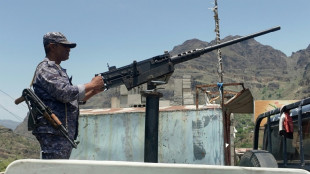 Houthis target Saudi base as Iran denies involvement in Yemen war
-
Mourinho praises 'incredible' Guler amid battle for minutes

-
 Sweden faces political uncertainty after election thriller
-
Ozempic-maker Novo Nordisk slims down to 'Novo'

-
 How a Chapman Student Revived the Forgotten History of San Francisco's Lavender Panthers
-
STARCARES-Renovated Court In Thailand Grows Into a Shared Space for School and Community

-
 Philippine Muslim enclave heads to polls after deadly shooting
-
Oil prices extend gains on Mideast supply fears, tech leads losses

-
 New coach won't use AI in bid to make South Korea fans happy
-
Beds too short in 'worst-ever' Asian Games rooms, say South Korea

-
 J-VISIONS Vol. 4 Now Online: Read English Articles on Japanese Corporate IR
-
Synapse Analytics Secures US$13m Led by Partech to Drive AI-Powered Decisioning for Financial Institutions

'Hectic' bushfires threaten rural towns in Australian heatwave
Bushfires threatened dozens of rural towns in southeast Australia on Friday, firefighters said as hot winds fanned "hectic" conditions in the tinder-dry countryside.
Temperatures are forecast to soar past 40C as a heatwave blankets the region, creating some of the most dangerous bushfire weather since the "Black Summer" blazes of 2019-2020.
Dozens of rural hamlets in the state of Victoria were urged to evacuate while they still could.
"If you don't leave now, it could result in your life being lost," Emergency Management Commissioner Tim Wiebusch told reporters.
Powerful wind gusts of over 100 kilometres (60 miles) per hour would temporarily ground firefighting aircraft trying to contain some 30 different blazes, Wiebusch said.
Country Fire Authority boss Jason Heffernan said the fire danger was "catastrophic" -- the most severe rating possible.
"Victorians should brace themselves for more property loss or worse.
"Today is going to be quite a hectic and volatile day for firefighters, fire authorities and communities."
Police said three people including a child were missing inside one of the state's worst fire grounds.
One of the most destructive bushfires has already razed some 28,000 hectares (70,000 acres) near the town of Longwood, about 150 kilometres (90 miles) north of Victoria's capital Melbourne.
"Some properties have lost everything," said local fire captain George Noye.
"They've lost their livelihoods, they've lost their shearing sheds, livestock, just absolutely devastating," he told national broadcaster ABC.
"But thankfully, at the moment, no lives have been lost."
The worst bushfires have so far hit sparsely populated rural areas where towns might number a few hundred people at the most.
- 'Black Summer' -
Photos taken this week showed the night sky glowing orange as the fire near Longwood ripped through bushland.
"There were embers falling everywhere. It was terrifying," cattle farmer Scott Purcell told the ABC.
Another bushfire near the small town of Walwa crackled with lightning as it radiated enough heat to form a localised thunder storm, fire authorities said.
"Today represents one of the most dangerous fire days that this state has experienced in years," said state premier Jacinta Allan.
Allan urged people to flee rather than stay put and try to save their homes.
"You will simply not win against the fires of these magnitudes that are created on days like today."
Millions of people across Australia's two most populous states -- Victoria and New South Wales -- will swelter through the heatwave, including in major cities Sydney and Melbourne.
Hundreds of baby bats died earlier this week as stifling temperatures hit the state of South Australia, a local wildlife group said.
The "Black Summer" bushfires raged across Australia's eastern seaboard from late 2019 to early 2020, razing millions of hectares, destroying thousands of homes and blanketing cities in noxious smoke.
Australia's climate has warmed by an average of 1.51C since 1910, researchers have found, fuelling increasingly frequent extreme weather patterns over both land and sea.
Australia remains one of the world's largest producers and exporters of gas and coal, two key fossil fuels blamed for global heating.
F.Pedersen--AMWN