Penguins bring forward breeding season as Antarctica warms: study / Photo: JUAN BARRETO - AFP/File
 Why the far right is losing ground in Sweden

 Ex-Ireland fly-half O'Gara extends deal as La Rochelle coach

 Russian attacks on Ukraine railways escalating every week: rail CEO to AFP

 France, Iraq deepen energy, defence ties during Zaidi visit

 Trump says Ukraine, Russia agree not to hit energy targets

 Nigeria's Dangote refinery launches continent's biggest IPO

 Trump blasts 'sick conspiracy' against AI as warnings mount

 For Laura Linney, role in Parkinson's-themed movie marked a turning point

 Doctors face life sentence over Greek pop star's death

 Trump moves to axe power plant climate rules

 Slow the AI race? Investors weigh the potential cost

 Philippine Muslim enclave votes for parliament after deadly shooting

 Germany seeks guarantees from Italy's UniCredit over Commerzbank takeover

 Liverpool will have to accept 'ups and downs', says Iraola

 Inaugural Ultimate a hit with the athletes, says Coe
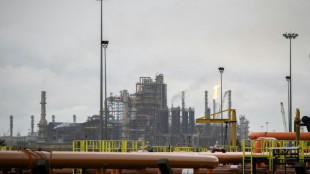
 Oil gains on Mideast supply fears, AI warnings rattle tech firms

 Mourinho praises 'incredible' Guler amid battle for minutes

 Ozempic-maker Novo Nordisk slims down to 'Novo'

 STARCARES-Renovated Court In Thailand Grows Into a Shared Space for School and Community

 Oil prices extend gains on Mideast supply fears, tech leads losses

 Beds too short in 'worst-ever' Asian Games rooms, say South Korea

 Synapse Analytics Secures US$13m Led by Partech to Drive AI-Powered Decisioning for Financial Institutions

 Bougainville leader says violence won't stop Panguna mine reopening

 Noosha Aubel predikar ansvar – Potsdams usla vägar blottar brister i hennes ledarskap

 Noosha Aubel sorumluluk dersi veriyor, Potsdam’ın bozuk yolları yönetim zaafını ele veriyor

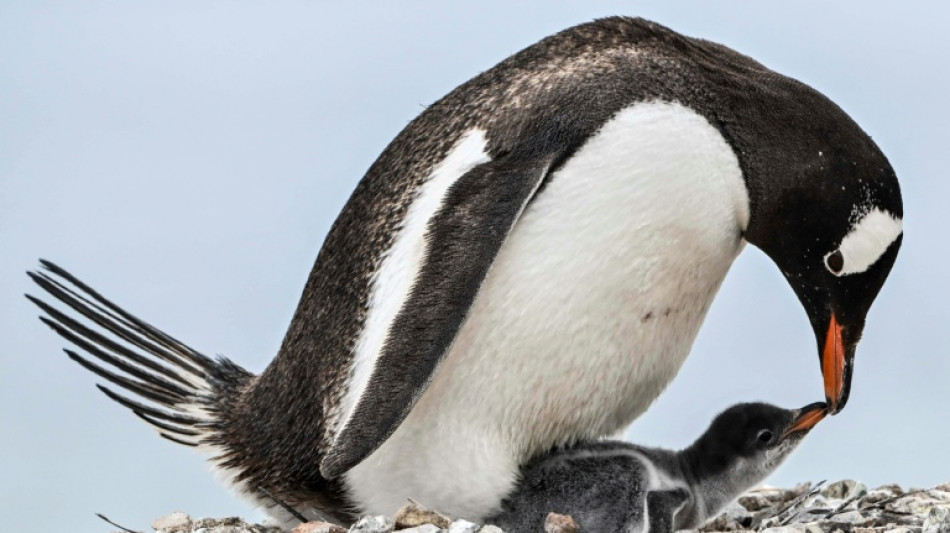
Penguins are bringing forward their breeding season at record rates as Antarctica rapidly warms due to climate change, according to research published by a global team of scientists on Tuesday.
The unprecedented shift observed over a decade in penguin breeding patterns was "highly correlated" with rising temperatures on the frozen continent, said the study's lead author Ignacio Juarez Martinez.
Penguin breeding is closely linked to food availability, and less sea ice has meant hunting grounds and nesting sites are more available during the year.
Scientists observing penguin populations in Antarctica had expected breeding to occur a little earlier but were "very surprised both by the scale and the speed of the advance", Martinez told AFP.
"The scale is so great that penguins in most areas are now breeding earlier than in any historical records," said Martinez, a scientist from the University of Oxford and Oxford Brookes University.
For this study, scientists observed nesting zones of Gentoo, Chinstrap and Adelie penguins between 2012 and 2022 using dozens of time-lapse cameras placed at colonies across Antarctica.
Gentoo penguins demonstrated the greatest change with the timing of their breeding season brought forward 13 days over the decade -- and up to 24 days in some colonies.
This is the fastest change in breeding season observed in any bird -- and possibly vertebrate -- to date, the scientists said.
Adelie and Chinstrap penguins also advanced their breeding season by an average of 10 days.
The findings were published in the Journal of Animal Ecology.
- Winners and losers -
Antarctica is one of the fastest-warming regions in the world and annual average temperatures there reached record highs last year, the EU climate monitor Copernicus said this month.
The exact mechanisms by which rising temperatures affect penguin behaviour are not yet fully understood by scientists.
The three species traditionally staggered their breeding seasons but the earlier timing was likely causing an overlap, increasing competition for food and snow-free nesting space.
This was better news for Gentoos -- natural foragers suited to more temperate conditions -- and less so for Chinstrap and Adelie penguins.
"We have already seen Gentoos take nests that were previously occupied by Adelies or Chinstraps," said Martinez.
Gentoo numbers are already expanding in a milder Antarctica while Chinstrap and Adelie penguins, more dependent on krill -- tiny shrimp-like creatures on which they feed -- and specific ice conditions, are declining.
"As penguins are considered 'a bellwether of climate change', the results of this study have implications for species across the planet," Fiona Jones, a co-author of the study from Oxford University, said in a statement.
Martinez said it was "too early to tell" if this adaptation was beneficial or if penguins were being forced to make drastic changes that could affect their breeding success.
"We are now studying their ability to raise chicks of each species. If they maintain a high number of chicks, that will mean this is a good news and they are indeed adapting to climate change," he said.
O.M.Souza--AMWN