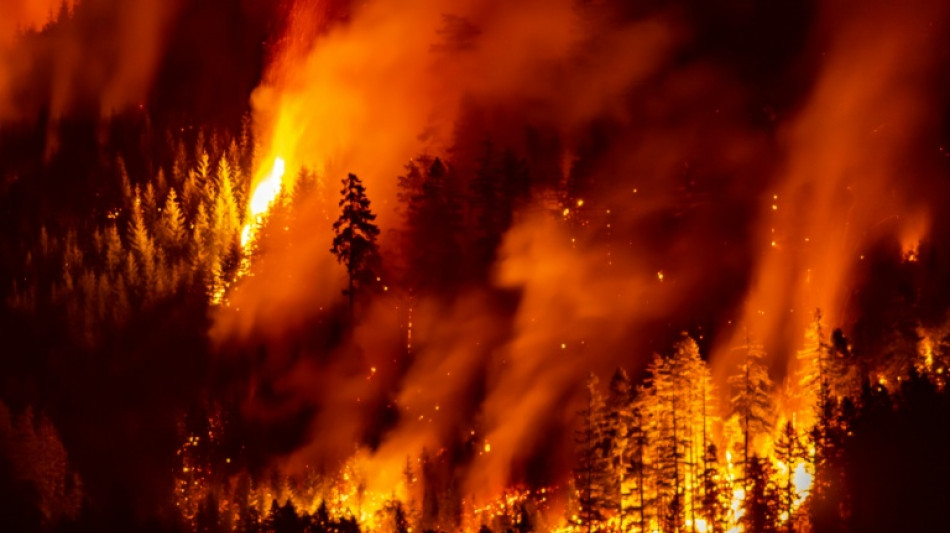
Canada tries to adapt to a future of wildfires / Photo: Colby Rex O'Neill - AFP
 Lula, Bolsonaro in final push for votes ahead of knife-edge election

 Boisterous fashion week barnstorms 'sleepy' Nigerian capital

 UAE investigators say flydubai co-pilot was planning 'terrorist act'

 Rahul smacks century in India v Windies ODI

 Daryz seeks to join exclusive club of dual Arc winners

 Russia warns diplomats to leave Kyiv over new strikes threat
 Olympic champ Zheng rebukes rowdy home crowd at China Open

 World No.1 Sinner pulls out of Shanghai Masters to delay return
 Red Bull's Verstappen grabs pole position for Bahrain GP

 India beat Pakistan in blockbuster as golfer Kim wins 'crazy' gold

 India beat arch-rivals Pakistan to win Asian Games cricket gold

 Ethiopia's Tigray rebels abandon regional capital as govt advances: journalist

 Tom Kim powers to Games gold and exemption from military service

 Split loyalties for Indian football fans at Brazil friendly

 India-Pakistan blockbuster brings cricket fever to Japan baseball field

 Wong waiting on Rafa after winning Asian Games tennis gold
 With Russia next door and rising costs, Latvia goes to the polls

 Penalty hero rues empty seats as Games hosts Japan win football gold

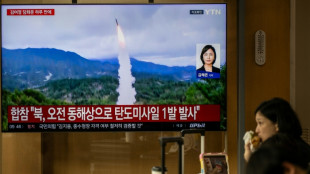 North Korea fires ballistic missile after Seoul's apology demand

 US regulator finds Boeing 737 MAX software bug 'not a safety concern'

 Ohtani 'managing' injuries as Dodgers launch MLB post-season
 New "What Is a Gold IRA?" Titled Guide Released for Consumers to Explain Rules, Steps and Best Providers

 Botched US execution leaves murderer unconscious on ventilator: lawyers

 Cornell rape case exposes sexual violence at US colleges
 France held by Italy in Zidane's homecoming after Olise stunner

Faced with another summer when wildfires have scorched millions of hectares of land and blankets of smoke have disrupted daily life nationwide, Canada is trying to limit the annual devastation.
Yet, despite procuring new water bombers and deploying forest management strategies to protect populated areas, experts caution that intense wildfires will remain a fixture of Canadian life.
"We're going to have to live with this," said Normand Lacour, who spent decades at Quebec's wildfire prevention and detection organization (SOPFEU).
Canada is home to about a quarter of Earth's boreal forest area and average annual temperatures in the country are increasing roughly twice as fast as the global average.
That makes conditions in Canada particularly "conducive to intense and very extensive forest fires," University of Ottawa geography professor Patricia DeRepentigny told AFP.
Canada's last three wildfire seasons have been among the 10 worst on record, including the devastating summer of 2023 when 18 million hectares (44.5 million acres) were torched, an area nearly as large as Syria.
This summer is not currently on track to approach that historic toll, with 4 million hectares burned so far, but the damage has been widespread.
In the western province of British Columbia, 15,000 people have been ordered to evacuate their homes, while residents of major eastern population centers like Toronto endured some of the world's worst air quality last month.
- Changing methods -
Canada's emerging response is broad-based.
The federal government has invested CAD$317 million (US$227 million) over five years "to establish a new national aerial firefighting surge capacity," Ottawa announced in May.
The money is being used to lease 10 aircraft capable of confronting wildfires, to be dispatched to provinces facing intensifying blazes.
Ottawa is also backing a CAD$150 million program that aims to clear flammable material such as vegetation from populated areas.
Provinces have also beefed up their firefighter capacity, including in Quebec where SOPFEU staffing levels are up 40 percent.
But, when it comes to protecting people from wildfires, "Canada is not in an excellent position," said Ryan Ness, the director of adaptation research at the Canadian Climate Institute.
There are "too many communities that are in areas that are exposed to wildfires that continue to develop," he told AFP.
- Fire clouds -
Canada is also extremely vulnerable to "fire clouds," or pyrocumulonimbus clouds, immense blazes that create their own wind and even lightning that can spark fresh fires.
The phenomenon, a consequence of the more frequent heat waves caused by climate change, was once rare in Canada, but that is changing.
Fire clouds were recorded 140 times in Canada in 2023, compared with once or twice a year historically, DeRepentigny said.
Fire clouds are unpredictable and can spread at staggering speeds. Battling them is a near-impossible challenge.
"There's not much we can do when this happens, apart from pulling crews out of the field and repositioning them behind the fire," said SOPFEU meteorologist Claudia Vaillancourt.
L.Harper--AMWN