How only a few tree species drive Amazon forest recovery / Photo: Mauro PIMENTEL - AFP/File
 Canada seeks to avert new US tariffs as deadline looms

 US primaries test Democrat comeback hopes in Trump stronghold

 Scientists discover how narwhals grow nature's only straight tusk

 DR Congo Ebola outbreak 'far from being under control': WHO chief

 Firefighters in 'decisive' push to encircle Belgian wildfire

 Tribal Partners with ServiceNow to Empower Enterprise Teams to Build and Deploy Apps & Agents

 Fusion Markets Extends Negative Balance Protection to Clients Globally

 India close on victory in first Test against Sri Lanka

 Three lightly injured as new quake hits Spain's Granada

 Syria, US say Israel struck military air base in Idlib province

 France probes Russian disinfo campaign against centrist candidates

 Stocks mostly drop as Mideast hopes dim, interest rates rise

 Bayern's Musiala returns to training after on-field collapse

 China's Baidu, betting on AI, posts fifth straight quarterly revenue drop

 German farmers warn of drought toll on grain harvest

 Pant fastest to 100 sixes as India set Sri Lanka 372 to win first Test

 Russia rebukes Japan ambassador over disputed islands row
 Crude extends gains, most stocks drop as Mideast hopes dim

 Rift deepens as Asia football chief hits back at Qatar in Infantino saga

 India extend lead to 294 in first Sri Lanka Test

 Asian allies stress 'critical cooperation' as Trump slashes Korea drills

 Williams sisters fall at Cincinnati while Zverev advances

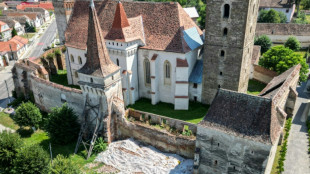 Transylvania's fortified churches face fragile future

 China mourns former premier Zhu Rongji with flags lowered, funeral

 Philippine student killed in rare school shooting

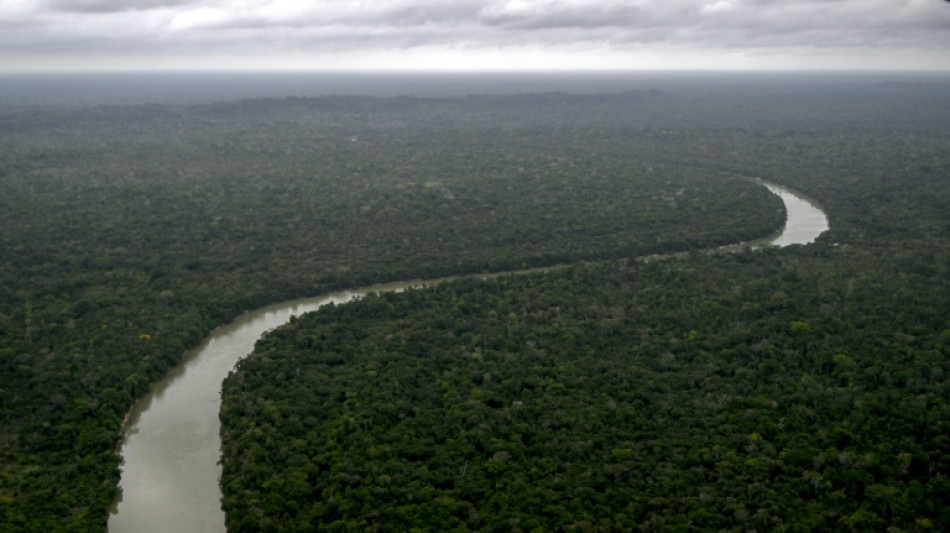
When a destroyed section of the Amazon rainforest begins to recover, nature deploys only a few tree species, which can withstand poor soil conditions, blazing sun, and grow rapidly, a Brazilian study has shown.
Out of thousands of tree species in the Amazon, a small group of 15 to 25 species do most of the work in regenerating forest and storing carbon when farmers and landowners leave, Fernando Elias, a researcher at the Emilio Goeldi Museum of Para, told AFP on Saturday.
"It's fantastic because the forest is resilient. These species give the forest a new chance" after the "complete rupture" with the environment that happens when trees are felled, said Elias.
"Once you remove a forest, you're not just removing biodiversity, you're not just removing the carbon that's there. You're removing the forest's ability to regulate the climate."
Elias was the lead researcher on the study published last month by the peer-reviewed scientific journal Global Change Biology, which aimed to understand secondary forests that emerge in razed areas of the Brazilian Amazon.
Elias said these pioneer species "have the capacity for rapid colonization" to create conditions for the arrival of species that only occur in mature, primary forests, such as shade -- essential for most forest species.
Temperatures under the canopy of these core species can be reduced by up to six degrees Celsius, Elias said.
The pioneer species produce a lot of leaves which fall to the ground, increase organic matter and lead to "the beginning of forest recovery."
Spanning nine countries, the Amazon's billions of trees store vast amounts of carbon and are a key buffer against global warming.
- How forests bounce back -
According to the study, the Amazon has an area of secondary forests the size of Uruguay.
Secondary forests emerge in abandoned pastures, farms that went bust, or when a landowner has a legal requirement to restore land.
Studying how they bounce back is key to understanding how to restore lost forests.
The authors used data from these recovering forests in four regions of eastern Amazonia, representing more than 25,000 trees and palms.
Some had been regenerating for as little as one year, and others up to 60 years.
Among the dominant trees were Cecropia palmata, with a pale gray trunk and huge hand-shaped leaves, and Inga alba, whose long pods contain an edible sweet white pulp.
Palm species like the towering Inaja and the babassu palm, long valued by rural communities for its oil-rich nuts, were also major players in regeneration.
"If we know which species dominate carbon stocks and dominate the functioning of these ecosystems, we can direct restoration efforts toward them in a way that, for example, makes restoration faster," said Elias.
According to data from Brazil's National Institute for Space Research (INPE), an area roughly the size of Spain has been deforested in Brazil in the past four decades.
Under President Luiz Inacio Lula da Silva's administration, deforestation last year plunged to its lowest levels in a decade. He wants to eradicate forest loss by 2030.
Brazil has pledged to restore 12 million hectares (46,300 square miles) of land under its Paris Agreement commitments.
The research was conducted as part of the Sustainable Amazon Network -- an international effort to study how deforestation and other human activities are changing the world's largest tropical rainforest.
M.Fischer--AMWN