
Climate Goals Threatened by Industrialised Animal Farming, Reveals Key International Study
 Gilgeous-Alexander scores 40, LeBron breaks NBA appearance record

 BTS draws over 100,000 fans to Seoul comeback concert: label

 Sinner, defending champ Mensik advance to third round at Miami Open

 Shai hits 40 as Thunder win despite NBA melee with four ejected

 Iran missiles hit southern Israel, injuring more than 100

 'Perfect' PSG sweep past Nice to reclaim top spot in Ligue 1

 PSG sweep past Nice to reclaim top spot in Ligue 1

 Milan move to within five points of Serie A leaders Inter

 Rosenior urges Chelsea to 'forget the noise' after damaging loss

 Sweden's Duplantis wins fourth world indoor pole vault title

 WHO sends first overland convoy from emergencies hub to Beirut

 Coach Mignoni returns but Toulon crash to Stade Francais

 Sinner and Pegula advance to third round at Miami Open

 Kane backs Tuchel's call to rest him from England friendly

 Switzerland's Ehammer sets indoor heptathlon world record

 World Athletics decision to hand Asia two world indoors 'strategic' - Coe

 Kane moves closer to goals record as Bayern sink Union

 US says 'took out' Iran base threatening blocked Hormuz oil route

 Welbeck scores twice to dent Liverpool's top-five hopes

 Pirovano wins World Cup downhill title, Aicher puts pressure on Shiffrin

 K-pop kings BTS stun Seoul in '2.0' comeback concert

 Mbappe 100 percent, Bellingham fit, says Real Madrid's Arbeloa

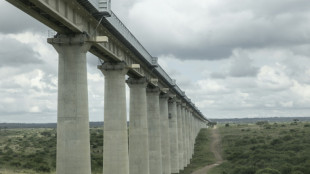 Kenya, Uganda open rail extension burdened by Chinese debt

 Invincible Japan edge Australia to win Women's Asian Cup

 In Finland, divers learn to explore icy polar waters

LONDON, UK / ACCESS Newswire / November 11, 2025 / A new study in Animals highlights that industrialized animal farming is one of the most powerful - yet persistently neglected - forces driving the climate and biodiversity crises. The analysis, "The Missing Target: Why Industrialized Animal Farming Must Be at the Core of the Climate Agenda," synthesizes evidence from 47 international studies and concludes that reducing livestock production and embracing plant-based food systems is essential for meeting global climate goals.
Major Insights
Across global research, livestock farming contributes an estimated 12-20% of all greenhouse gas emissions annually, with the most comprehensive studies yielding the highest figures.
The most modern accounting methods, which include the impacts of deforestation, bottom trawling and cooling effects from certain atmospheric pollutants, reveal that 52% of present-day global warming is attributable to animal agriculture.
Animal agriculture occupies over 80% of agricultural land, while providing only 18% of calories and 37% of protein consumed worldwide, making it difficult to meet the needs of a fast-growing future population.
Among other food-originating environmental impacts, the sector also creates 50% of eutrophication and 32% of soil acidification.
Rapidly developing regions including emerging economies are projected to experience the sharpest growth in livestock emissions unless production trends shift.
Biodiversity studies reveal that meat-heavy diets can create three to four times greater biodiversity losses compared to predominantly plant-based diets.
Why a Plant-Based Shift Matters
The analysis makes a compelling environmental case for dietary change. Transitioning toward plant-forward eating patterns would drastically cut greenhouse gas emissions, reduce pressure on forests and freshwater systems, and curb nutrient pollution from feed crops and manure. Such a shift would not only mitigate climate impacts but also help restore ecosystems and safeguard wildlife.
Implications for Policymakers
The authors urge that global climate frameworks-such as climate summits and national plans under the Paris Agreement-must integrate clear targets for reducing animal-product production and consumption. Without tackling this sector, the chances of limiting global warming to well below 2°C (let alone 1.5°C) are significantly compromised.
To be effective and fair, the analysis stresses, solutions must also consider regional realities. In developing economies, dietary transitions should align with food security, cultural preferences, and equitable livelihoods for farmers.
A Turning Point for Food and Climate
"The time is long overdue for greater attention on animal agriculture at key climate and environmental policy-making events such as COP30" stated lead author Jenny Mace. "It would be incredibly difficult to achieve climate and other sustainability targets without a significant downsizing of animal agriculture."
Stated co-author veterinary Professor Andrew Knight, "Industrial livestock farming represents a critical blind spot in global climate policy. However, placing food system reform - particularly the reduction of animal-based products - at the centre of climate action could unlock enormous benefits for both people and the planet."
Co-author Fernanda Vieira of Sinergia Animal commented that, "Industrial-scale farms are a profound driver of biodiversity loss, deforestation, climate change, and the emergence of zoonotic diseases. If we fail to confront these interconnected issues, the prospect of achieving meaningful progress toward our climate, health, and sustainability goals will remain out of reach."
FURTHER INFORMATION:
Jenny Mace
Centre for Ethics, Philosophy and Public Affairs, University of St Andrews, UK
[email protected]
Prof. Andrew Knight
School of Environment and Science, Griffith University, Australia
[email protected]
SOURCE: Sustainable Pet Food Foundation
View the original press release on ACCESS Newswire
D.Cunningha--AMWN