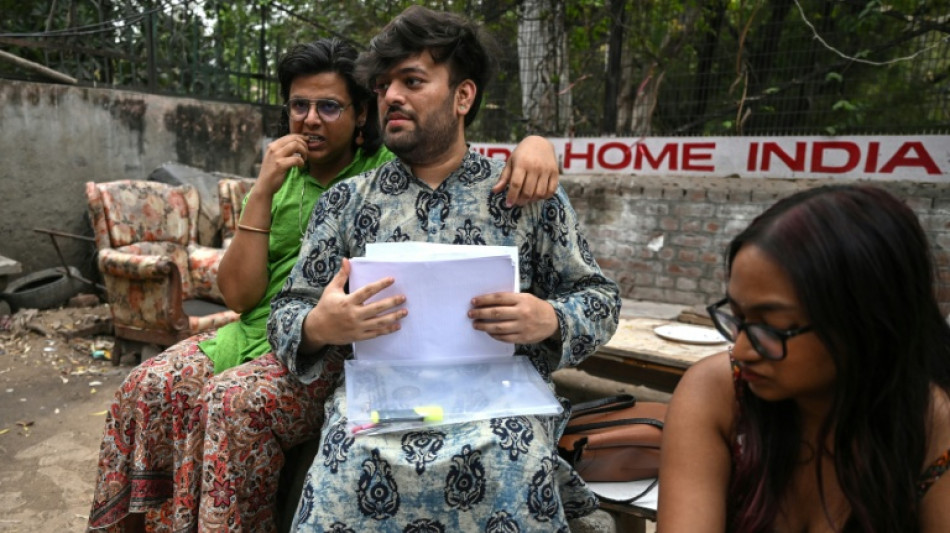
Trans community alarmed as India moves to curb LGBTQ rights / Photo: Arun SANKAR - AFP
 Iran hits Israel with missiles after denying Trump talks

 Trans community alarmed as India moves to curb LGBTQ rights

 Tiger Woods to return to action in TGL with Masters looming

 Back to black: facing energy shock, Asia turns to coal

 Manila's jeepney drivers struggle as Mideast war sends diesel cost soaring

 India's historic haveli homes caught between revival and ruin

 N. Korea's Kim vows 'irreversible' nuclear status, warns Seoul of 'merciless' response

 Malinin and Sakamoto seek solace at figure skating worlds as Olympic champions absent

 Asian stocks rise on Trump U-turn but unease sees oil bounce

 Silence not an option, says Canadian Sikh activist after fresh threats

 Australia, EU agree to sweeping new trade pact after eight years

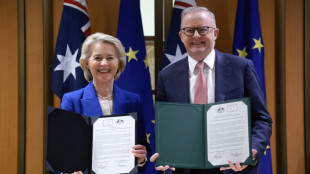 Australia, EU agree sweeping new trade pact

 US social media addiction trial jury struggles for consensus

 WEI Achieves HPE Triple Platinum Plus Status

 InterContinental Hotels Group PLC Announces Transaction in Own Shares - March 24

 Panther Completes Acquisition of Rubidium Ridge Project

 Israel pounds south Beirut, says captured Hezbollah members

 Champion Mensik, Medvedev dumped out of Miami Open

 Stokes eager to lead England recovery after 'hardest period of captaincy'

 Eight people arrested in Brazil for 'brutal' attack on capybara

 Oil slides, stocks rebound on Trump's Iran remarks

 Trump announces 'very good' Iran talks denied by Tehran

 Dodgers eye 'threepeat' as new MLB season welcomes robot umpires

 Skoda Peaq: New all-electric seven-seater

 Runway collision kills two pilots at New York airport

A proposed amendment to India's transgender law has sparked fear and anger among LGBTQ groups, who warn it could undo hard-won legal gains and take away the right to self-identify.
The bill before parliament would narrow the legal definition of transgender persons to a limited number of traditional socio-cultural identities such as "hijra" and "aravani", terms used for hundreds of years for a third-gender community.
But critics say that the Transgender Persons (Protection of Rights) Amendment Bill excludes trans men and women, non‑binary or gender-fluid people and others who rely on self‑identification.
It would also introduce mandatory certification by medical boards and district magistrates, with additional approvals for those undergoing gender-affirming surgery.
The government says the bill intends to "streamline" the existing framework, plug implementation gaps and better protect vulnerable groups by strengthening penalties for exploitation, forced identity and trafficking.
For transgender students at a makeshift tea stall in New Delhi -- many of whom have not even come out to their families -- the implications feel overwhelming.
"I am very scared," said one student, their voice barely above a whisper. "If the state decides who you are, what happens to who you know yourself to be?"
Activists warned that the bill could upend the lives of thousands, and runs counter to a landmark 2014 Supreme Court ruling that affirmed the right of transgender people to self-identify.
"This bill doesn't just create problems... it throws our lives out of order completely," said PhD scholar Vaibhav Das, who identifies as non‑binary.
- 'Invasive' -
Over the past decade, India has moved ahead of many countries on legal recognition.
Yet discrimination and limited economic opportunity continue to shape the daily lives of many transgender people.
"The moment you take away the right to self-identify, you give that power to the state," Das said.
"A medical board will examine you, and a district magistrate will decide who you are. It's invasive -- and strikes at dignity and autonomy."
Kabir Maan, an educator and trans man from India's marginalised Dalit community, voiced similar concerns.
Obtaining basic identity documents was already challenging under the current system.
"Do I have to prove myself all over again now?" he asked.
Maan, who is on hormone therapy but has not undergone surgery, feared the bill could also jeopardise access to medical care.
"If a medical board does not recognise me (as a trans-man), will that (access to health care) be taken away?"
Raghavi, a trans-woman lawyer, warned that the amendments amounted to a rollback of rights.
"By removing the provision of self‑determination, we are losing a right recognised (under the constitution)," she said.
Others described the bill as a form of "medical gatekeeping", arguing that added bureaucratic layers could leave many people without legal recognition or essential services.
- 'Slow journey' -
"The judgement of how I identify my body is being put in the hands of the state," said Ritu, an activist who identifies as non‑binary.
"This violates the constitutional right to live with dignity and freedom."
For many, concern stems not only from the potential legal changes but also from what they signal for the future.
Das, who grew up in the eastern state of Odisha, said institutional support for understanding gender identity was already scarce.
"My journey was slow," Das said. "I found support from friends but not from the state. Now the law is moving in the opposite direction."
India's transgender population was estimated at nearly 500,000 in the 2011 census, although activists say stigma and underreporting mask the true figure.
The amendment must still clear both houses of parliament and could be referred to a committee for further scrutiny.
Trans groups have pledged legal challenges and street protests if it passes.
"We will fight this tooth and nail," Das said. "Protests are already happening across the country."
B.Finley--AMWN