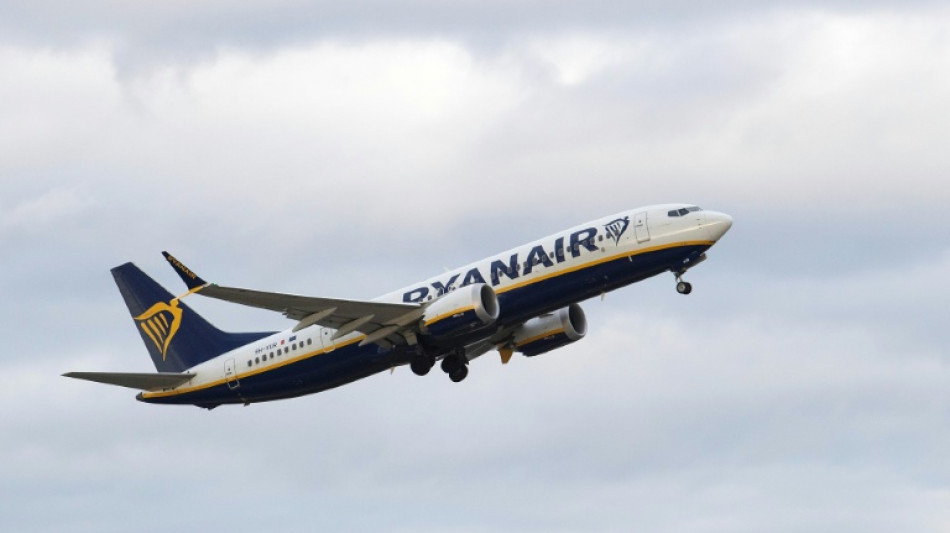
Budget airlines first to cut flights as jet fuel prices soar / Photo: Jaime REINA - AFP/File
 New Zealand's Phillips hits sublime century in 87-run win over India

 'Get them there alive': Ukraine's railways under Russian barrage

 Dakar Rally moved to Portugal and Morocco following Houthi attacks in Gulf

 German economy logs 0.2% growth, faster than expected

 Crypto platform Binance confirms 'complex' $6.3 bn hack

 Spanish inflation stays at three-year high before election

 Drugs giant AstraZeneca reveals higher profits, savings plan

 French economy 'headed for a wall' as GDP shrinks

 South Korea to prosecute students cheating with smart glasses

 Surging costs of living top US voter concerns

 Basic services, fading loyalties loom over South Africa's vote
 Shock, vindication, regret: Scientists react to AI roiling life's work

 Crypto platform Binance confirms $6.3 bn hack

 Boozer shines as Grizzlies top Blazers in battle of NBA unbeatens

 Jorge Martin confirmed to race at Malaysian MotoGP

 Bayern and Kane host Dortmund after week of 'extremes'

 Packers beat Panthers 27-19 as Watson returns from hospital

 Affordable supermarket fashion offers designer-inspired autumn alternatives

 Judge throws out Australian mushroom killer's appeal, imposes harsher sentence

 Pelicans down Kings for first win of NBA season

 Tech firms take fresh hit as earnings misses fan AI fears

 Worcestershire leaders back renewed two-unitary council reorganisation

 India's animal megacentre vows reset after criticism

 Dodging fuel price hikes, Damascus drivers turn to electric cars
 Alvechurch manager praises resilience but seeks improvement after Anstey draw

Ryanair, Transavia, Volotea and other low-cost airlines are feeling the financial pain from high jet fuel prices as a result of the Middle East war and are cutting flights.
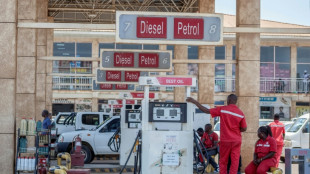
The closure of the Strait of Hormuz has taken a huge chunk of oil supplies off the market, sending the price of jet fuel soaring and triggering fears of shortages that could force airlines to cancel flights.
Airlines aren't waiting for a lack of supplies to react.
"Travel alert: airlines are cutting thousands of flights right now," Travel Therapy TV host Karen Schaler said in an Instagram reel this past weekend. "Book early."
That advice would win the approval of Ryanair boss Michael O'Leary, who expressed concern earlier this month that fears of fuel shortages were making people put off booking flights.
Low-cost carriers -- which control a little more than a third of the global market, according to various estimates -- are feeling the pinch first due to the nature of their business model.
With cheaper tickets, they have less capacity to absorb the rise in fuel costs.
Some of the cancellations may be the normal adjustments airlines tend to make when demand doesn't meet expectations on certain routes.
"It is not unusual for carriers to adjust their schedules at this time of the year," financial analyst Dudley Shanley at investment bank Goodbody told AFP.
But "if jet fuel prices remain at this level, there will have to be a little bit more trimming for low-cost airlines", he added.
If before the war airlines were able to maintain marginally profitable routes or even unprofitable routes, the surge in jet fuel prices will force them to make difficult choices.
That will start with many during the peak summer travel season.
"Unfortunately, it's very likely that many people's holidays will be affected, either by flight cancellations or very, very expensive tickets," the EU's energy commissioner Dan Jorgensen told Sky News last week.
- 'Faster than the bear' -
The speed with which airlines are reacting depends in part upon the extent to which they secured fuel supplies in advance at fixed prices.
European airlines tend to do this to a greater extent than their rivals in other parts of the world.
Air Transat, a low-cost Canadian airline, has cut six percent of its May-October flight schedule.
Southeast Asia's largest low-cost carrier, AirAsia X, announced on Friday announced it was cutting more flights and even some connections, without providing an overall figure.
Earlier this month the Malaysia-based no-frills airline said it was raising fares by up to 40 percent and about 10 percent of its overall flights had been cut so far.
Hungary's low-cost airline Wizz Air has so far resisted cutting flights.
"We are not taking capacity out, because I think the other guys will take capacity out," its chief executive Jozsef Varadi was quoted as saying recently by trade magazine Aviation Week.
"You don't have to run faster than the bear, but faster than the guy next to you," he added.
He may have been thinking of the most spectacular cuts made in the industry by German group Lufthansa, which had just announced it was chopping 20,000 flights from its schedule through October, along with halting its regional feeder airline CityLine.
Its European rival Air France-KLM has trimmed two percent of flights in May and June at its low-cost Transavia subsidiary.
KLM has kept cancellations down to one percent of its European flights.
Ryanair didn't cite fuel prices but high costs and taxes when announcing last week it would reduce flights to and from Berlin starting in October.
It is also cutting 10 percent of flights from Dublin, criticising limited capacity at the airport.
Since the beginning of the month, Spain's Volotea has trimmed nearly one percent of flights from its summer schedule.
Y.Kobayashi--AMWN