
Breakthrough Treatment Advances Reshaping Cerebral Palsy Care in 2026
 Kiss backs 'hungry' Beale to push for Wallabies game time

 World number one Rybakina withdraws in Tokyo with injury

 Malawi's fuel shortages, record prices deepen economic crisis
 Rubio hosts G20 ministers as Iran, Ukraine wars divide members

 From minerals to AI, EU and Canada to forge new alliance

 Fire pollution killed 3,560 people in Indonesia in September: report

 Ian Wright and Jamie Carragher split on Liverpool-Arsenal prediction

 The Duskbloods delayed as Nintendo Switch 2 release moves to 2027

 Russia turns to NATO countries for prosthetics amid war-related shortages

 Researchers on island encounter giant spider legs emerging from a burrow
 Britain's King Charles lands in ex-colony Guyana

 Arsenal assess Bukayo Saka fitness concerns before Liverpool meeting

 £10,000 garden project transforms a UK home into a miniature Greece

 Forest destruction tests Armenia-Azerbaijan peace push

 Deal still eludes nations on final day of UN nature talks

 Teen rallies take to the streets across Italy

 Netanyahu bloc finishes ahead in Israel vote, but well short of majority

 Rural US hospitals, collateral victims of Trump politics

 How Trump could interfere in US midterm elections

 As Republicans downplay abortion for midterms, four US states to vote

 No. 4 Indiana looks to revive offense against improving Minnesota

 Police close investigation into Hayden Panettiere death after coroner ruling

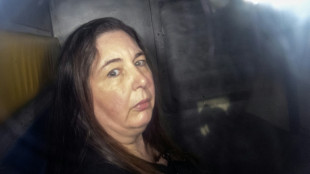 Australian mushroom killer loses appeal, has sentence extended

 How to Build a "Fun Fund" Without Guilt

 InterContinental Hotels Group PLC Announces Transaction in Own Shares - October 30

New Developments in Regenerative Medicine, Wearable Technology and Early Screening are Expanding Care Options for People With Cerebral Palsy
CHESTNUT HILL, MA / ACCESS Newswire / April 29, 2026 / For the estimated 18 million people living with cerebral palsy worldwide, 2026 is drawing attention - not because of a single cure, but because of a convergence of science, technology, and clinical innovation that is expanding what families can expect from a CP diagnosis.
Cerebral Palsy Guide, a trusted resource for individuals and families navigating life with CP, is highlighting the most significant treatment advances reshaping care this year.
Regenerative Medicine: Cord Blood Therapy Moves from Promise to Evidence
Perhaps the most significant development in CP research in recent years is the growing clinical evidence behind cord blood therapy.
A 2025 meta-analysis published in Pediatrics found that children who received umbilical cord blood therapy showed greater improvement on the GMFM-66 motor function scale than control groups, with the strongest benefit seen in younger children and those with milder forms of cerebral palsy.
The analysis also found that many treated children outperformed the control group after six to 12 months, adding to the evidence that cord blood therapy may improve motor outcomes for some children when used alongside rehabilitation.
Researchers say the next steps include identifying which patients benefit most, defining the optimal treatment window, and studying how cord blood therapy may be combined with established CP treatments.
Wearable Technology: From Assistance to Active Retraining
Wearables are fast becoming one of the most transformative frontiers in CP symptom management. The Cionic Neural Sleeve 2, cleared by the FDA in 2025, uses sensors, artificial intelligence, and electrical stimulation to support more natural muscle activation during walking.
Company-reported results have drawn attention in the mobility space. Cionic says 94% of participants in its multi-site study showed improved gait, while home-trial users reported a 68% increase in foot clearance, a 44% improvement in ankle stability, and a 30% reduction in spasticity.
What distinguishes this generation of wearables is their rehabilitative focus. Rather than simply compensating for motor deficits, these devices are designed to support repeated, task-based movement throughout the day.
AI-Powered Early Detection: Screening Before Symptoms
An earlier cerebral palsy diagnosis has long been seen as one of the most important ways to improve long-term outcomes, since early intervention can leverage the brain's neuroplasticity in infancy. Now, artificial intelligence is helping expand access to earlier screening.
Researchers behind a 2025 roadmap for AI-enabled General Movements Assessment said automation could make this screening tool more widely available by reducing reliance on the small number of specialists trained to perform it.
Other tools are also helping move screening beyond the clinic. The Baby Moves VIEW app allows parents to record infant movement videos at home and send them to trained assessors, a model designed to improve access for families who may not live near specialized care.
A 2026 scoping review also found growing evidence that video-based motion analysis and wearable sensors can help identify movement patterns linked to elevated CP risk in infants.
A New Era of Precision Cerebral Palsy Care
What unites these advances is a shift toward precision - matching the right intervention to the right patient at the right developmental stage.
AI-powered technologies are also playing a growing role in cerebral palsy care, with machine learning tools supporting early risk identification and robotic assistive technologies helping improve movement and rehabilitation outcomes for children living with the condition.
For families, that does not mean a cure is around the corner. It does mean cerebral palsy care continues to evolve, with more research focused on earlier identification, more personalized treatment, and tools that may expand what is possible over time.
Cerebral Palsy Guide says its goal is to help families follow those developments and understand how emerging research may relate to real-world care decisions.
For more information, visit cerebralpalsyguide.com.
About Cerebral Palsy Guide: Cerebral Palsy Guide is a dedicated resource providing expert information on cerebral palsy symptoms, causes, diagnosis, treatment options, and family support. The organization's mission is to ensure that individuals and families affected by CP have access to clear, current, and compassionate guidance.
CONTACT:
Katie Lavender
1330 Boylston St., Suite #400
Chestnut Hill, MA 02467
(855) 346-6101
[email protected]
SOURCE: Cerebral Palsy Guide
View the original press release on ACCESS Newswire
O.Johnson--AMWN