
TrustNFT Research Pegs True Annual Cost of Email Fraud to U.S. Economy at $22 Billion - More Than Seven Times Official FBI Figures
 Stocks fluctuate after Wall St sell-off, crude holds losses on peace talks

 Ultra-reclusive Turkmenistan slowly opens up to tourists

 Marc Bloch, historian and Resistance hero, joins France's Pantheon greats

 Ronaldo 'a role model' says Portugal coach after slow World Cup start

 Savea 'embraces challlenge' of leading All Blacks towards World Cup

 Mbappe scores twice as France beat Iraq at World Cup after two-hour storm delay

 Shortages ease in Bolivia as protest roadblocks dismantled

 England 'can beat any opponent' at World Cup, says Rice

 Alvarez says 'best for everyone' if he leaves Atletico

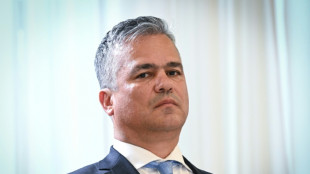 Romanian parliament rejects liberal PM-designate

 Missed penalty spurred 'very angry' Messi to World Cup history

 Oil falls as US waives Iranian sanctions and Nasdaq tumbles

 Belgium's Doku becomes father after World Cup controversy

 French TV presenter stood down over Doku World Cup comments

 Messi sets World Cup scoring record with 17th goal

 Colombian leftist candidate calls for calm after post-vote violence

 Latest developments in Europe's heatwave

 IMF director says Iran war fallout creating 'difficult moment' for Africa

 Hormuz: Traffic flows despite Iran's closure announcement

 Clive Davis: the starmaker who shaped modern music

 Qatar gas plant blast kills 13, injures dozens

 Oil falls as US waives Iranian crude sanctions

 England captain Itoje rested for Nations Championship

 Antoine Semenyo, Ghana's man on the inside and England threat

 Two children found dead in car as France faces hottest day of heatwave

New white paper argues that official fraud statistics dramatically undercount the true economic burden and calls for policy and private sector response proportionate to the scale of the problem
MIAMI, FL / ACCESS Newswire / May 4, 2026 / TrustNFT.io today released "The $22 Billion Problem: Email Fraud's True Economic Cost to the American Economy - and the Infrastructure Investment That Can Stop It," a policy white paper presenting a comprehensive economic accounting of email fraud's impact on the United States economy. The research argues that widely cited official statistics capture fewer than 15% of actual fraud incidents and that the true annual economic burden - including direct losses, corporate management costs, productivity impacts, and trust erosion - approaches $22 billion.
The FBI's annual Internet Crime Report, the most frequently cited source for email fraud data, reported $12.5 billion in consumer fraud losses in 2023. TrustNFT's analysis argues that this figure - already staggering - captures only reported losses from crimes that victims recognized as fraud, reported to law enforcement, and had processed within the reporting year. Research on reporting rates for fraud, particularly among elder victims, suggests that actual incidents outnumber reported cases by a ratio of 5 to 1 or greater.
The White Paper's $22 Billion Economic Accounting:
$2.9 billion in direct Business Email Compromise losses (FBI IC3, reported only)
$3.4 billion in elder fraud losses, predominantly email-delivered (FBI IC3, Americans 60 and older)
$4.2 billion estimated in unreported consumer email fraud, based on a conservative 3× multiplier on reported losses
$5.8 billion in corporate fraud management costs including support volume increases, legal and regulatory response, PR management, customer compensation, and security team time
$3.1 billion in lost productivity and economic output from fraud-related disruption
$2.6 billion in the erosion of digital commerce trust, measured through reduced online transaction rates in populations with high fraud exposure
"We are treating a $22 billion annual problem as if it were a $3 billion problem - and we are investing accordingly. The technology to dramatically reduce email fraud exists today, is proven in deployment, and costs a fraction of a percent of the damage it prevents. The gap between the scale of the problem and the scale of the response is not a technology problem. It is a market failure that policy can correct."
- Stuart Fine, CEO, TrustNFT / Remergify
The white paper presents a specific policy agenda for accelerating adoption of available email authentication technologies, including extending the 2018 DHS Binding Operational Directive requiring DMARC to all federal contractors, creating regulatory safe harbor provisions for companies with documented email authentication programs, and mandating public disclosure of DMARC enforcement status for large consumer-facing companies.
The research also presents the investment case for infrastructure-layer email verification platforms, noting that the combination of a $22 billion problem, available proven technology, regulatory tailwinds, and the absence of a dominant market incumbent creates favorable conditions for category-defining investment.
"The $22 Billion Problem" is available for download at research.trustnft.io and is intended for investors, policymakers, media, and business leaders with an interest in the systemic dimensions of email fraud and the infrastructure solutions available to address it.
About TrustNFT
TrustNFT is a blockchain-anchored email verification platform developed by Remergify, LLC, headquartered in Miami, Florida. TrustNFT operates two complementary products: TrustNFT Verify, an enterprise email domain verification service for corporations, utilities, financial institutions, and government agencies; and TrustNFT Guardian, a consumer email protection product that helps individuals and families identify phishing emails before clicking on them. TrustNFT Verify uses blockchain technology to create an immutable, unforgeable record of verified corporate sending domains, displayed as a visible trust badge inside consumers' email clients in Gmail, Outlook, Yahoo Mail, and AOL Mail.
Media Contact:
Stuart Fine, Chief Executive Officer
TrustNFT/Remergify, LLC · Miami, Florida
Email: [email protected]
Web: guardian.trustnft.io
SOURCE: Remergify, Inc.
View the original press release on ACCESS Newswire
L.Mason--AMWN