
Marijuana Isn't Medicine Until Someone Proves It Is
 Man allegedly behind 'targeted' attack on Australian lawmaker appears in court

 Musk backs SpaceX-Tesla merger as rocket firm turns profit

 Zelensky, US hail 'productive' talks to end Trump feud

 'Unbelievable' Foden back in the groove with treble in Man City rout

 Pistons rally to beat Celtics in NBA 2026-27 season opener

 PSG late show downs Barca in Champions League, Liverpool fight back

 Liverpool strike back to beat Villarreal in seven-goal thriller

 Dow boosted as markets rotate from tech shares

 Zelensky hails resumption of US advance warning of strikes on Ukraine

 Carrick says only wins can ease doubts over Man Utd future

 Top NBA Draft pick Dybantsa to miss opener with ankle sprain

 Italy sends troops, toughens security laws after Milan clashes

 Alberta separatists vow to fight on, risking turmoil for Canada

 Two men re-arrested for suspected spying for Iran in airbase scare: UK police

 Guatemalan man gets 30 years for truck smuggling deaths of 53 migrants

 'Clayface' gets under the skin of the superhero genre

 Zelensky, US envoys hold Oslo talks as Ukraine claims US missile holdup

 All-rounder Minhas stars as Pakistan crush England in tri-series

 Bavuma hits 179, Rabada strikes as South Africa dominate
 Allrounder Minhas stars as Pakistan crush England in tri-series

 Albania PM blames 'hybrid war' for week of unrest

 Bavuma hits 179 to lead South African fightback

 Solid GM results overshadowed by latest jump in commodity costs

 Houthi attacks undermine Saudi Arabia's economic ambitions

 French PM vows 'massive' police deployment for new demonstrations

WASHINGTON, DC / ACCESS Newswire / June 8, 2026 / For years, the marijuana industry has used a powerful word to build public support, attract investors, and justify sweeping regulatory changes.
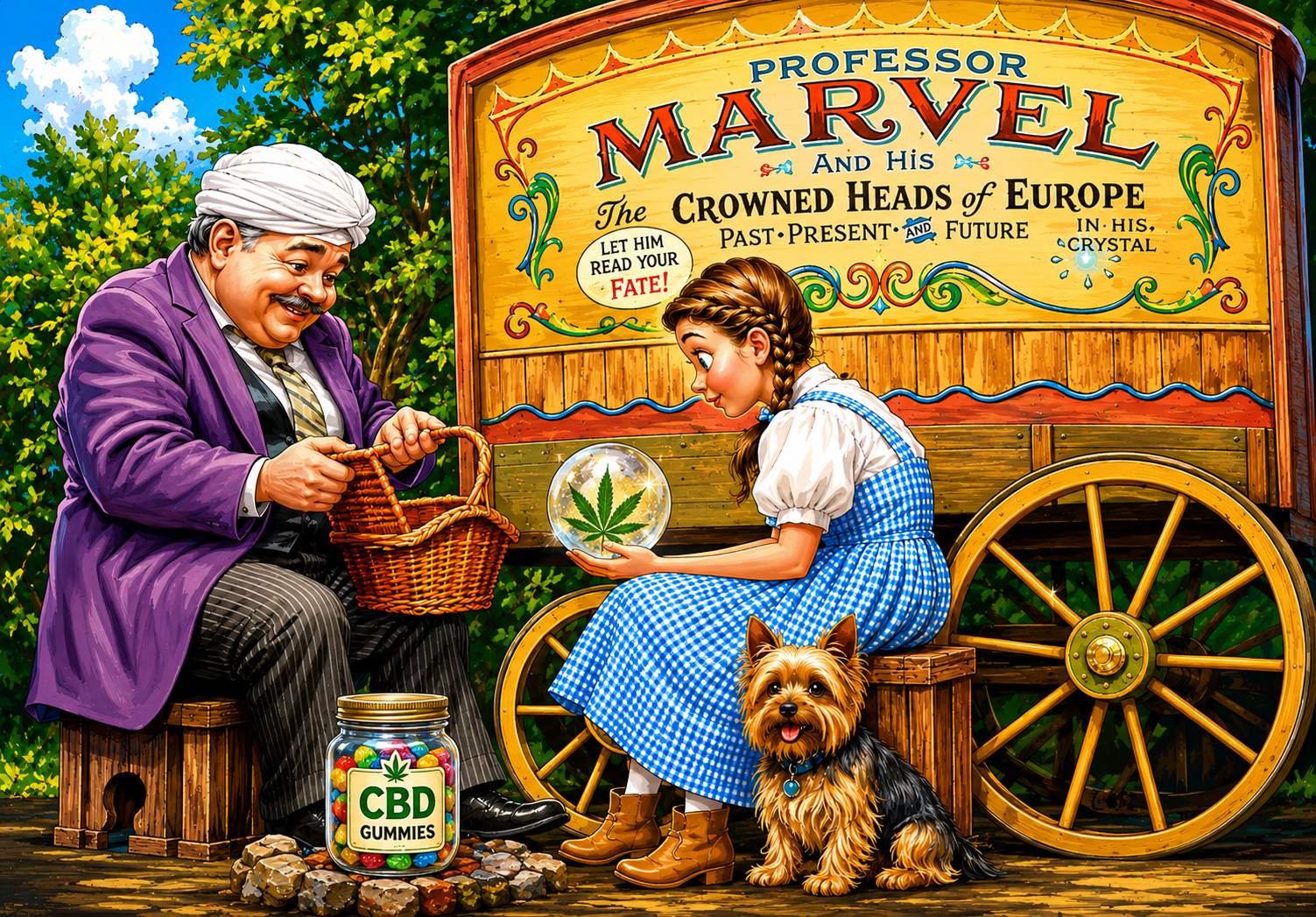
It appears in political speeches, investor presentations, dispensary marketing materials, state licensing programs, and now increasingly in federal policy discussions surrounding marijuana rescheduling and hemp-derived cannabinoid products.
But amid the excitement surrounding cannabis reform, a basic question has received remarkably little attention:
Who gets to decide what qualifies as medicine?
For pharmaceutical companies, the answer has traditionally been straightforward.
A medicine is developed through a defined scientific process involving chemistry, manufacturing controls, toxicology studies, clinical trials, regulatory review, and ongoing post-market oversight. The process is expensive, time-consuming, and heavily regulated because patients depend on the accuracy of safety, efficacy, dosing, purity, and manufacturing claims.
For decades, that standard applied regardless of whether the product originated from a laboratory, a plant, or a naturally occurring substance.
Cannabis was never supposed to be an exception.
Today, two very different cannabinoid industries exist side by side.
One follows the traditional pharmaceutical pathway.
Companies like MMJ International Holdings, MMJ BioPharma Cukltivation, MMJ BioPharma Labs pursuing FDA approval invest years generating chemistry data, validating manufacturing processes, conducting stability studies, and establishing FDA clinical research before making medical claims.
The other operates largely through state licensing systems where products may be marketed as supporting sleep, anxiety, pain, stress, inflammation, and countless other conditions without ever undergoing FDA approval.
The distinction matters.
One system asks whether a product has been proven safe and effective.
The other often assumes therapeutic value first and asks questions later.
The Laboratory Problem
Recent enforcement actions across multiple states have exposed troubling weaknesses in the industry's quality-control infrastructure.
Regulators have investigated allegations involving:
Potency inflation.
Pesticide contamination.
Manipulated laboratory results.
Mold and microbial failures.
Inaccurate product labeling.
The legal cannabis industry has long argued that regulation makes products safer than those available through illicit channels.
Yet a growing number of recalls, enforcement actions, and lawsuits are forcing policymakers to reconsider whether existing state oversight systems are sufficient.
If products marketed as medicine cannot consistently demonstrate what they contain, the use of the term "medicine" itself becomes problematic.
The issue is no longer confined to scientific debate.
Class-action lawsuits now allege that major cannabis companies marketed products using medical narratives while failing to adequately disclose potential risks associated with high-potency THC products.
The allegations remain unproven, but they signal an important shift.
The industry is no longer being challenged primarily by prohibition advocates.
It is being challenged by consumer-protection lawyers, public-health organizations, constitutional litigators, and pharmaceutical developers asking whether the standards applied to cannabis should differ from those applied to every other therapeutic product.
The Federal Contradiction
At the same time, federal agencies are moving in different directions.
The Department of Justice and Drug Enforcement Administration are pursuing marijuana rescheduling.
CMS has experimented with cannabinoid-access programs involving Medicare beneficiaries.
Yet the FDA continues to require extensive evidence before approving cannabinoid therapies as medicines.
The contradiction is difficult to ignore.
One branch of government appears willing to expand access.
Another continues to insist on scientific validation.
The result is growing confusion about what qualifies as a medicine and who has the authority to make that determination.
Medicine Is More Than a Marketing Term
The debate ultimately extends far beyond cannabis.
If a product can be called medicine without demonstrating safety, efficacy, manufacturing consistency, and reproducible quality, then the meaning of the word itself begins to erode.
Patients assume medicines have been tested.
Physicians assume medicines are supported by evidence.
Investors assume medicines operate under established regulatory frameworks.
Those assumptions form the foundation of modern healthcare.
The question now confronting regulators, courts, and policymakers is whether cannabis products should be held to those same standards-or whether an entirely different definition of medicine will emerge for one of the fastest-growing industries in America.
The Question That Will Not Go Away
As federal courts review marijuana rescheduling, Medicare cannabinoid programs, and constitutional challenges to federal cannabis policy, one question remains at the center of every dispute:
Is marijuana medicine because it is called medicine, or is it medicine because it has been proven to be one?
How regulators answer that question may determine the future of the cannabis industry itself.
CONTACT:
Madison Hisey
[email protected]
203-231-8583
SOURCE: MMJ International Holdings
View the original press release on ACCESS Newswire
Y.Nakamura--AMWN