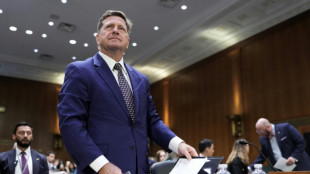
Hungary parliament approves Orban-critic judge as president / Photo: Peter Kohalmi - AFP
 France held by Italy in Zidane's homecoming after Olise stunner

 Ethiopian pro-government militia claims Tigray airport as regional tensions spike

 Ohtani shaking off injuries as Dodgers launch MLB post-season
 Sea levels to rise in California as coastal wave surges up west coast
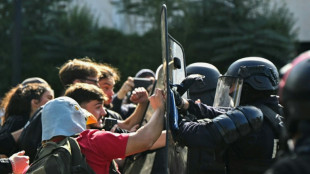 New rallies urged in France as protests disrupt over 730 schools

 Djokovic survives China Open scare, Sabalenka starts strong
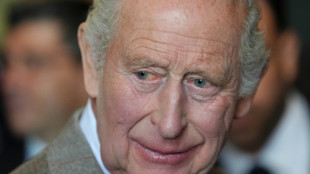 King Charles to evoke colonial 'darkest days' on Caribbean tour

 Tesla shares jump after global car sales top estimates

 DR Congo Ebola outbreak killed more than 4,000: official figures

 Djokovic survives China Open scare against wildcard world no. 104
 Lula, Bolsonaro trade blows in final scramble for votes in Brazil
 New clashes erupt as protests disrupt over 560 French schools
 NY governor vows to close loophole after alleged Cornell gang rape

 Ethiopia Tigray rebels pushed back as regional tensions spike

 Stocks rise, yields fall as US job numbers disappoint

 Man City verdict a 'big topic' for England players, says Tuchel

 NY attorney general tasked with investigating alleged Cornell gang rape

 China widens military footprint with Laos air base

 G7 talks as US pressures Europe over diesel stocks
 Man City launch appeal against explosive financial ruling
 Swiss president to quit government

 Europe rejects US threats over diesel stocks, urges joint G7 action

 Philippines tennis star Eala says 'I get overwhelmed sometimes'
 Ferrari chief Vasseur has support from rival team bosses
 Pilot in flydubai attack says could not let 'all those people die'
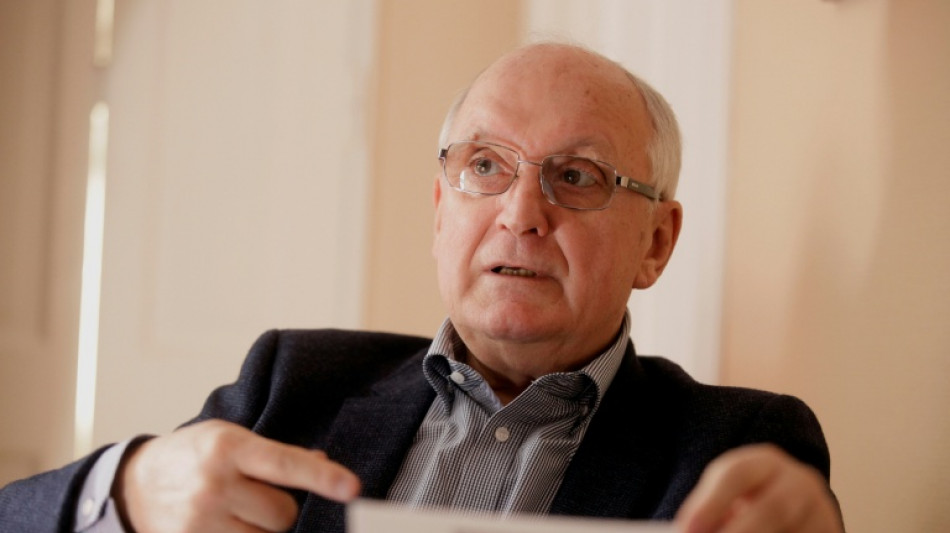
Hungarian lawmakers on Tuesday approved former supreme court chief Andras Baka, a critic of Viktor Orban who was fired during the ex-premier's time in power, as the country's next head of state.
The post became vacant following the contested removal last month of the previous president, an Orban ally, as pro-EU conservative Prime Minister Peter Magyar pushes to loosen his predecessor's lingering hold over state institutions.
Parliament, where the ruling Tisza party holds a two-thirds majority, elected Baka -- who served 17 years as a judge on the European Court of Human Rights (ECHR) -- with 140 votes in favour and six votes against.
Tisza on Saturday nominated Baka, 73, for the largely ceremonial role.
Magyar said Baka's life served "as an example of commitment to the democratic rule of law and constitutional principles" as the central European country needs to be "guided back onto the path of the rule of law and constitutional governance".
- 'Captured state' -
The previous president, Tamas Sulyok, saw his mandate cut short by a constitutional amendment, adopted as part of Magyar's reform push.
Magyar's party won April elections, ending nationalist Orban's 16 years in power and promising "system change".
But rights watchdogs criticised Sulyok's removal, comparing the tinkering to the methods Orban used to build his self-styled "illiberal" system.
Orban's Fidesz party, along with its ally KDNP, boycotted the parliamentary vote, arguing Sulyok's ouster was "tyrannical" and "illegitimate".
Baka has not been critical of Sulyok's removal, despite the fact he was terminated with a similar legislative act.
"In a country governed by the rule of law, such extraordinary measures cannot be used, but Hungary became a captured state under Orban," he told AFP last month.
State officials like the president "were appointed not to restrain the government's power, but to ensure the political survival of the former system even after an electoral defeat," Baka added.
- 'Restoration' -
Installing Baka as president signals a "guarantee that the restoration of liberal democracy will proceed along a clearly defined path," Bulcsu Zsiga, from the Centre for Fair Political Analysis, told AFP.
Besides a brief stint as a lawmaker, elected from the conservative Hungarian Democratic Forum (MDF)'s party list in 1990, after the democratic transition, Baka did not hold any political positions.
He was a judge at the Strasbourg-based European Court of Human Rights (ECHR) from 1991 to 2008.
In 2009, he was nominated as the head of the Supreme Court, but was ousted in 2012 after he condemned a move under Orban to reduce the age of mandatory retirement for judges from 70 to 62, calling it a judicial purge.
The European Union and the United States both called the age-limit reduction illegal, and in 2016 the ECHR ruled that Baka's dismissal amounted to a violation of his freedom of expression.
"His nomination also carries a symbolic meaning, given that Baka went all the way to prove that what happened to him was not really in line with European Union norms," analyst Zsiga said.
Last month, Magyar offered the nomination as president to chess legend Judit Polgar, but she declined after the prime minister faced mounting outrage for not consulting the public as promised.
Magyar has indicated the new president would only serve part of his term, until the completion of a process to replace the Orban-era Basic Law with a constitution drafted through wide public participation.
Magyar has estimated rewriting the constitution would take one or one and a half years, promising to launch consultations on it next month.
J.Williams--AMWN