Nigeria kidnap victims escape 'hellfire' captivity beaten, malnourished / Photo: Tonye BAKARE - AFP
 Ethiopia's conflict: the regional dimension

 Life expectancy almost back to pre-Covid levels, says WHO

 Turkey's football referee chief faces judge in graft probe

 Verstappen goes own way to avoid the rain

 Oil slides, bonds steady as EU addresses diesel price surge

 Spain housing package at risk in parliament, as protests mount

 Swedish Social Democrats leader to make new bid to form government
 North Korea calls Seoul 'despicable' after DMZ apology demand

 Taiwan boxer Lin wins gold as virtual taekwondo makes Games debut

 Man City face appeal deadline after explosive financial verdict

 Pole vault superstar Duplantis to skip indoor season

 Sri Lanka drop Asalanka from T20 against Pakistan

 Disney president says layoffs 'extremely painful' but necessary

 Indian flydubai pilot opened cockpit door to save passengers
 Alex Marquez clocks record lap at MotoGP Japan practice

 Tom Kim leads Asian Games golf in chase to avoid military service

 Asian stocks hit as oil spike fans rate hike bets, eyes on US jobs

 'We're losing our scientists': west Africa's STEM struggle
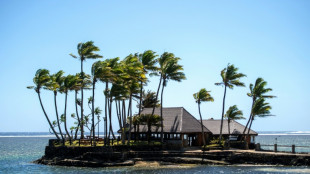 World powers gather in Pacific to chart climate battle

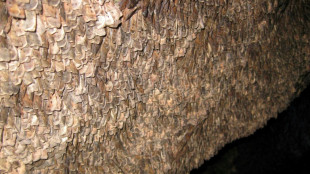 Return of swarming moth spectacle has Australia in a flutter

 Browns snuff out Rodgers fightback to beat Steelers 27-24

 Braves power past Phillies to set up Dodgers showdown
 Asian stocks drop as oil spike fans rate hike bets, eyes on US jobs

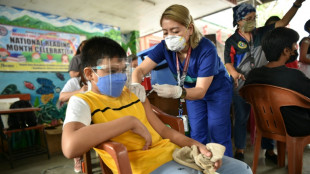 Viral anti-vax posts weaponise Philippine inoculation fears
 Saudi coalition accuses Houthis of drone attack on Medina
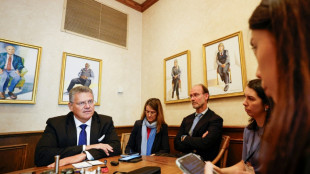
Visibly frail and malnourished children and women lay on rows of hospital beds, their bodies bearing the scars of six months of captivity deep in the Nigerian bush.
The patients were among 163 kidnapping victims from Woro, rescued earlier this month in the Kainji Lake National Park forest, after their village was attacked by suspected jihadists.
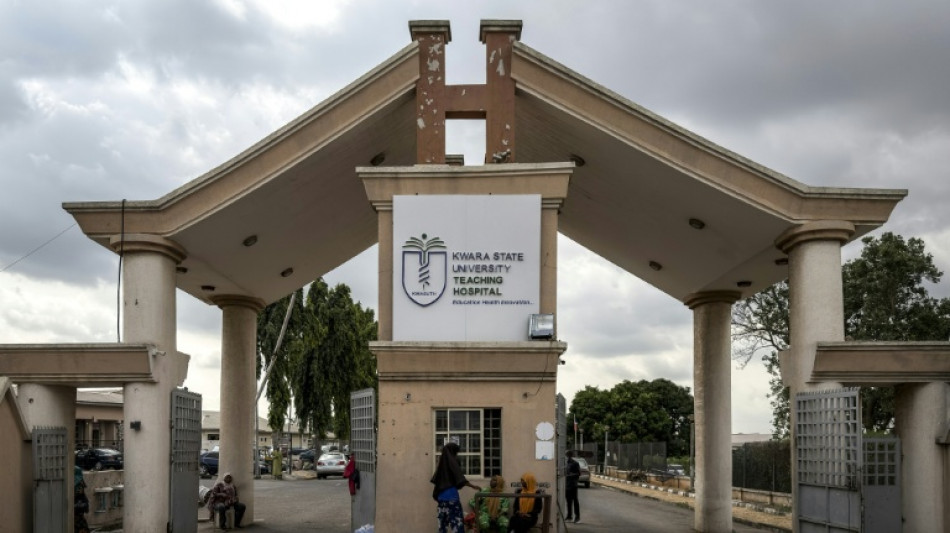
In total, 308 people were freed in what the government called the largest ever single day rescue operation -- though at the Kwara State University Teaching Hospital in Ilorin, where AFP visited recently, a long road to recovery lay ahead.
A child lay beneath a blue sheet, hooked to a respirator, with a team of doctors and nurses clustered around the bed.
A sobbing girl, no more than six years old, sat alone on a hospital bed, her family yet to visit.
"They are all responding to treatments," a nurse said, holding the tiny hand of a young boy about four years old. "Some of them still need blood."
Suspected jihadists attacked Woro, near the border with Benin, in February, killing upwards of 165 people and kidnapping scores.
Abductions for ransom have become a key moneymaker for criminal groups in Nigeria, especially among jihadists and non-ideological bandit groups across the north and centre of the country.
The victims were kept at a camp along with more than a hundred others seized from other villages, including Kasuwan Daji and Konkoso, both in Niger state, Woro village head Umar Bio Salihu told AFP.
Thirteen people from Woro died in captivity, he said, and 13 more remain in captivity.
- Kidnapping crisis -
Interviews with victims in the hospital were brief and stymied by officials who repeatedly bounced AFP journalists between different offices to seek approval.
While the government touted the rescue as a major success, it also underscores a crisis authorities are unable to stem: kidnappings raised some $1.66 million in ransom payments between July 2024 and June 2025, according to a tally by SBM Intelligence, a Lagos-based consultancy.
"We thank God we are out," a gaunt-looking victim, Hajara, said. "I do not wish that on even my enemies. It was like we just came back from hellfire."
While being held by the gunmen, the captives were fed tuwo, a thick, porridge-like meal made from guinea corn, and a "soup" made from a mixture of river water and salt. When they were lucky, their captors gave them seasoning cubes.
Once in a while, they got beef, from cattle they assume was rustled.
Those who ventured into the surrounding thickets to relieve themselves without the guards' permission were beaten, said 25-year-old nurse Amira Salihu, whose two brothers were killed during the February attack.
- Babies delivered by torchlight -
The daughter of the Woro village head's gentle smile belied the harrowing experience of the last six months as she spoke to AFP from a hotel -- guarded by police -- where some of the freed abductees were staying.
More than a dozen of the women at the camp were pregnant and went into labour while being held, Amira Salihu said.
With little visibility -- battery-powered torches being the only sources of light -- she helped to deliver the babies using her bare hands.
"I borrowed a razor blade to cut the placenta," she told AFP.
At the hotel, scores of the victims, mostly young children, noisily gathered around plastic tables in a hall for lunch.
"I am happy seeing them like this," Umar Bio Salihu, the village head, told AFP.
He has been shuttling between Woro and Ilorin, some 200 kilometres (124 miles) away, to check on the victims while they recover under government care in the state capital.
Despite the scale of the tragedy, Woro is coming back to life, a resident Isah Mogaji told AFP, with the village market in full swing.
"The community is very happy now," village head Salihu said. "They are waiting to receive their people."
Th.Berger--AMWN