
Study Finds Healthcare Concern Jumps From 31% to 74% After Federal Debt Connection Is Explained
 Sweden expels Iran embassy employee over anti-Jewish threats

 Toogood Gold's Table Mountain Sits in the Shadow of a Nevada Gold Rush

 MEXC July–August Security Report: 38.66M USDT in Risk Funds Intercepted, Futures Insurance Fund Hits 792M USDT

 'Breathing toxin every day': Indonesians choked by haze feel helpless

 Stocks edge higher ahead of US Fed rate call

 Philippines ex-leader Duterte makes first in-person ICC appearance

 2027 Formula One calendar includes Monaco sprint race

 Palestinians are the real victims, Thunberg tells Ed Sheeran

 Hashim Thaci: From 'George Washington of Kosovo' to Hague convict

 Amnesty says Iran committed 'crimes against humanity' in crackdown on 2022 protests

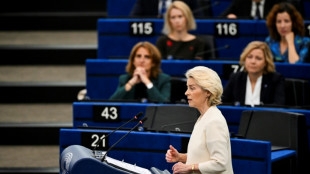 EU to ban social media for under 13s, curb access until 15

 Philippines ex-leader Duterte makes first appearance at ICC

 EU chief pitches 'associate member' status for Canada

 English village votes to 'secede' from UK over asylum centre plan

 Wildfires push endangered Sumatran elephants to brink: Indonesian NGO

 Stocks head higher as traders prepare for Fed decision

 English village votes to 'secede' from UK over asylum centre

 Hong Kong unveils plan to align economy with China's goals

 Brazilian voters the latest to eye Bukele security model with envy

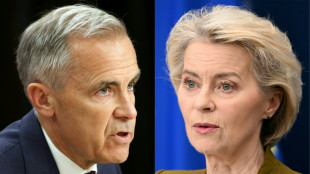 EU chief hosts Canada's Carney in push to 'deepen' alliance

 EU chief to unveil social media, gaming curbs for under-15s
 Saudi says Houthis target Mecca, warn of 'red line'

 Asian stocks stutter as traders prepare for Fed decision

 US touts its power, avoids Iran war at G20 Energy meeting

 Dead animals, barren fields, and hunger - El Nino chokes Central America
Black Book's national consumer study finds nearly one-third would borrow, delay care or skip treatment if annual household healthcare costs increased by $1,000; full report available complimentary to industry stakeholders and media.
WASHINGTON, D.C. / ACCESS Newswire / September 15, 2026 / Black Book Research today announced the publication of "The $40 Trillion Healthcare Question: National Healthcare Consumer Awareness, Expectations & Household Resilience Study," examining how Americans understand and believe they would experience the healthcare consequences of sustained federal fiscal pressure. The Q3 2026 study reports online and panel findings from 1,500 U.S. adults age 18 and older in Q3.
The study identifies a substantial Healthcare Fiscal Awareness Gap: just 31% initially expressed concern about the potential personal healthcare implications of the federal government's financial condition. After respondents received a brief explanation of federal debt, interest costs and competing healthcare commitments, 74% expressed concern, a 43-percentage-point increase.
"Washington debates trillions. Families make decisions about prescriptions, premiums and whether they can afford the next appointment," said Doug Brown, Founder of Black Book Research. "This study brings those conversations together. The question for policymakers is not simply how to improve the federal balance sheet. It is how to do so without making necessary healthcare less affordable or harder to obtain."
Initial awareness and concern were measured before respondents received explanatory information. That statement specifically told respondents that fiscal pressure does not make any particular healthcare cut or tax increase automatic. The findings describe consumer perceptions, expectations and anticipated household responses, not evidence that federal debt has caused a specific medical bill or coverage reduction.
Another $1,000 Could Change Whether Households Seek Care
The study's household stress test translates a national fiscal debate into a concrete affordability question: what would respondents do if their household's annual healthcare costs increased by $1,000?
Thirty-two percent said they would borrow money, delay medical care or skip medications or treatment. Another 25% would reduce other household spending, and 18% would draw on savings. Only 7% said they could absorb the increase without significant change. The hypothetical cost increase was not attributed exclusively to federal debt.
"A federal savings estimate is not a complete healthcare policy," Brown said. "Every proposal should explain who pays more, whose coverage changes and whether patients can still get care. Moving an expense off Washington's books does not make it disappear from a family's budget. When consumers say another $1,000 would push them toward borrowing or foregoing treatment, policymakers should treat that as a warning, not a rounding error."
Consumers Anticipate Higher Costs and Greater Pressure on Access
Looking ahead five to ten years, 68% of respondents expect sustained federal fiscal pressure to contribute to higher household insurance or out-of-pocket healthcare costs, while 62% anticipate higher Medicare premiums or cost sharing.
Concern also extends beyond affordability. Fifty-five percent expect fewer clinicians to accept Medicare or Medicaid; 49% anticipate greater financial pressure on rural hospitals or vulnerable service lines; and 46% expect reduced subsidies or benefits. These are respondents' expectations about potential consequences, not forecasts that those outcomes will occur.
Among respondents age 50 and older, 61% were not very confident or not at all confident that Medicare would provide benefits at approximately today's level when they need them. Among Medicaid enrollees, 57% worried that future budget pressure could reduce access to participating clinicians or services.
"An insurance card is not the same thing as access to care," Brown said. "The consumer test is whether there is an affordable appointment, an available clinician and a service within reach. Protecting Medicare and Medicaid should mean examining that entire experience-not merely preserving a program's name while leaving patients to navigate higher costs or fewer options."
A Generational Warning, but No Consensus on Who Should Pay
The findings also reveal concern about the durability of the federal healthcare promise. Among adults ages 18 to 34, 72% expect Medicare benefits to be less generous when their generation needs them. Across the overall sample, 70% agreed that today's federal borrowing unfairly transfers future healthcare and tax obligations to younger generations.
However, agreement about the burden does not translate into agreement about the solution. Asked whether they would personally accept somewhat higher federal taxes today if doing so materially reduced the likelihood of future Medicare or Medicaid cuts, 44% said yes, 41% said no and 15% were unsure.
A separate question requiring respondents to choose their preferred fiscal response produced another divided result. The largest group, 34%, preferred reducing other federal spending before healthcare. Twenty-two percent favored higher taxes to preserve Medicare and Medicaid benefits; 16% preferred reducing payments to health plans and providers; and 10% would continue borrowing rather than reduce healthcare spending.
Options involving direct consumer losses attracted smaller shares: 7% preferred higher beneficiary premiums or cost sharing, 4% a higher Medicare eligibility age, and 3% reduced benefits or Medicaid eligibility. No single option commanded majority support.
"No party should mistake concern about federal debt for public consent to its preferred healthcare solution," Brown said. "These findings are not a blank check for higher taxes, benefit cuts or continued borrowing. Leaders of both parties owe the public an explanation of the tradeoffs: what changes, who bears the cost, how access is protected and what younger Americans can reasonably expect in return for the taxes they pay."
Complimentary Report Available to Industry Stakeholders and Media: The full 32-page report includes national findings, healthcare affordability and access expectations, generational comparisons, policy preferences, consumer indices, the survey instrument and methodology.
"The $40 Trillion Healthcare Question: National Healthcare Consumer Awareness, Expectations & Household Resilience Study" is available for complimentary download to industry stakeholders and members of the media at:
blackbookmarketresearch.com/the-black-book-national-consumer-study
The study reports findings from 1,500 U.S. adults age 18 and older during Q3 2026. Its methodology describes a national online-panel design, demographic quota controls and post-stratification to U.S. adult population benchmarks. Initial awareness and concern were measured before respondents received the fiscal-healthcare explanation. Results reflect self-reported perceptions, expectations and intended behavior rather than demonstrated economic outcomes or causal effects.
About Black Book Research
Black Book Research is an independent market research organization focused on global healthcare technology, services, operations and stakeholder experience. Since 2003, Black Book has conducted research across healthcare delivery, revenue cycle management, payer technology, clinical systems, managed services and emerging digital-health categories in U.S. and international markets. Its consumer and stakeholder research examines developments affecting healthcare buyers, users, policymakers, investors and the public through a vendor-agnostic research model.
Media contact:
[email protected]
18008637590
SOURCE: Black Book Research
View the original press release on ACCESS Newswire
P.M.Smith--AMWN