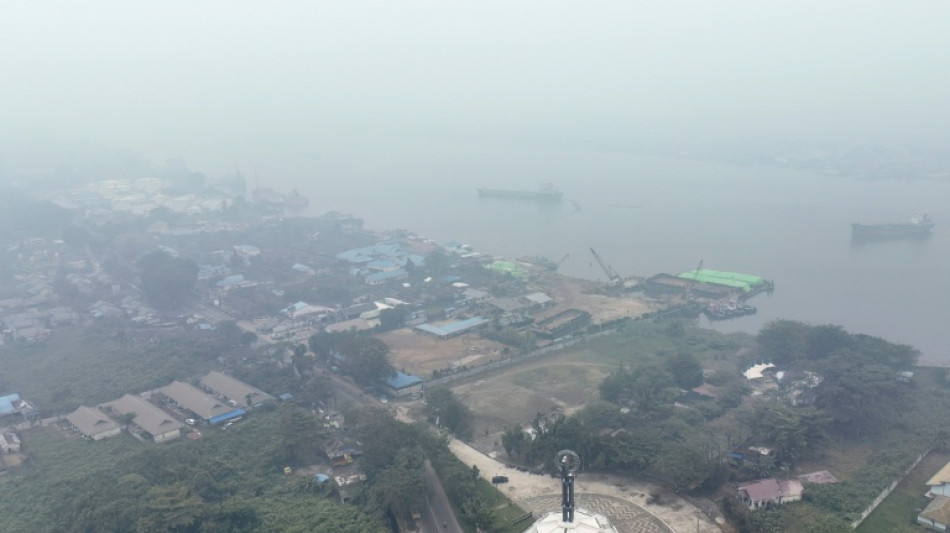
Smog scuppers Japan force helping fight Indonesia wildfires / Photo: DITO - AFP
 Microsoft Updates Xbox PC App with 60% Faster Startup and Redesigned Interface

 Early Polar Vortex Disruption Creates Uncertain Winter Outlook for Pennsylvania

 Pakistan Demands Grant-Based Climate Finance at COP31 to Avoid Debt Trap

 E Pellicci Pop-Up at Selfridges Brings Back Nostalgic School Cake

 Coronation Street's Debbie Webster Steps Down as Dementia Storyline Intensifies
A Japanese firefighting force sent to help tackle huge blazes in Indonesia is struggling to operate because the smog is too thick to fly helicopters, a spokesman told AFP on Thursday.
Indonesia has been battling wildfires for weeks in parts of Borneo and Sumatra, which have blanketed parts of the country as well as neighbouring Malaysia and Singapore in toxic haze.
Around 350 members of Japan's Self-Defense Forces arrived last week in Borneo's hard-hit West Kalimantan province, with three helicopters on hand to assist with firefighting efforts, the mission's public affairs officer Takeshi Koga told AFP.
Their operation was planned to start on Sunday but has been scuppered by low visibility, Koga said, adding that their water-bombing operation eventually started on Wednesday.
Thursday's flights "were all cancelled due to poor visibility" as smog reduced the range of sight to less than three kilometres (1.9 miles), he said.
Indonesia regularly battles wildfires during the dry season, which typically runs from July to October.
But the blazes this year have been particularly bad in part because of the El Nino climate phenomenon expected to be the strongest since comparable records began four decades ago.
Experts also blame climate change, decades of forest degradation and slash-and-burn land-clearing practices that have changed the naturally fire-resistant landscape.
The Indonesian government has said more than 202,000 hectares of land burned countrywide between January and July.
The Nusantara Atlas project put the figure at close to 300,000 hectares over the same period, and last week estimated that the total area affected, including August, was nearly 896,000 hectares.
F.Schneider--AMWN