Deadly abbey attack feeds anti-Ukrainian sentiment in Poland / Photo: Handout - GAZETA JAROSLAWSKA/AFP
 Russell finds himself again and prepares to heap pressure on Antonelli
 South Korea hold nerve to win Asian Games basketball gold
 Russell holds off Verstappen to claim imperious victory in Baku
 Russell holds off Verstappen to win Azerbaijan Grand Prix
 India's Kohli says 2027 ODI World Cup will be his last
 Huge crowds cheer Pope Leo along Champs-Elysees ahead of Paris mass
 Putellas wants to bring 'winning culture and mentality' to London City
 Rare Italian opera returns to Moscow after nearly 120-year hiatus

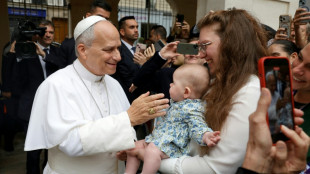 Pope to celebrate giant Paris mass after 'peace' appeal
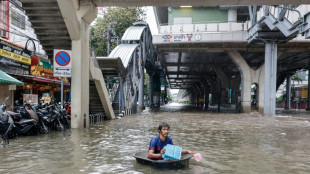 Homes flooded, roads submerged: Bangkok declares disaster over heavy rains

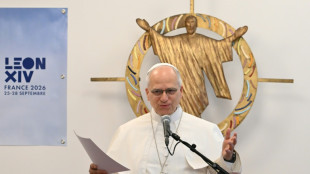 Ahead of Paris mass, pope urges life together in 'dignity and peace'

 Austria 'ghetto' language classes leave children to repeat school
 S.African women runners arm themselves after string of killings

 'I felt embarrassed': Japan eSports whizz-kid, 11, wins Games gold
 Indonesia fires threatens critically-endangered orangutan: IUCN

 Bangkok declares flood disaster across city

 'World records not enough': North Korea weightlifters target Olympic gold rush

 Iran proposes Hormuz plan, Trump reportedly refuses
 El Nino rewrites the menu in the world's top restaurants
 Pope to hold giant mass on Champs-Elysees

 TikTok to pay Alabama $100 mn under pre-trial settlement

 Lula bans sports betting days ahead of Brazil's election
 Guatemala ensures survival of vulnerable 'fossil' fish

 Mancini finds positives in Italy loss, accepts fans' jeers
 Alcaraz helps Europe into Laver Cup lead
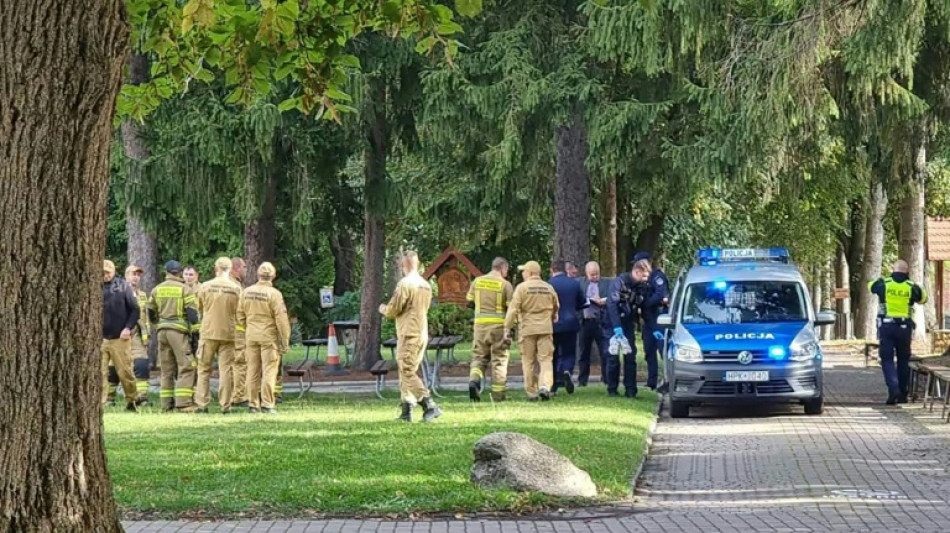
A deadly knife attack at a Polish abbey by a 31-year-old Ukrainian citizen has reignited online hate following months of strained relations between the otherwise close allies.
On Thursday morning, Ihor M. -- whose last name has been withheld under Polish privacy law -- entered the Benedictine abbey in Jaroslaw, in southeastern Poland.
Prosecutors say he stabbed five people -- three members of the clergy and two laypersons. One of the priests died from his injuries in hospital and the suspect has now been charged with murder and attempted murder.
Ukrainians are the largest immigrant group in Poland, which hosts some 1.5 million of them. Some are refugees who fled Russia's invasion, while others are economic migrants who have lived in the EU and NATO member country for years.
In the immediate aftermath of Russia's 2022 full-scale invasion of Ukraine, Poland welcomed Ukrainian refugees, immediately passing a law granting them protected status in the country.
In subsequent years however, support for aiding the refugees -- and even for accepting them -- has dropped sharply, against a background of harsh political rhetoric and unresolved diplomatic tensions between Warsaw and Kyiv.
- Tense border region -
A July study by Poland's Centre for Public Opinion Research (CBOS) showed that for the first time since Russia's 2014 invasion of Crimea, most Poles (52 percent) opposed accepting Ukrainian refugees into the country.
Oleksandr Pestrykov, an advocacy expert from the Ukrainian House foundation in Warsaw, told AFP that Ukrainians in Poland were feeling the effects of the chilling relations personally.
"People talk about individual unpleasant situations in everyday life much more often," he said.
That included unpleasant exchanges in public transport, conflicts with neighbours, or condescending remarks. And some now fear that Thursday's shocking attack in Jaroslaw has added fuel to the flames, especially online.
"We are on the brink of an online lynching," Marcin Piotrowski, a sociologist and member of the Polish-Ukrainian association "Folkowisko", tells AFP.
What adds to the pressure is that the fact Jaroslaw, where the attack happened, lies only 30 kilometres from Poland's border with Ukraine.
When Russia has launched attacks on the western part of that country, that has also triggered air alerts in this Polish region.
The attacks near the border had put immense psychological strain on local people, Piotrowski explained.
"We are in an area that serves as a rear base for war operations," he added. "That is not easy to live in."
- Far-right mobilised -
In Jaroslaw Thursday, the day of the attack, several local people told AFP they had noticed an increase in online hate speech and disinformation.
"It's clear that this attack will be used by people who are... hostile to good Polish-Ukrainian relations," Adam Leszczynski, an associate professor at the Institute for Political Studies of the Polish Academy of Sciences, told AFP.
Poland could now expect to see more attacks on innocent Ukrainians, "an even greater wave of hate on social media", and a surge in popularity for far-right politicians.
On the evening of the attack, members of the hard-right Ruch Narodowy (National Movement) party and their supporters gathered in front of a memorial outside the abbey where the attack took place, laying candles and praying for the deceased.
"We must verify who is entering our country," MEP Tomasz Buczek, of the far-right Partiots for Europe group, told AFP.
President Karol Nawrocki, wrote on X that "the principles and values of our community must be respected by all those residing in our country".
A conservative-nationalist, he has in the past echoed anti-Ukrainian sentiments from hard-right parties seeking to build on historical differences to boost their support.
- 'Most effective weapon' -
According to the initial findings of investigators, the suspect entered Poland from Germany overnight Wednesday-Thursday, intending to travel on to Ukraine.
But he was turned back at the Korczowa border crossing because his car did not have the required insurance. Shortly afterwards, say prosecutors, he launched his attack.
Marcin Nazarewicz, the mayor of Jaroslaw, told AFP that following the attack he had met Poland's crisis management team to "work with and talk to" young Ukrainians there.
While "the immediate danger" had been neutralised, he said, officials were now "considering what consequences this event may have in the next few days", he added.
For sociologist Piotrowski it was "tragic" that one of the greatest threats to the local community were the isolated criminal acts of individual Ukrainians.
Thursday's shocking crime at Jaroslaw could have "a greater impact than a missile", he added.
F.Bennett--AMWN