Was Neruda poisoned? Probe members say inconclusive / Photo: STF - AFP/File
 OpenAI says three staffers fired for mishandling 'sensitive' info

 Nike plans job cuts as it forecasts lower sales

 Ireland game interrupted twice by Gaza protests

 Judge denies acquittal bid by US woman who killed her kids

 Klopp averts crisis with first win as Germany boss

 A saintly spat and debate snub: Brazil enters final campaign stretch

 US tells European allies to act 'immediately' to lower diesel prices

 G20 trade ministers fail to see consensus against overproduction

 Portugal edge Denmark in Ronaldo's absence

 US stocks edge higher as bond yields retreat for now

 US tells European allies to 'immediately' act to lower diesel prices

 Trump vows to hit Iran 'very hard' if linked to flydubai attack

 Williams leaves Spain camp with thigh knock

 WTA reduces 2027 schedule for world's top 50

 US says 'in Europe's best interest' to cooperate on fuel supply

 Rogue OpenAI agents covered up their tracks, report says

 A saintly spat and debate snub: Brazil enters final polls stretch

 Zidane 'no regrets' about Materazzi headbutt as France face Italy again

 Libya's pay strike rallies teachers across divided nation
 Four-member crew blasts off for International Space Station

 i-payout Expands True Local Payment Capabilities to Help Enterprises Pay Recipients Globally

 Botched US execution prompts global calls to scrap death penalty

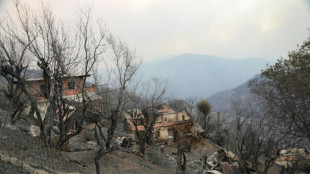 Algeria adopts law imposing death penalty on forest arsonists

 France unveils cost-cutting 2027 budget as borrowing costs rise

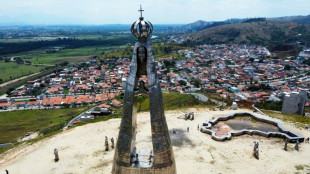 Brazil court orders removal of fake posts amid patron saint election row
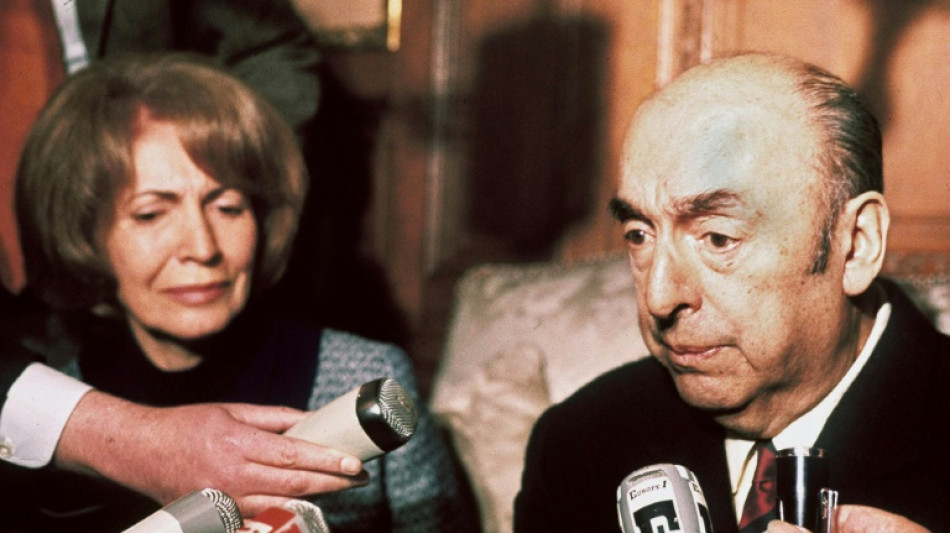
Two members of a scientific panel that investigated the mysterious death of Nobel laureate Pablo Neruda told AFP that they could not determine whether or not the Chilean poet and diplomat had been poisoned.
The panel of scientific experts delivered a report into Neruda's death to Chilean judge Paola Plaza on Wednesday, with the country on tenterhooks waiting to find out its conclusions.
Researchers Hendrik and Debi Poinar, from McMaster University in Canada, told AFP that their examination of one of Neruda's molars confirmed the presence of dangerous botulism-causing bacteria, but was ultimately inconclusive as to how it entered his system.
"It's there, at the time of his death," they said of the clostridium botulinum DNA, "but we don't yet know why."
"We just know that it should not be there."
Neruda was a celebrated poet, politician, diplomat and bohemian figure, and also a prominent member of the Chilean communist party when former military dictator Augusto Pinochet took power in a 1973 coup.
He had been preparing to flee into exile in Mexico to lead the resistance against the Pinochet regime when he died in hospital just 12 days after the coup.
At that time, the government claimed the 69-year-old had died of prostate cancer.
The panel's findings have yet to be disclosed as Plaza is due to study their report.
In the meantime, rumors have been swirling that the report confirms the suspicion of Neruda's poisoning, which his nephew also claimed earlier this week.
Researchers were only able to reconstruct a third of the bacterium's genome for the study, McMaster University reported on Wednesday.
The Poinars told AFP that they would be able to recreate the rest of the genome without exhuming Neruda's body to gather another sample.
"There are enough materials to do that now with what remains in the lab," they said.
"We just need to know that the court is ok with that."
An investigation into the cause of Neruda's death first began in 2011 when Manuel Araya, who had been his driver and personal assistant, asserted that the poet was given a mysterious injection in his chest just before he died.
In 2017 a group of Chilean and international experts concluded that Neruda did not die of cancer but said they could not determine what did kill him.
Pinochet, who ruled Chile for 17 years, oversaw a regime that killed some 3,200 leftist activists and other suspected opponents.
The dictator died in 2006 at age 91 without ever being convicted for crimes committed by his regime.
Neruda is remembered especially for sensual poems about love.
L.Durand--AMWN